Leaf Chains and Hoisting Chains
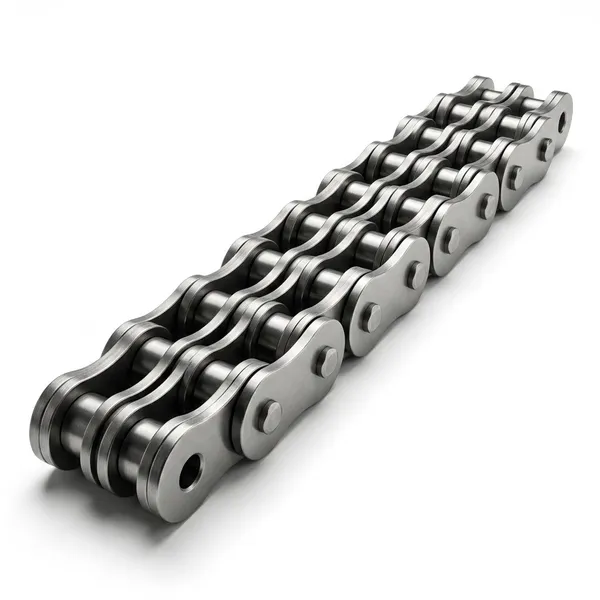
Korea Ever-Power leaf chains are high-strength pin-and-plate assemblies designed for tension applications rather than power transmission. Unlike roller chains, a leaf chain carries its full load through stacked link plates pinned together without a bush or roller – making the structure compact, highly flexible, and capable of extremely high tensile loads in a narrow profile suited to the confined spaces inside forklift mast channels. BL and LH series leaf chains for forklift mast assemblies, industrial door drives, counterweight systems, and hoist mechanisms. Minimum breaking loads from 11.1 kN to over 1,600 kN. Manufactured to ISO 4347 and ANSI B29.8 standards.
11.1 kN
Min. Breaking Load
1,600+ kN
Max. Breaking Load
ISO 4347
and ANSI B29.8
5:1
Safety Factor
Leaf Chain and Hoisting Chain - Product Overview
The EP range includes two series. BL series chains follow ANSI B29.8, the dominant standard in North America and Korea, and are specified by a two-digit code indicating pin diameter class and link plate count per link (e.g. BL622 means 6/8-inch pitch, 2-by-2 plate lacing). LH series chains follow the ISO 4347 European designation and share dimensional compatibility with many European forklift OEM specifications. Both series are manufactured from alloy steel plates and through-hardened pins, with each chain pre-tested at proof load before leaving the production line.
Applications extend beyond forklifts into industrial vertical door counterweights, crane hoist blocks, tensioning mechanisms on press beds, and load-levelling devices on automotive assembly fixtures. For any application requiring a maintenance replacement, the EP chain model number and pitch can be cross-referenced directly to the OEM part number on request.
Leaf Chain vs Roller Chain - Key Differences
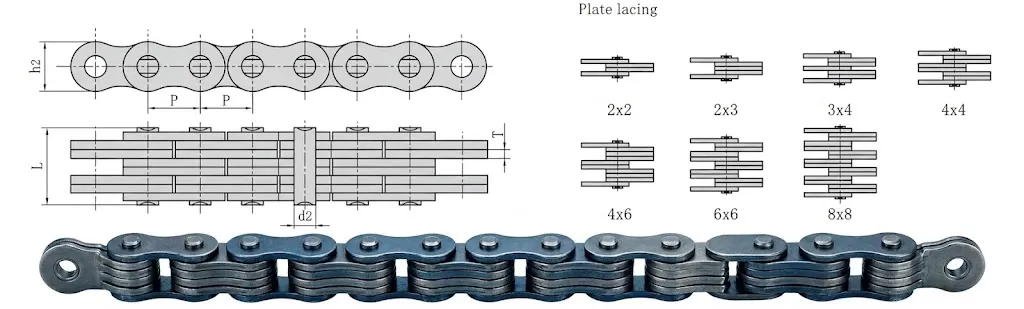
A leaf chain is purely a tension member. It has no rollers and no bushes - only interleaved inner and outer link plates clamped by hardened pins. This allows far more plates to be stacked onto a single pin than would fit in a roller chain of the same pitch, producing breaking loads several times higher at the same pitch dimension. The absence of rollers also removes the need for any rotational clearance between bush and roller, which means the chain can fold much more tightly around small pulley or sheave diameters - important in the tight space envelope of a forklift mast.
However, a leaf chain cannot transmit rotational power through a sprocket tooth engagement. It is always used over a plain cylindrical drum, a guide sheave, or a slotted anchor pin. The practical upshot is that leaf chains appear almost exclusively in linear hoisting and tensioning applications, never in rotating drive trains.
Leaf Chain Anatomy
Link Plates
Stamped alloy steel; multiple plates per link for load capacity
Pin
Through-hardened alloy; primary shear and bending member
Lacing Ratio
2x2, 3x3, 4x4, 6x6 etc; higher ratios give greater strength
Anchor Pin / Clevis
End fitting connecting chain to mast carriage or ram
BL Series Leaf Chain Specifications - EP-BL4 to EP-BL8
Standard: ANSI B29.8. All dimensions in mm. Minimum breaking load (MBL) is per chain strand at proof load. The BL number consists of pitch class and lacing designation (e.g. BL623 means 19.05 mm pitch, 2x3 lacing).
| EP Model | Pitch (mm) | Pin Dia. (mm) | Plate Width (mm) | Plate Thickness (mm) | Min. Breaking Load (kN) | Wt. (kg/m) |
|---|---|---|---|---|---|---|
| EP-BL422 | 12.70 | 4.45 | 7.92 | 1.52 | 11.1 | 0.27 |
| EP-BL434 | 12.70 | 4.45 | 7.92 | 1.52 | 20.0 | 0.41 |
| EP-BL444 | 12.70 | 4.45 | 7.92 | 1.52 | 24.5 | 0.47 |
| EP-BL446 | 12.70 | 4.45 | 7.92 | 1.52 | 28.9 | 0.54 |
| EP-BL522 | 15.875 | 5.08 | 9.53 | 1.93 | 17.8 | 0.40 |
| EP-BL534 | 15.875 | 5.08 | 9.53 | 1.93 | 31.1 | 0.62 |
| EP-BL544 | 15.875 | 5.08 | 9.53 | 1.93 | 37.8 | 0.72 |
| EP-BL546 | 15.875 | 5.08 | 9.53 | 1.93 | 44.5 | 0.82 |
| EP-BL622 | 19.050 | 5.94 | 12.07 | 2.42 | 26.7 | 0.58 |
| EP-BL623 | 19.050 | 5.94 | 12.07 | 2.42 | 33.4 | 0.69 |
| EP-BL634 | 19.050 | 5.94 | 12.07 | 2.42 | 44.5 | 0.88 |
| EP-BL644 | 19.050 | 5.94 | 12.07 | 2.42 | 53.4 | 1.04 |
| EP-BL646 | 19.050 | 5.94 | 12.07 | 2.42 | 62.3 | 1.20 |
| EP-BL666 | 19.050 | 5.94 | 12.07 | 2.42 | 80.1 | 1.50 |
| EP-BL688 | 19.050 | 5.94 | 12.07 | 2.42 | 106.8 | 2.00 |
| EP-BL822 | 25.400 | 7.92 | 15.88 | 3.18 | 44.5 | 0.96 |
| EP-BL834 | 25.400 | 7.92 | 15.88 | 3.18 | 75.6 | 1.48 |
| EP-BL844 | 25.400 | 7.92 | 15.88 | 3.18 | 89.0 | 1.75 |
| EP-BL846 | 25.400 | 7.92 | 15.88 | 3.18 | 107.0 | 2.05 |
| EP-BL866 | 25.400 | 7.92 | 15.88 | 3.18 | 138.0 | 2.58 |
| EP-BL888 | 25.400 | 7.92 | 15.88 | 3.18 | 178.0 | 3.28 |
LH Series Leaf Chain Specifications - EP-LH0822 to EP-LH2066
Standard: ISO 4347. LH designation uses pitch code and lacing configuration. LH0822 denotes 25.4 mm pitch (08 prefix), 2x2 lacing. LH2066 denotes 63.5 mm pitch (20 prefix), 6x6 lacing.
| EP Model | Pitch (mm) | Pin Dia. (mm) | Plate Width (mm) | Plate Thickness (mm) | Min. Breaking Load (kN) | Wt. (kg/m) |
|---|---|---|---|---|---|---|
| EP-LH0822 | 25.40 | 7.92 | 15.88 | 3.18 | 44.5 | 0.96 |
| EP-LH0834 | 25.40 | 7.92 | 15.88 | 3.18 | 75.6 | 1.48 |
| EP-LH0844 | 25.40 | 7.92 | 15.88 | 3.18 | 89.0 | 1.75 |
| EP-LH1022 | 31.75 | 9.53 | 19.05 | 4.00 | 66.7 | 1.55 |
| EP-LH1034 | 31.75 | 9.53 | 19.05 | 4.00 | 111.2 | 2.43 |
| EP-LH1044 | 31.75 | 9.53 | 19.05 | 4.00 | 133.4 | 2.88 |
| EP-LH1222 | 38.10 | 11.10 | 22.23 | 4.80 | 89.0 | 2.18 |
| EP-LH1234 | 38.10 | 11.10 | 22.23 | 4.80 | 150.0 | 3.43 |
| EP-LH1244 | 38.10 | 11.10 | 22.23 | 4.80 | 178.0 | 4.00 |
| EP-LH1634 | 50.80 | 14.27 | 28.58 | 6.35 | 267.0 | 6.67 |
| EP-LH1644 | 50.80 | 14.27 | 28.58 | 6.35 | 320.0 | 7.85 |
| EP-LH2034 | 63.50 | 19.05 | 36.45 | 7.94 | 480.0 | 11.80 |
| EP-LH2044 | 63.50 | 19.05 | 36.45 | 7.94 | 578.0 | 13.92 |
| EP-LH2066 | 63.50 | 19.05 | 36.45 | 7.94 | 800.0 | 18.80 |
BL vs LH Series - Comparison and Selection
| Criterion | EP-BL Series (ANSI B29.8) | EP-LH Series (ISO 4347) |
|---|---|---|
| Standard | ANSI B29.8 | ISO 4347 / FEM 4.004 |
| Primary markets | USA, Korea, Japan, SE Asia | Europe, UK, Australia, Middle East |
| Pitch range | 12.70 mm to 25.40 mm (BL4 - BL8) | 25.40 mm to 63.50 mm (LH08 - LH20) |
| Typical application | Light to medium forklifts, 1 to 5 tonne capacity | Medium to heavy forklifts, 3 to 20+ tonne |
| Lacing options | 2x2 through 8x8 | 2x2 through 6x6 |
| End fittings | Anchor pin, clevis, or tab-end; OEM matched on request | Anchor pin, clevis, or tab-end; OEM matched on request |
| OEM compatibility | Toyota, Komatsu, Mitsubishi, Doosan forklift specs | Linde, Jungheinrich, BT, Hyster/Yale specs |
Applications
Forklift Mast Assemblies
EP-BL and EP-LH chains are direct OEM-compatible replacements for forklift mast hoist chains on Toyota, Komatsu, Linde, Hyster, Yale, Mitsubishi, Doosan, BT, and Jungheinrich trucks from 0.5 tonne to 25 tonne. Both the free-lift and main hoist chain positions are covered. Chains are cut to the exact mast lift height and fitted with the appropriate anchor and clevis hardware.
Industrial Counterweight Systems
High-speed industrial vertical doors, machine tool quills, and press-bed counterbalance mechanisms use EP-LH1034 to EP-LH1644 chains running over steel sheaves. The chain must maintain dimensional stability under repeated tensile cycling without creep or measurable elongation. EP chains are tested to 10 million cycles at 30% of breaking load with no measurable joint play increase in pre-production type testing.
Hoist and Crane Reeving
EP-LH2034 to EP-LH2066 heavy leaf chains in the 63.5 mm pitch range are used in overhead crane hoist blocks, shipyard gantry chains, and mining cage suspension systems. Breaking loads over 800 kN on a single chain strand make these the highest-capacity tension components in the Korea Ever-Power range. Multi-strand reeving setups using two or four chains in parallel are standard for lift capacities above 30 tonnes.
Automotive Assembly Line Fixtures
Body-in-white carriers, powertrain assembly pallets, and precision vertical adjustment fixtures on automotive assembly lines use leaf chains because the high load capacity in a narrow section allows the fixture to carry vehicle body panels or engine blocks without the chain protruding beyond the fixture boundary. EP-BL644 and EP-BL646 are common in these applications.
Leaf Chain Inspection and Replacement Guidelines
Leaf chain failure in a forklift is a serious safety risk. The following guidelines reflect ISO 4347 and FEM 4.004 inspection requirements and should form the basis of a regular maintenance programme.
A
Check Chain Elongation
Measure 12 or 25 links at working tension. Replace when elongation exceeds 3% of nominal length. For BL622 at 19.05 mm pitch, 25 links nominal is 476.25 mm; replace at 490.5 mm or more.
B
Inspect for Cracked Plates
Clean the chain with a degreasing solvent and inspect every link plate for surface cracks, especially near the pin holes and at the waist of the plate. Any cracked plate is immediate cause for replacement regardless of elongation.
C
Check Pin Rotation
Mark pin ends and verify they have not rotated in the outer plates during operation. Pin rotation means the press fit has failed; the chain must be replaced immediately. Rotating pins generate rapid plate wear and can lead to sudden failure.
D
Lubricate at Every Service
Apply a chain lubricant with good penetration to the full chain length at every scheduled service - typically every 250 to 500 hours for forklifts operating in normal indoor environments. Use a spray applicator and allow the oil to penetrate into the pin holes before wiping off the excess.
Related Products - Chains and Matching Sprockets
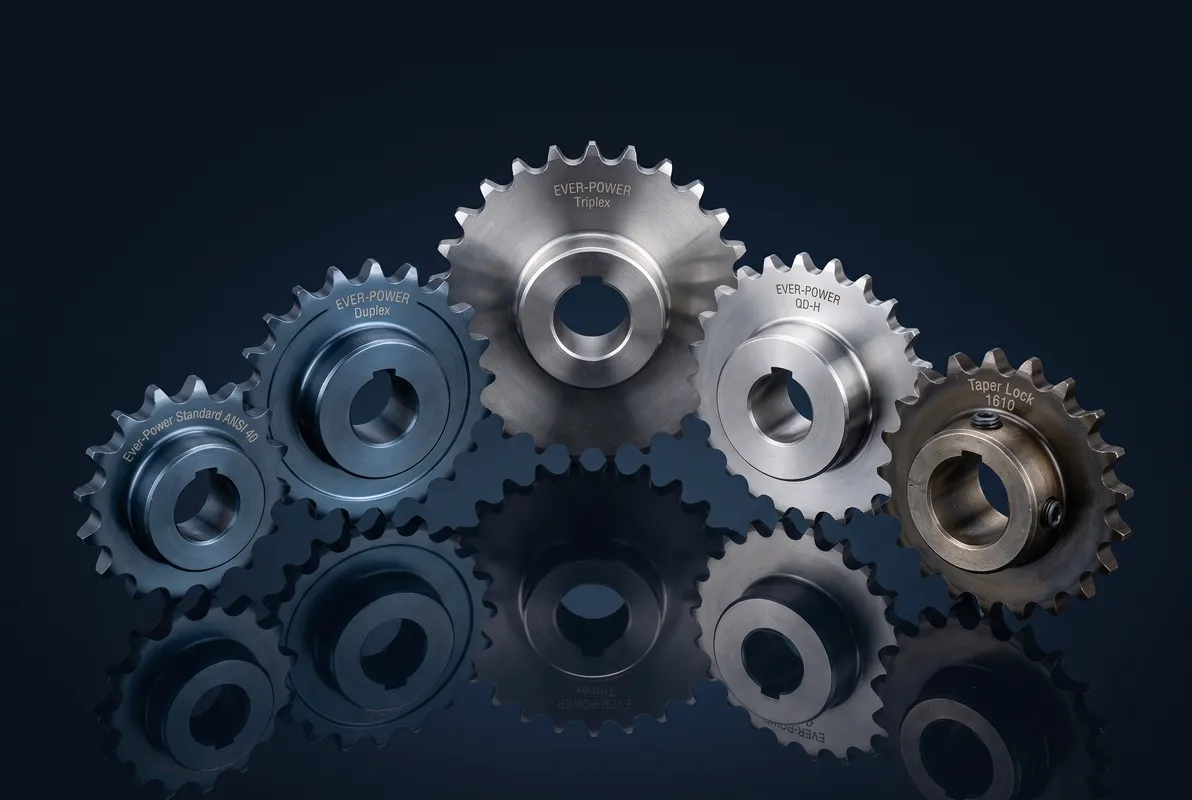
Every chain in the Korea Ever-Power range has a matching sprocket available. Sprockets are manufactured in C45 carbon steel, ductile iron, and case-hardened alloy steel to suit the tooth form geometry of each specific chain series. Using a matched EP sprocket alongside an EP chain guarantees correct pitch engagement, consistent tooth load distribution, and maximum chain service life.
The sprocket range covers simplex, duplex, and triplex tooth profiles for standard A and B series roller chains; agricultural tooth forms for CA, CC, and S series chains; ISO 1977 tooth profiles for M series conveyor chains; and custom tooth forms for WH series engineering chains. Bore machining, keyway, set screw, taper lock, and QD bushing hub designs are all available. Standard bore sizes ship within 5 working days; finished-bore and special-hub sprockets ship within 10 working days.
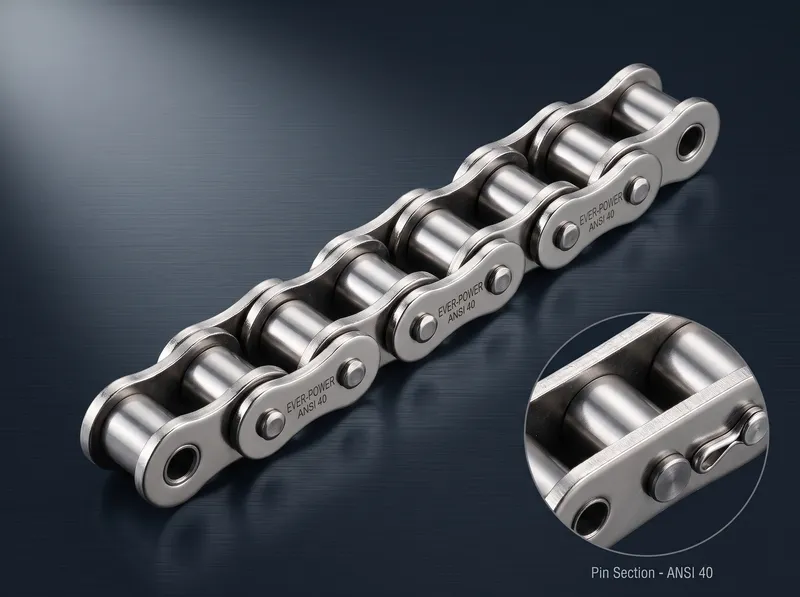
Driving Chains
A and B series short pitch precision roller chains for power transmission drives. Simplex to triplex, pitch 9.525 mm to 76.2 mm.
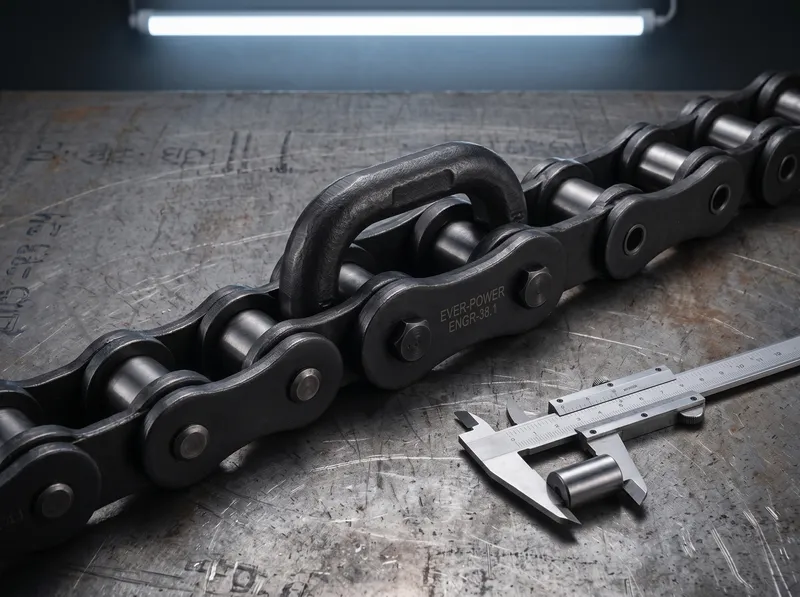
Engineering Chains
Welded steel, cast iron, and forged chains for cement, steel, mining, and chemical conveying. Heavy-duty pitch range up to 300 mm.
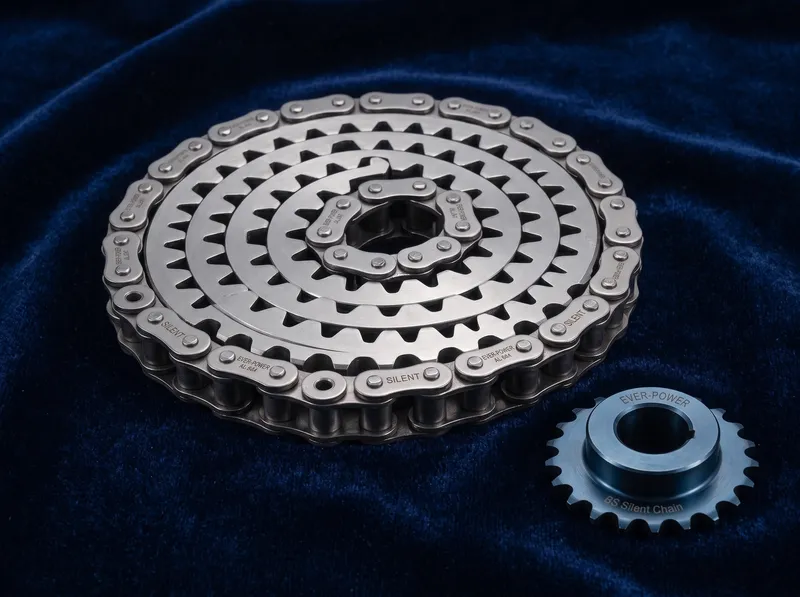
Stainless Steel Chains
SUS304 and SUS316L roller chains for food, pharmaceutical, and chemical environments requiring corrosion resistance or washdown.
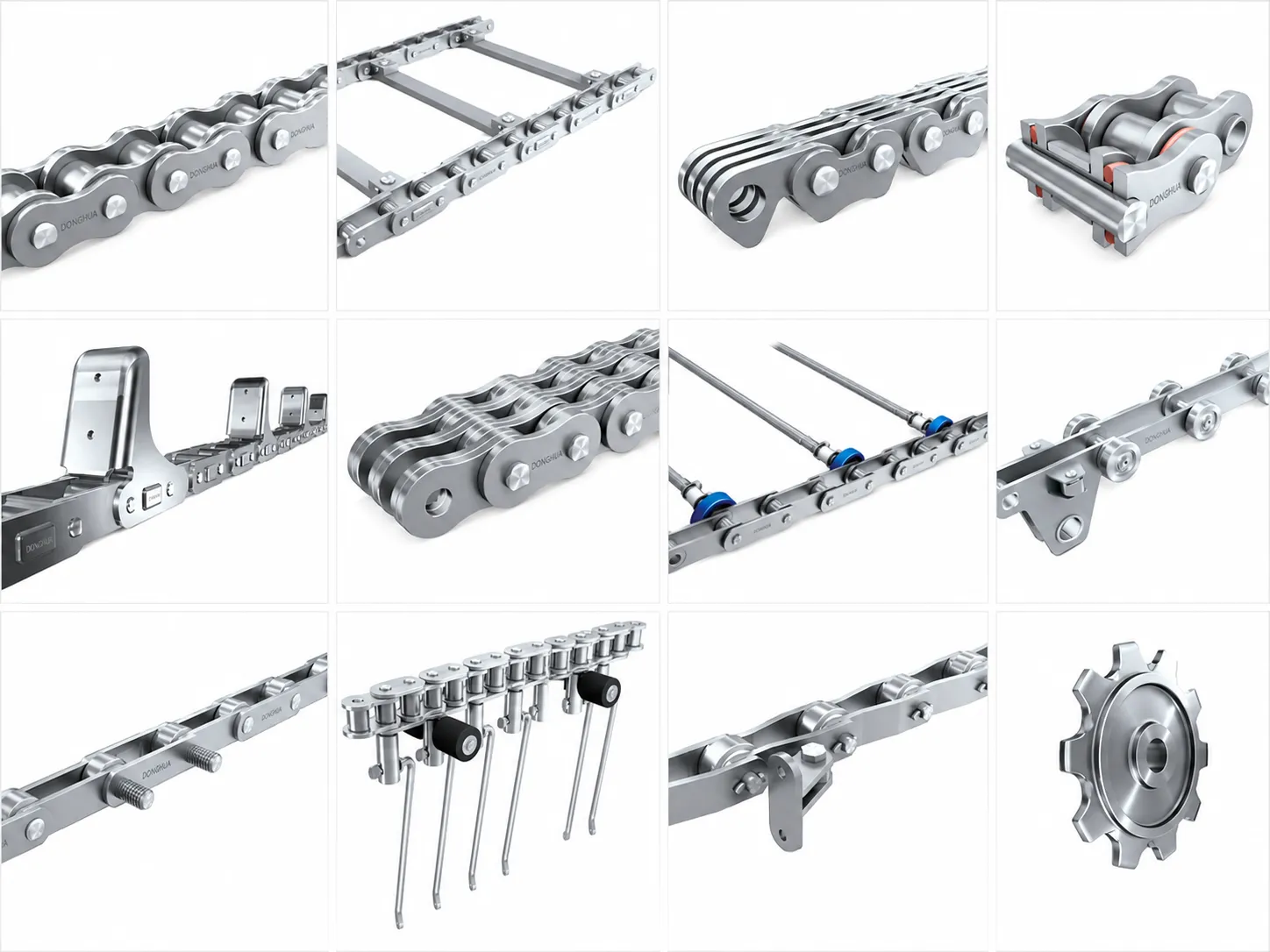
Conveyor Chains
Small and large pitch conveyor chains, double pitch, attachment chains, and industry-specific conveyor solutions for packaging, food, and manufacturing.
Frequently Asked Questions
What Our Customers Say
★★★★★
"We maintain a 120-truck Toyota and Linde fleet and switched to Korea Ever-Power EP-BL646 and EP-LH1034 chains three years ago. Elongation at the 6,000-hour mark averaged 1.8%, below our 3% threshold. We extended the replacement interval from 4,000 to 6,000 hours, which cut chain costs significantly."
P.W., Fleet Maintenance Manager
Australia - Logistics and Distribution
★★★★★
"Our vertical door counterweight system runs EP-LH1234 chains over 400 mm sheaves at 1,200 cycles per day. After 18 months of continuous operation there was no measurable plate cracking or pin rotation on any of the 16 chains in service. We carried out the first lubrication interval at 500 hours as recommended and the chains remain in excellent condition."
F.M., Maintenance Supervisor
Germany - Automotive Assembly Plant
★★★★★
"We ordered EP-BL622 chains cut to length with threaded anchor pin ends matched to our Hyster S7.0 specifications. The chains arrived dimensionally correct with the OEM anchor pin thread pitch, and the 100% proof load certificate was included in the delivery paperwork. No issues in 12 months of heavy port use."
C.A., Workshop Manager
South Korea - Container Port Operations
★★★★★
"The EP-LH2044 chains on our 20-tonne overhead crane reeving replaced chains from a European supplier at a significantly lower unit cost. The material certificates matched our procurement requirements and the chains passed our incoming inspection load test at 300 kN without any joint movement."
H.J., Chief Engineer
Netherlands - Heavy Steel Fabrication

Детали
| Editor | Cxm |
|---|