Engineering Chains
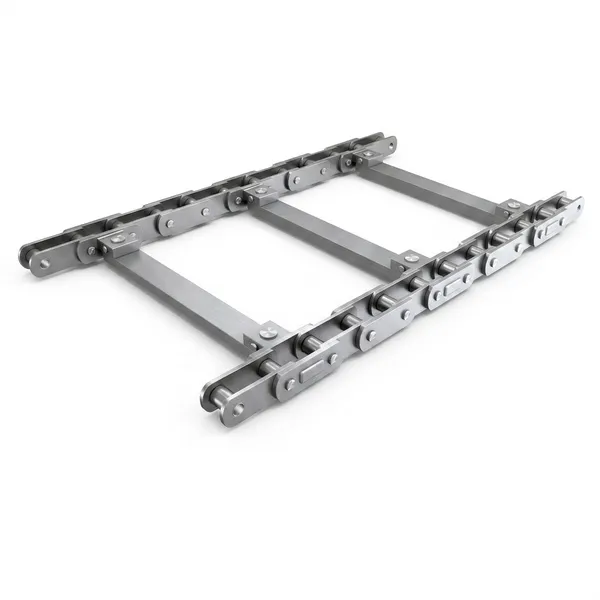
Welded steel conveyor chains, cast link chains, forged chains, bucket elevator chains, scraper chains, coal washing chains, bottle washer chains, and drag chains for cement, mining, steel, chemical, and heavy process industry applications. ISO 1977 heavy series and DIN 8167 standard dimensions.
Welded Steel
Cast / Forged
Up to 3,000 kN
Breaking Load
-40 to +700C
Operating Range
10+ Series
Elevator / Scraper / Drag
Engineering Chain - Product Overview
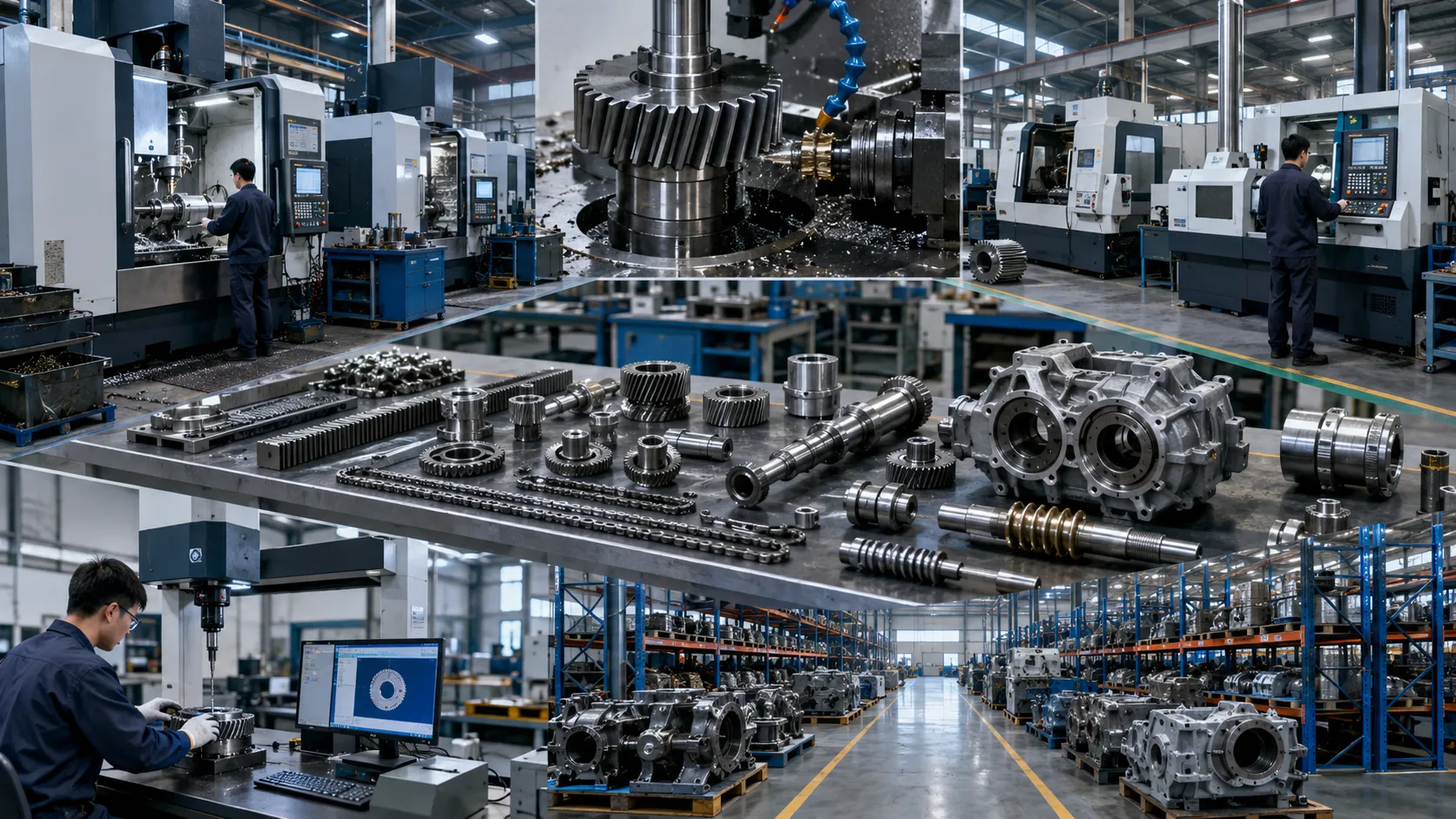
Korea Ever-Power engineering chains are purpose-designed for the most demanding conveying and elevating applications in heavy industry: cement kilns, blast furnace charge elevators, coal mine face and gate end conveyors, quarry apron feeders, steel works scrap charging, sugar mill mills elevator chains, bottle washing machine chains, paper pulp digesters, and chemical plant reactor feed conveyors. These chains differ fundamentally from the standard roller conveyor chains in the EP conveyor range - they use forged or cast components in place of stamped steel plates, welded or swaged construction instead of press-fit pin assembly, and alloy steel throughout rather than carbon steel.
The principal engineering chain families are: welded steel bushing chains (WH, WHX, WHD series) for bucket elevators and heavy conveying; cast link chains (P series, H class) for steel works and quarry drag conveyors; scraper conveyor chains (round-link, oval-link, and rectangular-link) for coal mine face conveyors; bottle washer chains for glass bottle cleaning machines; sugar mill chains for bagasse carrier conveyors; and lumber and log chains for sawmill log handling and timber sorting.
EP engineering chains are supplied in alloy steel with heat treatment specified to achieve the Brinell hardness required for the application - typically 250 to 350 HB for general heavy duty, 350 to 450 HB for abrasive service, and selected grades up to 550 HB for extreme abrasion resistance. Material certifications are provided with all engineering chain deliveries. Non-standard pitch, non-standard roller diameter, and custom attachment configurations are available with drawings and a minimum order quantity of one circuit length or 10 metres, whichever is greater.
Engineering Chain Series Summary
| Series / Type | Construction | Pitch Range | Max. Tensile | Primary Use |
|---|---|---|---|---|
| WH / WHX Bushing | Welded + pressed bushing | 100 to 305 mm | 1,600 kN | Bucket elevators, heavy conveyors |
| WHD Double Pitch | Welded, double pitch bushing | 130 to 260 mm | 800 kN | Agricultural elevators, seed processing |
| Cast Link (P Series) | Cast alloy steel links | 150 to 400 mm | 3,000 kN | Quarry drag conveyor, blast furnace |
| Round Link Scraper | Round bar, oval welded link | 86 to 152 mm | 1,200 kN | Coal mine face conveyor (AFC/BSL) |
| Bottle Washer Chain | Cast / stainless links | 100 to 125 mm | 200 kN | Glass bottle washing machines |
| Sugar Mill Chain | Cast or forged, flanged | 160 to 200 mm | 600 kN | Bagasse carrier conveyor, cane elevator |
| Drag Chain | Forged or welded, heavy duty | 200 to 500 mm | 2,000 kN | Steel scrap yard, slag handling |
| Timber / Log Chain | Forged, hook or lug links | 150 to 250 mm | 400 kN | Sawmill log decks, timber sorting |
WH Series Welded Steel Bushing Chains
WH series chains are the industry standard for bucket elevator and heavy bulk conveyor service. The link is formed from heavy-duty steel strip, bent to a figure-eight shape and welded at the seam. The bush is pressed into the barrel. These chains carry very high tensile loads at low speed and are rated primarily by minimum breaking load per the ISO 1977 heavy series classification.
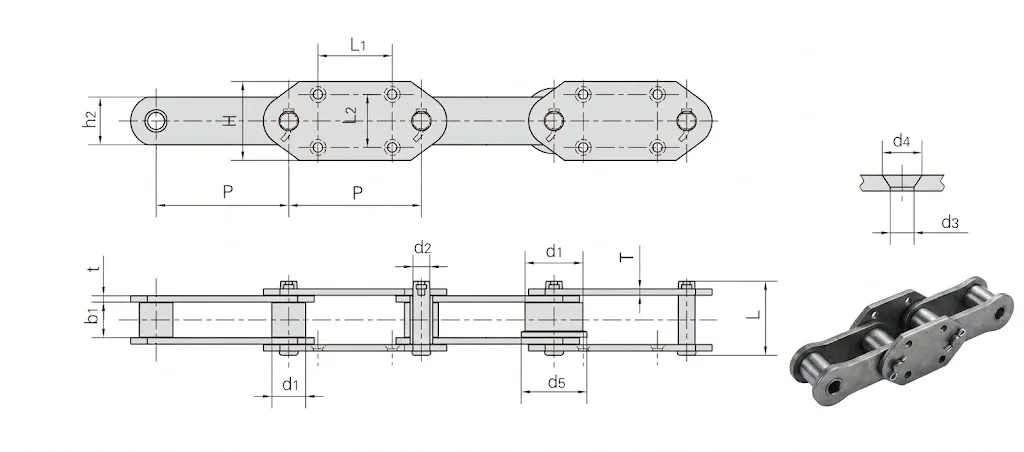
| EP Model | DIN / ISO Ref. | Pitch (mm) | Inner Width (mm) | Barrel Dia. (mm) | Min. Tensile (kN) | Wt. (kg/m) |
|---|---|---|---|---|---|---|
| EP-WH78 | WH78 | 100.00 | 36.0 | 38.0 | 245 | 9.8 |
| EP-WH82 | WH82 | 100.00 | 32.0 | 43.0 | 290 | 11.2 |
| EP-WH106 | WH106 | 130.18 | 45.0 | 48.0 | 450 | 16.0 |
| EP-WH110 | WH110 | 130.18 | 48.0 | 52.0 | 500 | 18.5 |
| EP-WH124 | WH124 | 152.40 | 51.0 | 60.0 | 630 | 22.0 |
| EP-WH132 | WH132 | 152.40 | 57.0 | 67.0 | 710 | 27.0 |
| EP-WH150 | WH150 | 200.00 | 64.0 | 76.0 | 900 | 38.0 |
| EP-WH176 | WH176 | 228.60 | 76.0 | 89.0 | 1,200 | 58.0 |
| EP-WH196 | WH196 | 260.35 | 89.0 | 100.0 | 1,600 | 78.0 |
Round Link Scraper Conveyor Chains
Round link chains for underground coal mine face conveyors (armoured face conveyors, AFC) and beam stage loaders (BSL). These chains are manufactured to DIN 22252 and BS 6396 standards and run in the channel section of the conveyor pan without sprocket engagement - they are pulled along by friction contact with the chain conveyor drive unit through scraper bars welded or clamped to the chain at intervals. The chain must therefore resist high tensile loads, be flexible in all planes, and resist abrasive contact with coal, rock, and steel pans.
| EP Model | Standard | Chain Size | Pitch (mm) | Bar Dia. (mm) | Min. Tensile (kN) | Wt. (kg/m) |
|---|---|---|---|---|---|---|
| EP-RL34x86 | DIN 22252 | 34x86 | 86 | 34 | 500 | 21.4 |
| EP-RL38x100 | DIN 22252 | 38x100 | 100 | 38 | 630 | 26.5 |
| EP-RL42x118 | DIN 22252 | 42x118 | 118 | 42 | 800 | 32.0 |
| EP-RL48x137 | DIN 22252 | 48x137 | 137 | 48 | 1,000 | 42.5 |
| EP-RL54x152 | DIN 22252 | 54x152 | 152 | 54 | 1,200 | 54.0 |
Specialty Engineering Chain Series
Cast Link Drag Chains (P Series)
Individual cast alloy steel links connected by pins or through-bolts, forming an extremely robust chain for quarry apron feeders, scrap yard drag conveyors, blast furnace charge elevator chains, and ore bin feeders. The cast link design tolerates impact from large rocks and scrap metal that would fracture conventional plate-and-pin chains. Available in high-chromium iron for abrasive wear resistance or manganese steel for impact resistance.
Pitch 150 mm to 400 mm. Breaking load up to 3,000 kN. Links can be supplied to customer drawings.
Bottle Washer Chains
Glass bottle washing machines use chain conveying systems that carry the bottles in pocket carriers through a series of pre-wash, wash, rinse, and final rinse tanks. The chains operate immersed in hot caustic washing solutions at 60 to 80 degrees C and must resist corrosion while carrying the load of filled bottle pockets. EP bottle washer chains are available in hardened steel with hot-dip galvanising for alkaline resistance, or in stainless steel for more demanding caustic concentrations.
Pitch 100 mm and 125 mm. Width configurations for standard Krones, KHS, Barry-Wehmiller, and SMF machine series.
Sugar Mill Chains
Sugar cane elevators and bagasse carrier conveyors use purpose-designed chains with flanged or fitted carrier bars that move cane stalks from the off-loading table to the cutting and milling equipment, and carry bagasse (spent cane fibre) from the mills to the boiler house. EP sugar mill chains follow the standard pitch and bearing dimensions used in Fulton, Fives Cail, and Fletcher-Smith mill designs. Cast manganese steel links for the most severely loaded positions.
Pitch 160 mm to 200 mm. Cast or forged construction. Carrier bar fixing holes drilled to pattern drawings.
Coal Washing Chains
Chains for heavy medium coal washing plants, including the drive chains for magnetite medium bath separators, fine coal spirals, and dense medium cyclone feed pumps. These chains operate immersed in magnetite medium and must resist abrasion from fine coal and magnetite particles while maintaining dimensional accuracy for sprocket engagement. Chrome-molybdenum alloy steel with through-hardening to 350 to 400 HB is standard.
Available in WH series pitch sizes. Can be supplied as replacement chains for existing plants with measured sample.
Timber and Log Handling Chains
Sawmill log deck chains, log sorting and grading conveyor chains, and debarker infeed chains. These chains must carry very high impact loads from logs being dropped or rolled onto the conveyor, and must resist wear from sand and grit embedded in log bark. EP log chains use forged steel links with integral hooks or cleats for log engagement. Log storage pond chain systems for floating log sorting are also available.
Pitch 150 mm to 250 mm. Working load rated per pair of chains to support maximum log diameter and density.
Steel Works Chains
Chains for blast furnace skip hoists, charging conveyors, coke oven pusher ram drives, and hot metal ladle transfer cars. Steel works chain applications are among the most demanding in engineering - high temperature from radiant heat, heavy impact, scale and slag contamination, and very long service life requirements between maintenance shutdowns. Heat-resistant alloy steel with ceramic or graphite dry lubrication is required above 400 degrees C.
P series cast links or WH series forged. Custom working load and pitch to plant specification drawing.
Applications
Cement Manufacturing
EP-WH124 to EP-WH176 bucket elevator chains for cement raw meal and clinker elevating to silo tops. WH series drag chains for kiln feed conveyors and clinker transport pans at temperatures above 400 degrees C. Cast link chains for reclaimer face conveyors in cement raw materials storage halls. EP can supply matched replacement chains to the standard dimensions used by FLSmidth, ThyssenKrupp Polysius, Gebr. Pfeiffer, and KHD cement plant equipment.
Coal Mining
EP round link scraper chains to DIN 22252 for underground armoured face conveyors (AFC) and beam stage loaders (BSL). Available in the standard sizes used by Caterpillar (Joy), Komatsu Mining (DBT), Eickhoff, and Chinese OEM manufacturers. Replacement chains can be supplied to a sample chain dimension check by EP engineers. Chain for surface preparation plants (washeries, preparation plants, and blending stockpiles) in WH and M series is also available.
Quarrying and Aggregates
EP cast link drag chains for quarry apron feeder conveyors that receive blasted rock directly from the primary crusher discharge. The cast manganese steel links absorb the impact of rocks up to 800 mm diameter and resist abrasion from silica-bearing aggregate. EP P-series chains are also used in aggregate crushing plant vibrating screen drive chains, raw material bucket elevators, and gravel washing plant conveyors where the chain must function in a continuously wet and abrasive environment.
Food and Beverage Industry
EP bottle washer chains for glass returnable bottle washing lines in major beverage plants. The chains carry the bottle pocket carriers through multi-stage washing and rinsing zones at elevated temperatures in caustic detergent solutions. Galvanised carbon steel chains for standard HDPE bottle pockets; stainless steel for premium lines where bottle quality demands cleaner washing solutions. EP also supplies sugar mill chains for cane handling and bagasse conveying in sugar manufacturing plants.
Related Products - Chains and Matching Sprockets
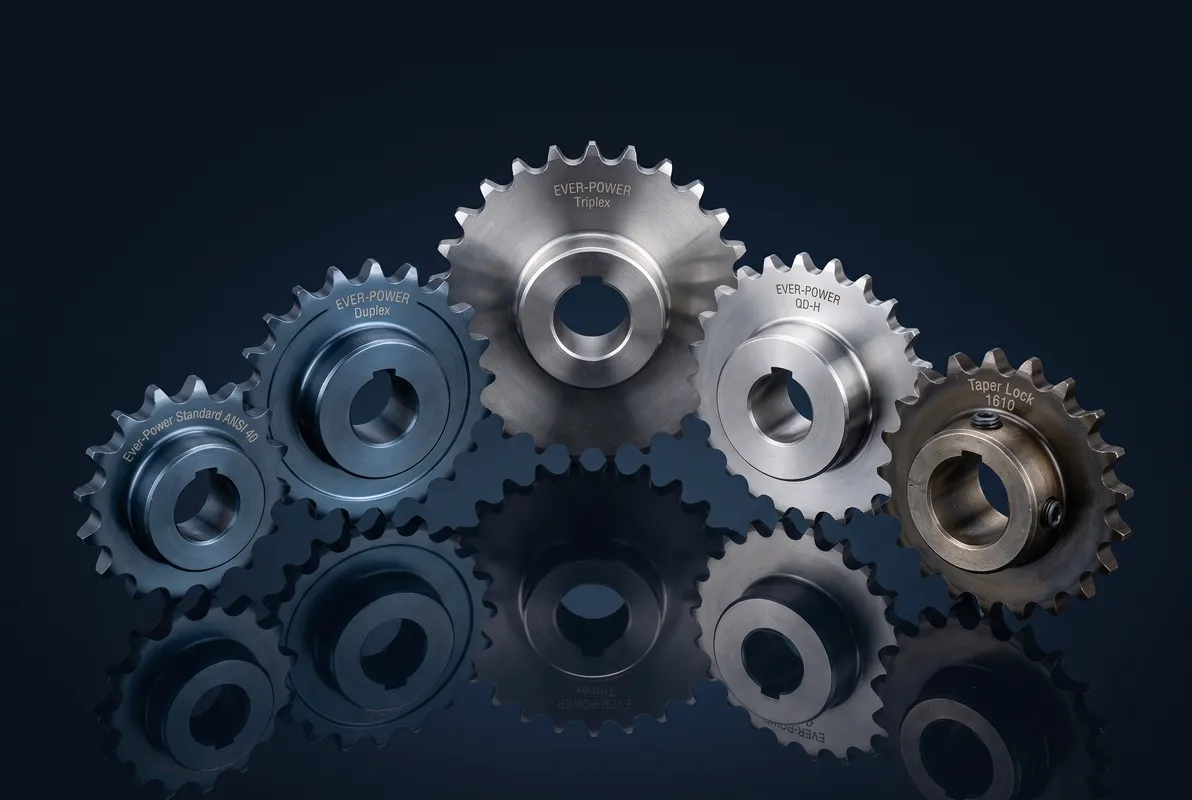
Every chain in the Korea Ever-Power range has a matching sprocket available through our partner site sprocket-chain.net. Sprockets are manufactured in C45 carbon steel, ductile iron, and case-hardened alloy steel to suit the tooth form geometry of each specific chain series. Using a matched EP sprocket alongside an EP chain guarantees correct pitch engagement, consistent tooth load distribution, and maximum chain service life.
The sprocket range covers simplex, duplex, and triplex tooth profiles for standard A and B series roller chains; agricultural tooth forms for CA, CC, and S series chains; ISO 1977 tooth profiles for M series conveyor chains; and custom tooth forms for WH series engineering chains. Bore machining, keyway, set screw, taper lock, and QD bushing hub designs are all available. Standard bore sizes ship within 5 working days; finished-bore and special-hub sprockets ship within 10 working days.
Driving Chains
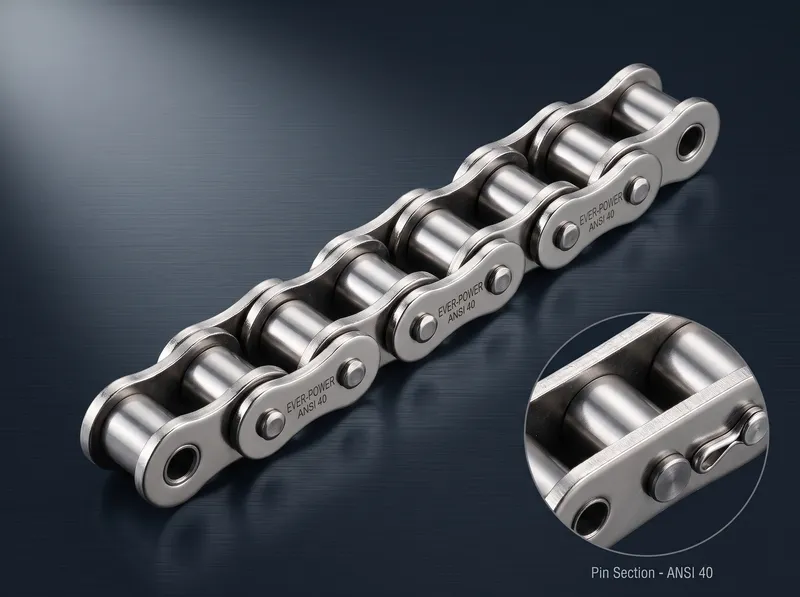
A and B series short pitch precision roller chains. Pitch 9.525 mm to 76.2 mm, simplex to triplex.
Leaf Chains
BL and LH hoisting chains for forklift masts and industrial hoists. Breaking loads to 1,600+ kN.
Conveyor Chains
C/M/HP/FV/MT series for assembly lines, food processing, packaging, and bulk material conveying.
Agricultural Chains
CA, CC, and S series for combine harvesters, balers, and crop handling machinery.
Frequently Asked Questions
What Our Customers Say
★★★★★
"We sent EP a sample of our clinker bucket elevator chain and received a dimensional drawing and quotation within 4 working days. The replacement WH132 chains matched our existing sprockets perfectly. After 26 months at 380 degrees C with monthly graphite lubrication, elongation is still below 1.5%. Previous chains from the OEM lasted 18 months before needing replacement."
M.A., Maintenance Manager
Egypt - Cement Plant, 3,000 tpd
★★★★★
"We fitted EP RL42x118 face conveyor chains to our longwall AFC. The DIN 22252 dimensions were verified before delivery and the master links functioned correctly on first installation. After two panel advances (approximately 650 metres of face advance), the chains showed 2.1% elongation and were replaced as planned. Chain quality was uniform across all 3 deliveries over the 18-month contract."
J.W., Underground Engineer
Poland - Coal Mine
★★★★★
"Our quarry crusher apron feeder was consuming cast link drag chains from the OEM at a rate of 2 replacements per year at very high cost. EP supplied P-series chains in 28% chrome iron casting for the outer links and manganese steel for the inner links. First replacement interval reached 22 months. The mixed metallurgy approach solved the simultaneous abrasion and impact problem that had defeated all-chrome-iron or all-manganese solutions."
F.B., Plant Manager
Australia - Granite Quarry
★★★★★
"Our glass bottle washing line uses chains that run through 68 degrees C caustic NaOH solution continuously. The previous hot-dip galvanised EP chains gave 3 years of service. We have now upgraded to stainless steel EP bottle washer chains and expect to reach 6 years before replacement. The stainless chains also meet our new food safety requirements without any additional certification steps."
P.K., Technical Manager
Netherlands - Beverage Bottling Plant

Lisätiedot
| Editor | Cxm |
|---|