Engineering Scope
Application Snapshot: Sprockets for reversing and frequent start-stop chain drives
Select and inspect reversing drives for load on both tooth flanks, repeated acceleration shock, backlash and slack movement, hub retention, tooth material, chain fatigue, and control of take-up. This article concentrates on reversing chain drive, start stop chain drive, both tooth flanks, shock load, chain backlash, and sprocket retention as field-verifiable decision inputs.
For sprockets for reversing and frequent start-stop chain drives, keep chain engagement, shaft mounting, operating duty, and maintainability in the same decision record; use the current drawing whenever an exact limit is model-specific.
Field Reference
- Chain/tooth interface
- Confirm reversing chain drive, start stop chain drive, and the mating chain dimensions before changing hardware.
- Shaft/hub interface
- Record both tooth flanks and mounting details that control concentricity, axial position, or load transfer.
- Operating duty
- Document speed, load, shock, starts/reversals, contamination, washdown, and maintenance access relevant to sprockets for reversing and frequent start-stop chain drives.
- Verification record
- For sprockets for reversing and frequent start-stop chain drives, keep measured values, nominal drawing values, wear observations, and the final replacement requirement distinct in the service record.
Decision Principle
Release sprockets for reversing and frequent start-stop chain drives from measured interfaces, not appearance.
For sprockets for reversing and frequent start-stop chain drives, check the chain interface, shaft connection, duty, and installed geometry as separate acceptance items, then reconcile them in the final specification.
Application Matrix
| Factor | What to verify | Release logic |
|---|---|---|
| Both tooth flanks become working surfaces | A one-direction sprocket can develop a dominant loaded-side pattern | Record both tooth flanks become working surfaces as a release check before installation or restart. |
| Start-stop duty raises transient load | Motor starts, indexing moves, emergency stops, jams, and direction changes can produce chain loads well above steady running values | Correct the system cause linked to start-stop duty raises transient load before fitting new hardware. |
| Slack changes sides during reversal | The tight and slack spans exchange roles, so take-up geometry, guides, and tensioners must work in both directions rather than only in the normal forward state | Accept slack changes sides during reversal when field evidence matches the controlled requirement. |
| Hub and key see repeated torque reversal | Back-and-forth torque can expose clearance, fretting, loose keys, or inadequate clamping sooner than steady one-direction duty | Reconstruct nominal hub and key see repeated torque reversal if wear has obscured the original geometry. |
| Low backlash requirements need controlled wear | Timing applications may be sensitive to chain elongation and tooth wear long before ultimate strength is threatened | Use the current supplier or machine limit for model-specific low backlash requirements need controlled wear. |
| Use measured machine data and the current chain/sprocket drawing for final acceptance; model-specific limits are not interchangeable. | ||
1. Both tooth flanks become working surfaces
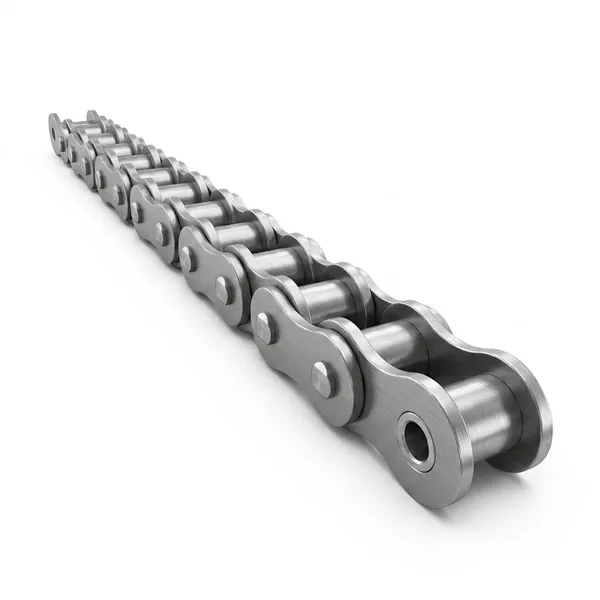
A one-direction sprocket can develop a dominant loaded-side pattern. Reversing changes which flank carries load, so both sides should have the intended profile and wear condition. Record the evidence for both tooth flanks become working surfaces beside the measured reversing chain drive. If both tooth flanks is size- or supplier-dependent, carry the drawing reference into the purchase record. For component context, review reversing drive sprockets when the linked product family is relevant to the same chain-drive interface.
Verification for sprockets for reversing and frequent start-stop chain drives: compare the field condition with nominal data and treat any difference that changes roller seating, shaft support, or service access as a release criterion.
2. Start-stop duty raises transient load
Motor starts, indexing moves, emergency stops, jams, and direction changes can produce chain loads well above steady running values. Use the drive manufacturer’s service-factor or dynamic rating method. Treat start-stop duty raises transient load as a pass/fail interface: document start stop chain drive, inspect the mating component, and use shock load to confirm the final operating fit.
Use the wear evidence to test start-stop duty raises transient load: asymmetric polishing, fretting, root impact, or chain climbing should lead to a measurable correction rather than a like-for-like replacement.
3. Slack changes sides during reversal
The tight and slack spans exchange roles, so take-up geometry, guides, and tensioners must work in both directions rather than only in the normal forward state. A useful field note for sprockets for reversing and frequent start-stop chain drives pairs both tooth flanks with chain backlash. That keeps the decision tied to the actual chain drive rather than a visual match. For component context, review industrial roller chain drives when the linked product family is relevant to the same chain-drive interface.
For procurement, express slack changes sides during reversal as verifiable data: chain standard, measured dimension, drawing reference, material condition, or operating requirement. Do not specify only ‘same as old.’
4. Hub and key see repeated torque reversal
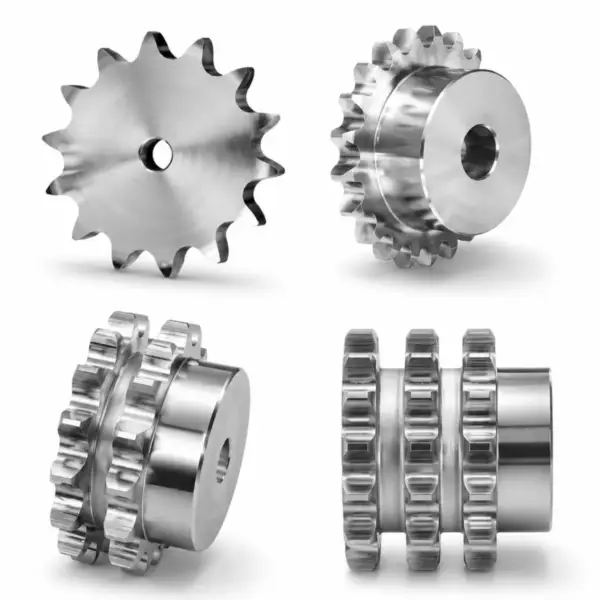
Back-and-forth torque can expose clearance, fretting, loose keys, or inadequate clamping sooner than steady one-direction duty. For sprockets for reversing and frequent start-stop chain drives, use shock load as the primary field reference and compare it with sprocket retention; resolve any disagreement before releasing the sprocket specification.
For commissioning, define how hub and key see repeated torque reversal will be checked after installation: chain seating, runout, shaft clearance, tooth-side contact, rpm, or loaded inspection as applicable.
5. Low backlash requirements need controlled wear
Timing applications may be sensitive to chain elongation and tooth wear long before ultimate strength is threatened. Condition-based replacement can be driven by positioning accuracy. The practical check for low backlash requirements need controlled wear is to connect the observed condition to chain backlash, then confirm that reversing chain drive does not introduce a second compatibility limit.
Verification for sprockets for reversing and frequent start-stop chain drives: compare the field condition with nominal data and treat any difference that changes roller seating, shaft support, or service access as a release criterion.
Application Review Sequence
- 1. Define the motion profile. Record start frequency, reversal frequency, acceleration/deceleration, peak torque, dwell, normal rpm, and emergency-stop behavior. If the observation changes shock load, stop and update the replacement specification before continuing.
- 2. Inspect both tooth flanks. Look for different wear patterns, pitting, polishing, or impact on forward and reverse working surfaces. Repeat or rotate the check when wear could bias chain backlash; the goal is nominal geometry, not one convenient reading.
- 3. Check chain slack in both directions. Observe how take-up and guides behave when torque reverses and ensure the chain cannot whip, disengage, or overload a tensioner. Photograph the setup when useful and identify the reference surfaces used to establish sprocket retention.
- 4. Inspect the shaft connection. Check key, bore, taper bushing, set screws, axial retention, and fretting for evidence of repeated micro-motion. If the observation changes reversing chain drive, stop and update the replacement specification before continuing.
- 5. Select material and tooth count. Use the chain maker's shock-duty selection method and compare standard versus hardened teeth, larger tooth count, or multiple strands as required. Repeat or rotate the check when wear could bias start stop chain drive; the goal is nominal geometry, not one convenient reading.
- 6. Commission representative cycles. Test forward, reverse, frequent starts, and controlled stops while watching chain tracking, backlash, noise, hub movement, and take-up response. Photograph the setup when useful and identify the reference surfaces used to establish both tooth flanks.
For sprockets for reversing and frequent start-stop chain drives, cross-check adjacent drive interfaces with power transmission components before releasing the installation or replacement record.
Specification Check
Avoid 01
Selecting from steady horsepower only. Document the corrective requirement specifically for sprockets for reversing and frequent start-stop chain drives before the part is released.
Avoid 02
Inspecting only one tooth flank on a reversing machine. Document the corrective requirement specifically for sprockets for reversing and frequent start-stop chain drives before the part is released.
Avoid 03
Using a one-direction tensioner layout when the slack span swaps sides. Document the corrective requirement specifically for sprockets for reversing and frequent start-stop chain drives before the part is released.
Avoid 04
Ignoring key fretting because the sprocket has not yet slipped visibly. Document the corrective requirement specifically for sprockets for reversing and frequent start-stop chain drives before the part is released.
Configuration cross-check: use this chain and sprocket drive selection only to compare common construction terminology for sprockets for reversing and frequent start-stop chain drives; release the part from the actual chain, shaft, and controlled drawing.
FAQ: Sprockets for reversing and frequent start-stop chain drives — practical engineering questions
How do I select a sprocket for a reversing chain drive?
Use the exact chain and ratio, then evaluate shock and acceleration, both working flanks, shaft and key reversal load, tooth count, material or hardening, slack control, and alignment.
Why do reversing sprockets wear on both sides of the teeth?
Torque changes direction, so the roller loads alternate tooth flanks. Unequal wear can reveal that one direction has higher load, more cycles, or worse alignment.
Do chain tensioners work the same in reversing drives?
Not always. Because tight and slack spans swap, a tensioner or guide may need a reversible arrangement. Use the machine or tensioner manufacturer's design guidance.
Does start-stop duty require hardened sprocket teeth?
It can justify hardening when repeated contact wear is limiting, but shock toughness, chain rating, lubrication, shaft connection, and alignment must also be checked.
Why does a sprocket key loosen on reversing equipment?
Repeated torque reversal can work clearance in the key and keyways, especially if fit or clamping is poor. Inspect for fretting, peening, and bore movement.
What should I record for a start-stop chain drive specification?
Record chain size, tooth counts, rpm range, start and reversal frequency, peak or design torque, shaft and key, take-up arrangement, environment, alignment, and positioning/backlash requirements.