इंजीनियरिंग कार्यक्षेत्र
Engineering Calculation Snapshot: Driven sprocket tooth count for speed reduction
Convert target input and output speed into a theoretical driven tooth count, then choose practical integers and verify the actual ratio, diameter, center distance, and chain capacity. This article concentrates on driven sprocket tooth count, speed reduction, input RPM, output RPM, driver sprocket, and gear ratio as field-verifiable decision inputs.
For driven sprocket tooth count for speed reduction, keep chain engagement, shaft mounting, operating duty, and maintainability in the same decision record; use the current drawing whenever an exact limit is model-specific.
क्षेत्र संदर्भ
- चेन/दांत इंटरफ़ेस
- Confirm driven sprocket tooth count, speed reduction, and the mating chain dimensions before changing hardware.
- शाफ्ट/हब इंटरफ़ेस
- Record input RPM and mounting details that control concentricity, axial position, or load transfer.
- परिचालन कर्तव्य
- Document speed, load, shock, starts/reversals, contamination, washdown, and maintenance access relevant to driven sprocket tooth count for speed reduction.
- सत्यापन रिकॉर्ड
- For driven sprocket tooth count for speed reduction, keep measured values, nominal drawing values, wear observations, and the final replacement requirement distinct in the service record.
निर्णय सिद्धांत
Release driven sprocket tooth count for speed reduction from measured interfaces, not appearance.
For driven sprocket tooth count for speed reduction, check the chain interface, shaft connection, duty, and installed geometry as separate acceptance items, then reconcile them in the final specification.
निर्णय तालिका
| कारक | क्या सत्यापित करना है | रिलीज लॉजिक |
|---|---|---|
| Start from the required speed relationship | For a simple chain drive, N2 = N1 x n1 / n2, where N1 is driver teeth, n1 input rpm, N2 driven teeth, and n2 target output rpm | Reconstruct nominal start from the required speed relationship if wear has obscured the original geometry. |
| Select the driver tooth count deliberately | The driver tooth count affects chordal action, chain articulation, chain rating, and physical diameter | Use the current supplier or machine limit for model-specific select the driver tooth count deliberately. |
| Round with process tolerance in mind | Driven teeth must be an integer | Record round with process tolerance in mind as a release check before installation or restart. |
| Watch the large-sprocket envelope | Large reductions can produce a driven sprocket too large for the machine or too close to the driver | Correct the system cause linked to watch the large-sprocket envelope before fitting new hardware. |
| Check chain length and take-up | Changing tooth counts changes pitch diameters and may change required chain length or take-up position | Accept check chain length and take-up when field evidence matches the controlled requirement. |
| अंतिम स्वीकृति के लिए मापे गए मशीन डेटा और वर्तमान चेन/स्पॉकेट ड्राइंग का उपयोग करें; मॉडल-विशिष्ट सीमाएं विनिमेय नहीं हैं। | ||
1. Start from the required speed relationship
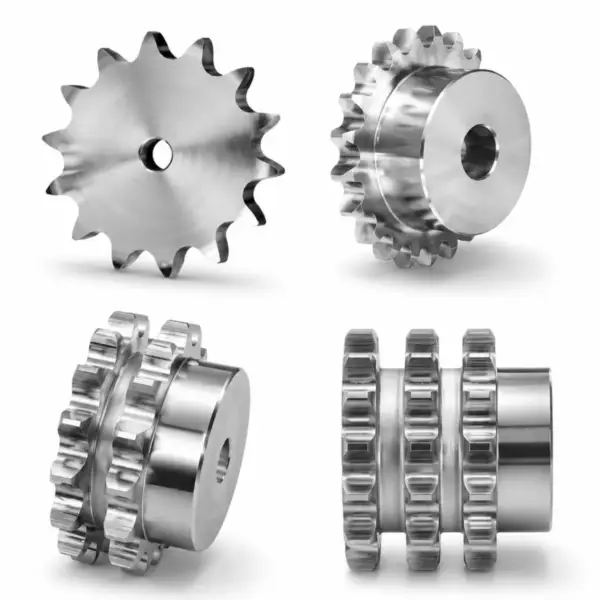
For a simple chain drive, N2 = N1 x n1 / n2, where N1 is driver teeth, n1 input rpm, N2 driven teeth, and n2 target output rpm. The practical check for start from the required speed relationship is to connect the observed condition to driven sprocket tooth count, then confirm that input RPM does not introduce a second compatibility limit. For component context, review industrial sprocket tooth counts जब संबंधित उत्पाद परिवार उसी चेन-ड्राइव इंटरफेस से संबंधित हो।
Verification for driven sprocket tooth count for speed reduction: compare the field condition with nominal data and treat any difference that changes roller seating, shaft support, or service access as a release criterion.
2. Select the driver tooth count deliberately
The driver tooth count affects chordal action, chain articulation, chain rating, and physical diameter. Do not choose it only because it makes the arithmetic convenient. Record the evidence for select the driver tooth count deliberately beside the measured speed reduction. If output RPM is size- or supplier-dependent, carry the drawing reference into the purchase record.
Use the wear evidence to test select the driver tooth count deliberately: asymmetric polishing, fretting, root impact, or chain climbing should lead to a measurable correction rather than a like-for-like replacement.
3. Round with process tolerance in mind
Driven teeth must be an integer. After rounding, calculate actual output speed and compare the error with the machine’s acceptable range. Treat round with process tolerance in mind as a pass/fail interface: document input RPM, inspect the mating component, and use driver sprocket to confirm the final operating fit. For component context, review roller chain drive ratios जब संबंधित उत्पाद परिवार उसी चेन-ड्राइव इंटरफेस से संबंधित हो।
For procurement, express round with process tolerance in mind as verifiable data: chain standard, measured dimension, drawing reference, material condition, or operating requirement. Do not specify only ‘same as old.’
4. Watch the large-sprocket envelope
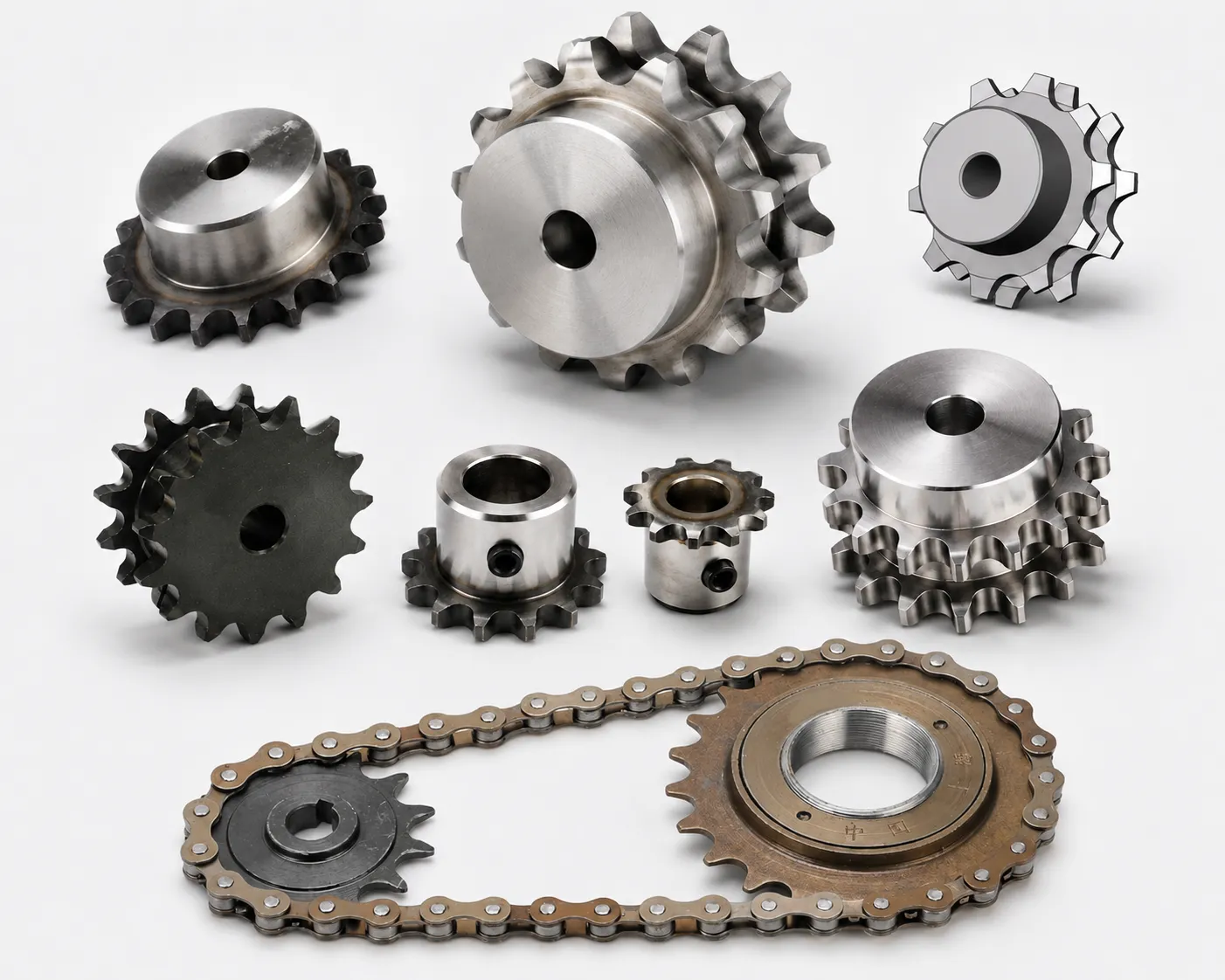
Large reductions can produce a driven sprocket too large for the machine or too close to the driver. Multiple stages may be better than forcing an extreme single-stage ratio. A useful field note for driven sprocket tooth count for speed reduction pairs output RPM with gear ratio. That keeps the decision tied to the actual chain drive rather than a visual match.
For commissioning, define how watch the large-sprocket envelope will be checked after installation: chain seating, runout, shaft clearance, tooth-side contact, rpm, or loaded inspection as applicable.
5. Check chain length and take-up
Changing tooth counts changes pitch diameters and may change required chain length or take-up position. A ratio calculation is incomplete until the physical drive is laid out. For driven sprocket tooth count for speed reduction, use driver sprocket as the primary field reference and compare it with driven sprocket tooth count; resolve any disagreement before releasing the sprocket specification.
Verification for driven sprocket tooth count for speed reduction: compare the field condition with nominal data and treat any difference that changes roller seating, shaft support, or service access as a release criterion.
गणना प्रक्रिया
Driven Tooth Count
N2 = N1 × n1 / n2
Example: an 18-tooth driver at 900 rpm targeting 300 rpm gives N2 = 54 teeth. If the target produces a fraction, select a practical integer and recalculate actual output speed.
- 1. Define target speeds. Record actual input rpm range and required output rpm range rather than a single nominal value if the machine varies speed. Photograph the setup when useful and identify the reference surfaces used to establish output RPM.
- 2. Choose candidate driver teeth. Use manufacturer selection guidance to choose a reasonable small sprocket for the chain, speed, and space. If the observation changes driver sprocket, stop and update the replacement specification before continuing.
- 3. Calculate theoretical driven teeth. Apply N2=N1 x n1/n2 for the target operating point. Repeat or rotate the check when wear could bias gear ratio; the goal is nominal geometry, not one convenient reading.
- 4. Select integer teeth. Round to practical tooth counts and calculate the actual reduction ratio and output speed for each candidate. Photograph the setup when useful and identify the reference surfaces used to establish driven sprocket tooth count.
- 5. Compare physical candidates. Check pitch diameter, outside diameter, center distance, chain wrap, guard clearance, and available shaft bore for the candidates. If the observation changes speed reduction, stop and update the replacement specification before continuing.
- 6. Confirm chain capacity. Use the selected tooth counts and chain speed in the chain maker's rating method before finalizing the sprocket pair. Repeat or rotate the check when wear could bias input RPM; the goal is nominal geometry, not one convenient reading.
For driven sprocket tooth count for speed reduction, cross-check adjacent drive interfaces with विद्युत संचरण घटक स्थापना या प्रतिस्थापन रिकॉर्ड जारी करने से पहले।
सत्यापन जाँच
01 से बचें
Choosing a huge driven sprocket without checking guard clearance. Document the corrective requirement specifically for driven sprocket tooth count for speed reduction before the part is released.
02 से बचें
Reducing the driver tooth count below manufacturer guidance just to make the ratio fit. Document the corrective requirement specifically for driven sprocket tooth count for speed reduction before the part is released.
03 से बचें
Ignoring variable input rpm when calculating one nominal output. Document the corrective requirement specifically for driven sprocket tooth count for speed reduction before the part is released.
04 से बचें
Changing tooth count on a replacement and unintentionally changing machine speed. Document the corrective requirement specifically for driven sprocket tooth count for speed reduction before the part is released.
कॉन्फ़िगरेशन क्रॉस-चेक: इस का उपयोग करें chain drive ratio selection only to compare common construction terminology for driven sprocket tooth count for speed reduction; release the part from the actual chain, shaft, and controlled drawing.
FAQ: Driven sprocket tooth count for speed reduction — practical engineering questions
How do I calculate driven sprocket teeth for a required RPM?
Use N2=N1 x input rpm / target output rpm. Then choose an integer N2 and recalculate the actual output speed.
What happens if the calculated sprocket tooth count is not a whole number?
Evaluate nearby integer tooth counts. Compare the resulting output-speed error and physical diameter, or change the driver tooth count so a better ratio is available.
Can I get a large speed reduction with one chain drive stage?
Sometimes, but a very large driven sprocket or very small driver can create space, articulation, wrap, and capacity problems. A multi-stage reduction may be more practical.
Does changing sprocket tooth count change chain length?
It can. Different pitch diameters change the geometry between fixed shaft centers, so the required number of chain pitches and take-up position should be recalculated.
How many teeth should the small sprocket have?
Use the chain manufacturer's guidance for the specific speed and duty. General engineering guidance favors more teeth for smoother engagement; do not choose an unusually small driver without a rating check.
What should I verify after choosing driven sprocket teeth?
Verify actual ratio and output rpm, pitch and outside diameters, center distance, chain length, chain wrap, chain rating, bore and hub capacity, and guard clearance.