Lančanici sa konusnim otvorom prema evropskom standardu | Konusno zaključavanje DIN 8187 ISO R606
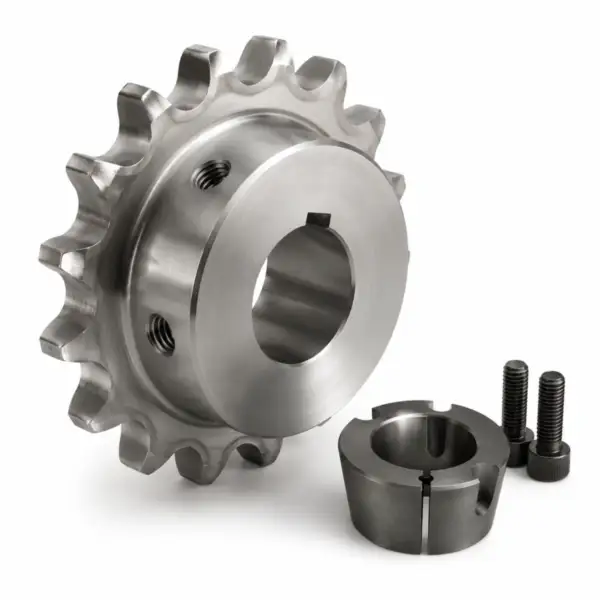
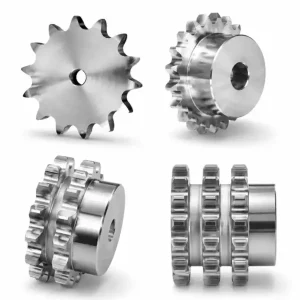
Evropski standardni lančanici sa konusnim otvorom prema DIN 8187 / ISO R606. Veličine lanca od 06B do 24B, simplex do triplex. Kompatibilno sa serijama konusnih zaključavajućih čahura od 1008 do 5050. Čelik i liveno gvožđe C45.
06B – 24B
Raspon veličina lanca
1008 – 5050
Raspon konusnih grmova
TS / TD / TT
Jednostruko / Dvostruko / Trostruko
ISO 9001
Certificirani kvalitet
Lančanici s konusnim provrtom – Pregled proizvoda
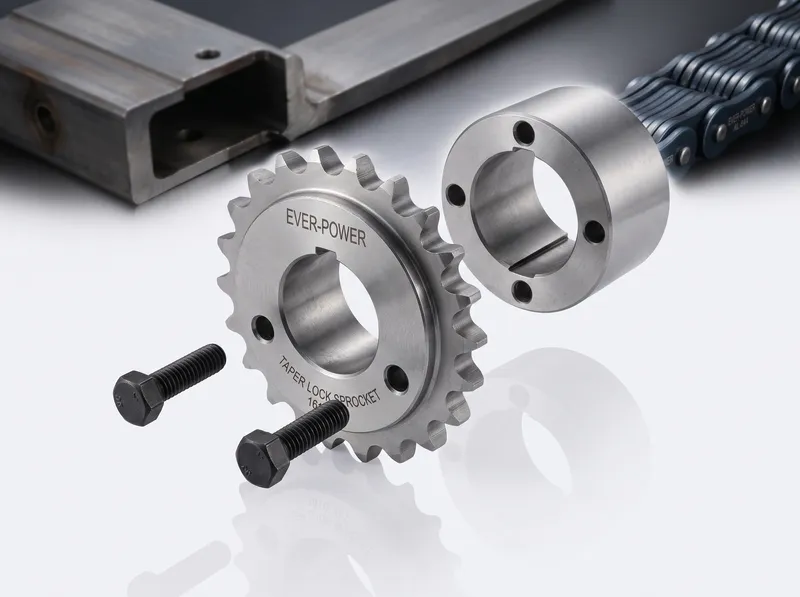
Zupčanici s konusnim otvorom marke Korea Ever-Power prema DIN 8187 / ISO R606 isporučuju se prethodno obrađeni kako bi prihvatili standardnu seriju konusnih čahura za zaključavanje - 1008 do 5050 - koje pokrivaju promjere osovina od 12 mm do približno 125 mm, ovisno o veličini čahure. Konusni otvor zamjenjuje konvencionalni raspored otvora s ključem i zateznog vijka precizno brušenim unutarnjim konusom koji se spaja s vanjskim konusom čahure za zaključavanje s dvostrukim konusom. Kada se vijci glave čahure zategnu, konus stvara veliko kompresivno stezno opterećenje na osovini bez potrebe za ključem za rotacijski pogon - sam frikcioni prihvat je dovoljan za sva nazivna opterećenja pogona.
Najvažnija praktična prednost lančanika s konusnim otvorom je uklanjanje bez oštećenja osovine. Otpuštanjem vijaka s glavom i njihovim ponovnim umetanjem u otvore za izbacivanje na čahuri, čahura se oslobađa konusa lančanika - lančanik i čahura se čisto odvajaju od osovine za nekoliko sekundi bez potrebe za čekićem, izvlakačem ili zagrijavanjem. Ovo je ključna razlika u odnosu na otvor s paralelnim klinom, gdje uklanjanje lančanika bez izvlakača rizikuje oštećenje osovine i ležaja, a gdje čekićanje po lančaniku može uzrokovati udarna opterećenja u susjednom ležaju. Za bilo koji pogon gdje se lančanici moraju mijenjati više od jednom godišnje, vrijeme i alati ušteđeni montažom konusnog otvora opravdavaju dodatne početne troškove.
Lančanici s konusnim provrtom proizvode se u tri konfiguracije glavčine: TS (simpleks/jednostruki lanac) za pogone s jednim lancem, TD (dupleks/dvostruki lanac) za dvolančane lančane pogone i TT (tripleks/trostruki lanac) za trostruke pogone. Otvor glavčine za sve tri konfiguracije je isti za datu veličinu lanca i broj zuba - razlika je u ukupnoj širini glavčine, koja se povećava sa svakim dodatnim lancem. Pregledajte kompletan raspon zupčanika za druge konfiguracije montaže.
Materijali: standardna klasa je ugljični čelik C45 s indukcijski kaljenim bokovima zuba. Dostupne su varijante od lijevanog željeza (G22) za abrazivne okoline gdje mazivo grafit smanjuje trošenje zuba - pogledajte naše asortiman zupčanika od lijevanog željeza Za detalje. Čahure za konusno zaključavanje nisu uključene — zasebno navedite šifru čahure i prečnik osovine. Uparite sa odgovarajućim Evropski standardni valjkasti lanac prema DIN 8187 za kompletan fabrički paket direktnog pogona.
🔧 Kada je konusni otvor pravi izbor
- Lančanici se mijenjaju u planiranim intervalima održavanja
- Pogon se nalazi u ograničenom prostoru gdje kraj vratila nije dostupan
- Za obrnuti rad ili udarno opterećenje potreban je pozitivan prihvat osovine
- U istoj konstrukciji pogona koriste se više veličina osovina
- Lančanik se mora ukloniti bez oštećenja susjednih ležajeva
- Troškovi prekida proizvodnje opravdavaju brže održavanje
Vodič za veličine konusne čahure - Raspon osovina po kodu čahure
Kod konusne čahure određuje raspon promjera osovine koji može prihvatiti. Lančanik se mora naručiti s odgovarajućim konusnim otvorom za vaš kod čahure. Uvijek navedite i veličinu lanca i potrebnu čahuru prilikom naručivanja.
| Bushov kod | Raspon osovine (mm) | Tipični zavrtanj s glavom | Tipična primjena |
|---|---|---|---|
| 1008 | 12 – 28 mm | M8 | Mali transporteri, mašine za pakovanje, laki poljoprivredni pogoni. Lančanici 06B–08B. |
| 1210 | 12 – 32 mm | M8 | Opšti laki do srednji industrijski transporter. Lančanici 06B–10B, manji broj zubaca. |
| 1610 | 14 – 42 mm | M10 | Najčešća veličina za industrijske pogone 08B–12B. Standardni asortiman za poljoprivredne mašine. |
| 2012 | 19 – 50 mm | M12 | Srednje teški industrijski transporter. Veći broj zubaca 10B–16B. Pogoni liftova i ventilatora. |
| 2517 | 25 – 65 mm | M16 | Teška industrija. 12B–20B pogoni. Pogoni rudarskih transportera, teških pumpi i kompresora. |
| 3020 | 35 – 75 mm | M20 | Veoma teška industrija. Veliki lančanici 16B–24B. Kamenolom, cementara i teška postrojenja. |
| 3535 | 40 – 90 mm | M20 | Teška-teška industrijska oprema. 16B–24B veliki broj zubaca, pogoni za velika opterećenja. |
| 4040 | 50 – 100 mm | M24 | Veoma teška postrojenja. Veliki pogoni 20B–24B. Pogoni za rudarstvo, jaružanje i teške brodove. |
| 5050 | 60 – 125 mm | M30 | Maksimalna veličina grma. Pogoni 24B i veći. Čeličana, teški transporter za kamenolome. |
Konusne čahure se prodaju zasebno — nisu uključene u paket lančanika. Uvijek navedite: (1) veličinu lanca, (2) broj zubaca, (3) tip lanca TS/TD/TT, (4) šifru čahure, (5) prečnik osovine. Šifra čahure mora biti kompatibilna s otvorom glavčine lančanika — pogledajte tabele specifikacija ispod.
Ključ kolone: Z = broj zuba | de = prečnik vrha (mm) | dp = prečnik kruga koraka (mm) | D = spoljni prečnik glavčine (mm) | H = širina glavčine (mm) | za čahuru = potreban kod čahure | Tip = tip profila glavčine (1–8, pogledajte crteže u katalogu) | TS = simpleks | TD = dupleks | TT = tripleks | * = kotači sa velikim pločama zuba
Specifikacije lančanika sa konusnim otvorom
Materijal: Ugljični čelik C45 kao standard. *Lijevo željezo G22 dostupno — sufiks -CI prilikom naručivanja. Konusne čahure za zaključavanje prodaju se zasebno.
06B-1-2-3 | Razmak 9,525 mm | Valjak Ø 6,35 mm | Unutrašnja širina 5,72 mm
| Ž | de (mm) | dp (mm) | TS (Simplex) — D / H / Bush | TD (Duplex) — D / H / Bush | TT (Triplex) — D / H / Bush | ||||||
|---|---|---|---|---|---|---|---|---|---|---|---|
| 17 | 55.3 | 51.83 | 45 | 22 | 1008 | 41 | 22 | 1008 | — | 25.6 | 1008 |
| 21 | 68.0 | 63.91 | 46 | 22 | 1008 | 49 | 22 | 1008 | — | 25.6 | 1008 |
| 25 | 80.0 | 76.02 | 63 | 25 | 1210 | 64 | 25 | 1210 | — | 25.6 | 1210 |
| 30 | 94.7 | 91.12 | 63 | 25 | 1210 | 75 | 25 | 1210 | 79 | 38 | 1615 |
08B-1-2-3 | Razmak 12,70 mm | Valjak Ø 8,51 mm | Unutrašnja širina 7,75 mm
| Ž | de (mm) | dp (mm) | TS — D / H / Bush | TD — D / H / Bush | TT — D / H / Bush | ||||||
|---|---|---|---|---|---|---|---|---|---|---|---|
| 17 | 73.6 | 69.11 | 60 | 25 | 1210 | 56 | 25 | 1210 | — | 34.9 | 1210 |
| 19 | 81.7 | 77.16 | 63 | 25 | 1210 | 62 | 25 | 1210 | — | 34.9 | 1210 |
| 25 | 105.8 | 101.33 | 76 | 25 | 1610 | 87 | 32 | 2012 | — | 34.9 | 2012 |
| 38 | 158.6 | 153.80 | 90 | 32 | 2012 | 100 | 32 | 2012 | — | 34.9 | 2012 |
10B-1-2-3 | Razmak 15,875 mm | Valjak Ø 10,16 mm | Unutrašnja širina 9,65 mm
| Ž | de (mm) | dp (mm) | TS — D / H / Bush | TD — D / H / Bush | TT — D / H / Bush | ||||||
|---|---|---|---|---|---|---|---|---|---|---|---|
| 17 | 93.0 | 86.39 | 71 | 25 | 1610 | — | 25.5 | 1610 | — | 42.1 | 1210 |
| 19 | 103.3 | 96.45 | 75 | 25 | 1610 | — | 25.5 | 1610 | — | 42.1 | 1615 |
| 25 | 134.0 | 126.66 | 90 | 32 | 2012 | 90 | 32 | 2012 | 105 | 45 | 2517 |
| 38 | 199.2 | 192.24 | 100 | 32 | 2012 | — | — | — | — | — | — |
16B-1-2-3 | Razmak 25,40 mm | Valjak Ø 15,88 mm | Unutrašnja širina 17,02 mm
| Ž | de (mm) | dp (mm) | TS — D / H / Bush | TD — D / H / Bush | TT — D / H / Bush | ||||||
|---|---|---|---|---|---|---|---|---|---|---|---|
| 17 | 149.0 | 138.22 | 90 | 32 | 2012 | — | 47.7 | 2517 | — | 79.6 | 2517 |
| 21 | 181.2 | 170.43 | 110 | 45 | 2517 | 140 | 51 | 3020 | — | 79.6 | 3030 |
| 25 | 213.5 | 202.66 | 110 | 45 | 2517 | 140 | 51 | 3020 | 175 | 89 | 3535 |
| 38 | 320.7 | 307.59 | 140 | 51 | 3020 | 140 | 76 | 3030 | 175 | 89 | 3535 |
Stolovi 12B i 20B/24B dostupni su na zahtjev. Puni asortiman: Z=17 do Z=114 za 06B–16B, ovisno o kompatibilnosti s čahurama; veći broj zubaca prikazan kao * u katalogu su varijante s pločastim kotačima. Svi brojevi zubaca od Z=13 nadalje dostupni - kontaktirajte nas sa svojim specifikacijama.

Aplikacije
Transporteri i procesni pogoni koji zahtijevaju puno održavanja
Svaki pogon gdje se lančanici mijenjaju u redovnim intervalima – kamenolom, cementara, agregat, prerada hrane – značajno štedi troškove rada s konusnim otvorom u odnosu na otvor s paralelnim klinom. Jedna zamjena lančanika, koja je ranije zahtijevala izvlakač, pregled osovine na oštećenja i ponovnu obradu novog otvora, može se smanjiti na 20 minuta rada s imbus ključem. Kod više pozicija lančanika po mašini u velikom postrojenju, ušteda vremena održavanja je značajna tokom cijele godine.
Pogoni za preokretanje i primjene pri udarnim opterećenjima
Prihvat konusne čahure pri cikličnom preokretanju opterećenja je superiorniji od paralelnog otvora s jednim zateznim vijkom iz nekoliko razloga: konus stvara koncentričnu kompresijsku silu oko cijelog opsega osovine, a ne tačkasto opterećenje od zateznog vijka, a samoblokirajući kut konusa osigurava da se čahura ne može pomaknuti pod preokretnim momentom. Za lančane pogone drobilica, pogone balirki i bilo koju primjenu sa značajnim udarnim opterećenjem, konusni otvor je preferirana metoda montaže. Pogledajte našu kompletnu kategorija lančanika za sve dostupne tipove.
OEM dizajni s više veličina osovina
Proizvođači mašina koji koriste isti lančanik u porodici proizvoda s različitim opcijama veličina osovine mogu imati jednu veličinu lančanika i isporučivati različite šifre čahura za svaku veličinu osovine. Ovo smanjuje zalihe lančanika sa pet različitih izbušenih dijelova na jedan lančanik s konusnim provrtom plus pet čahura. Sastavljanje je brže na proizvodnoj liniji, a troškovi zaliha su niži. Šifre čahura od 1210 do 2012 pokrivaju većinu veličina osovina koje se koriste u evropskim industrijskim mašinama (12–50 mm).

Odgovarajući lanac i srodni proizvodi
Pogonski lanci
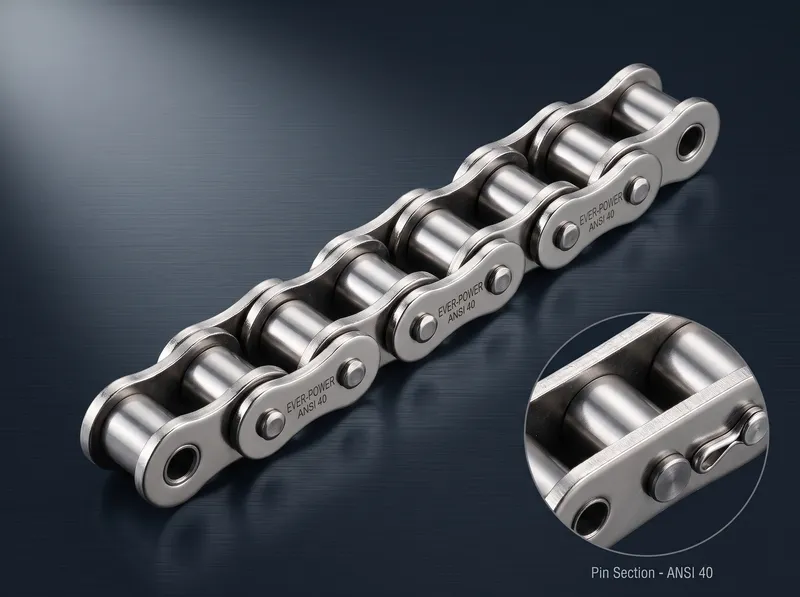
Precizni valjkasti lanci s kratkim korakom serije A i B za prijenos snage. Korak od 9,525 mm do 76,2 mm, simpleks do tripleks.
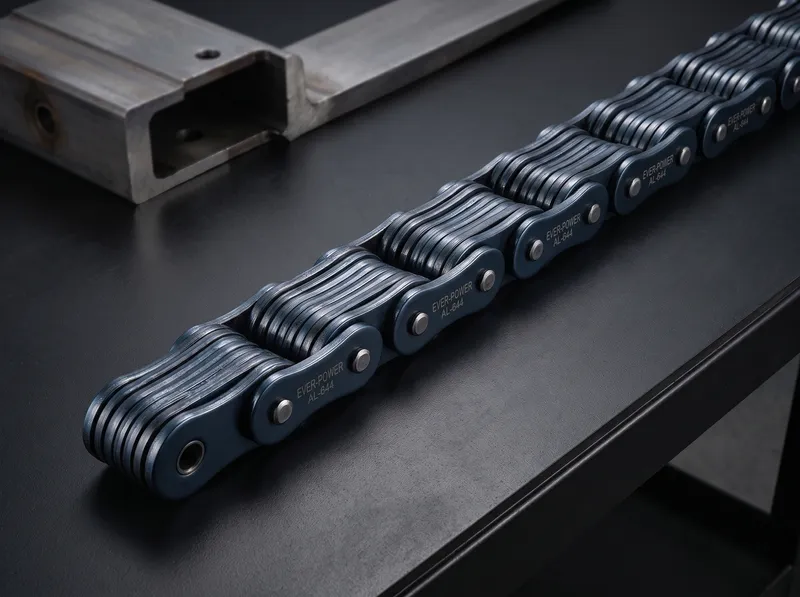
Lanci od lišća
Lanci za podizanje serije BL i LH za jarbole viljuškara i industrijske mehanizme za podizanje. Prekidna opterećenja od 11 kN do 1.600+ kN.
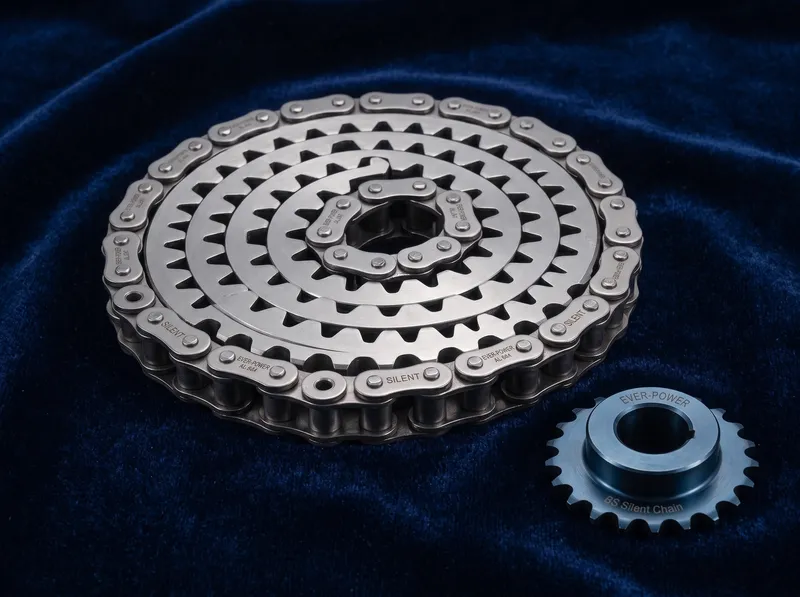
Lanci od nehrđajućeg čelika
Valjkasti lanci SUS304 i SUS316L za okruženja s ispiranjem u prehrambenoj, farmaceutskoj i hemijskoj industriji.
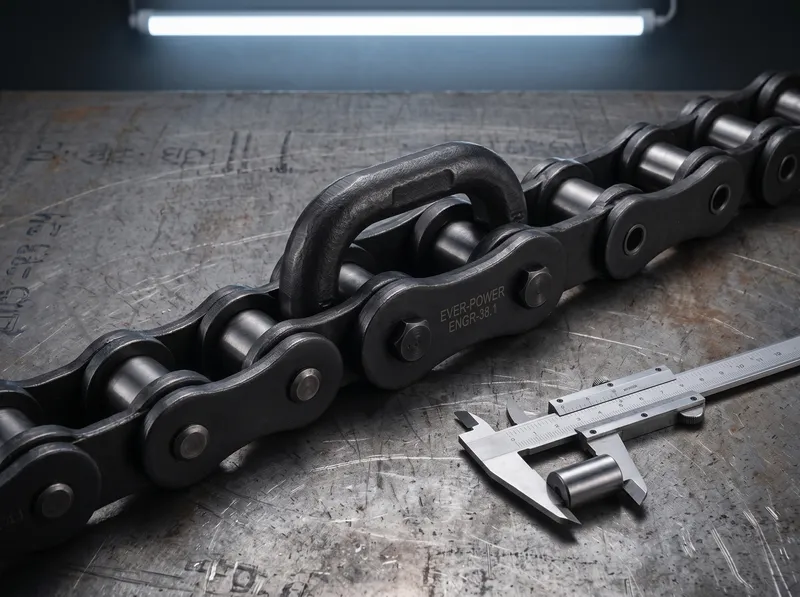
Inženjerski lanci
Zavareni čelični, liveni i kovani lanci za transport teškog tereta u cementnim, čeličnim, rudnim i hemijskim postrojenjima.
Često postavljana pitanja
Šta kažu naši kupci
★★★★★
"Upravljamo postrojenjem za drobljenje krečnjaka sa 22 pozicije za lančani pogon. Ranije nam je bio potreban inženjer za održavanje sa kompletnim setom izvlakača i pristupom tokarilici za zamjenu lančanika - obično pola dana po poziciji. Nadogradili smo sve pozicije na lančanike sa konusnim otvorom Korea Ever-Power tokom dva zastoja. Zamjena lančanika sada traje jednoj osobi 25 minuta. Povrat ulaganja je bio manji od 8 mjeseci."
AP, Direktor postrojenja
Ujedinjeno Kraljevstvo – Kamenolom krečnjaka
★★★★★
"Proizvodimo kombajne sa glavnim lančanim pogonom 12B-1. Standardizirali smo Korea Ever-Power 1610 lančanike sa konusnim provrtom na pozicijama hedera, vršidbe i elevatora. Naši serviseri širom svijeta sada mogu zamijeniti bilo koji pogonski lančanik bez specijalizovanog alata. Čahura 1610 u rasponu od 25-38 mm pokriva svaku osovinu u našem pogonskom sistemu."
MW, direktor servisnog inženjeringa
Njemačka – OEM poljoprivrednih mašina
★★★★★
"Održavamo pogone reverzibilnih transportera na lučkom terminalu - veliko udarno opterećenje pri reverziranju. Lančanici s klinastim provrtom su se olabavili u roku od 3 mjeseca na pozicijama s najvećim opterećenjem. Lančanici s konusnim provrtom Korea Ever-Power 2012 na istim pogonima su u upotrebi 14 mjeseci bez ikakvih znakova trenja ili pomicanja. Konusni hvat drži mnogo bolje pri reverziranju nego provrt s navojnim vijakom."
CV, Inženjer za održavanje terminala
Holandija – Lučki teretni terminal

Dodatne informacije
| Urednik | Cxm |
|---|
Povezani proizvodi
-
Dvostruki lančanici za dva jednostruka lanca azijskog standarda
-
Azijski standardni lančanici s dvostrukim korakom
-
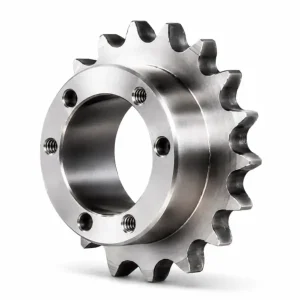
Lapčanici sa QD čahurama prema američkom standardu
-
Dvostruki lančanici za dva pojedinačna lanca, američki standard
-
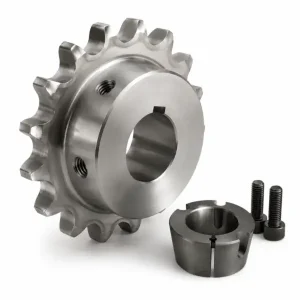
Američki standard lančanika s konusnim provrtom
-
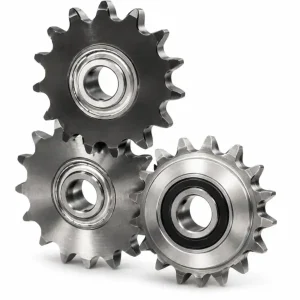
Zatezni lančanici s kugličnim ležajevima prema evropskom standardu | Slobodnorotirajući zatezni lančanici DIN 8187
-
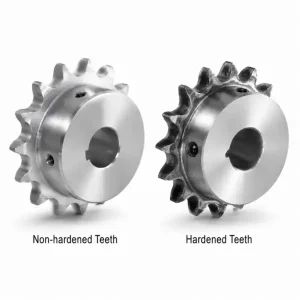
Lančanici sa gotovim otvorom, evropski standard | Prethodno izbušeni DIN 8187, spremni za ugradnju
-
Evropski standardni lančanici i pločasti kotači | Simplex Duplex Triplex DIN 8187