Ball Bearing Idler Sprockets European Standard | Free-Running Tensioner Sprockets DIN 8187
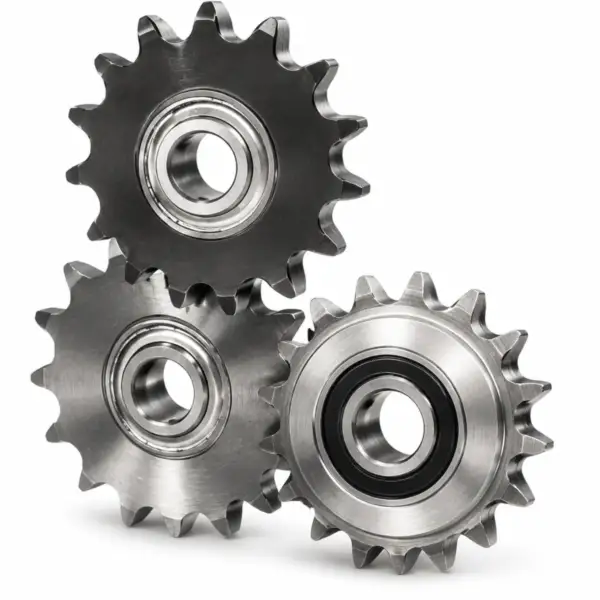
Pre-assembled ball bearing idler sprockets to DIN 8187 / ISO R606. Sealed bearing, free-running on fixed pin. Chain sizes 5mm pitch to 31.75mm pitch. For chain tensioning, slack-strand support and chain guide applications. Korea Ever-Power factory-direct.
9 Sizes
Pitch Range Available
Sealed 2RS
Bearing Type
Ø16–25 mm
Pin Bore Range
ISO 9001
Certified Quality
Ball Bearing Idler Sprockets – Product Overview
Ball bearing idler sprockets are non-driven chain sprockets that rotate freely on a fixed pin or shaft. Unlike drive sprockets — which are keyed or bushed to a rotating shaft — idler sprockets have a sealed deep-groove ball bearing pressed into the hub bore, allowing the sprocket to spin freely around a stationary mounting pin. This makes them the correct component for chain tensioning, slack-strand support and chain direction-change applications where no power transmission through the sprocket is required.
Korea Ever-Power idler sprockets are supplied as a complete ready-to-mount assembly — the ball bearing is already pressed into the sprocket hub and pre-packed with lithium grease. The 2RS double-lip rubber seal on both faces of the bearing prevents ingress of chain oil, dust and moisture into the bearing race, making the assembly suitable for use in dusty agricultural and industrial environments without any additional lubrication or sealing work at installation. Every assembly is test-spun before despatch to confirm free rotation and correct bearing seating.
The tooth profile of every idler sprocket conforms to DIN 8187 / ISO R606 — full compatibility with any European standard roller chain of the matching pitch. The idler engages the chain in the same geometry as a drive sprocket, distributing the contact load correctly across the tooth root radius and avoiding the accelerated wear that results from mismatched tooth profiles on tensioner sprockets.
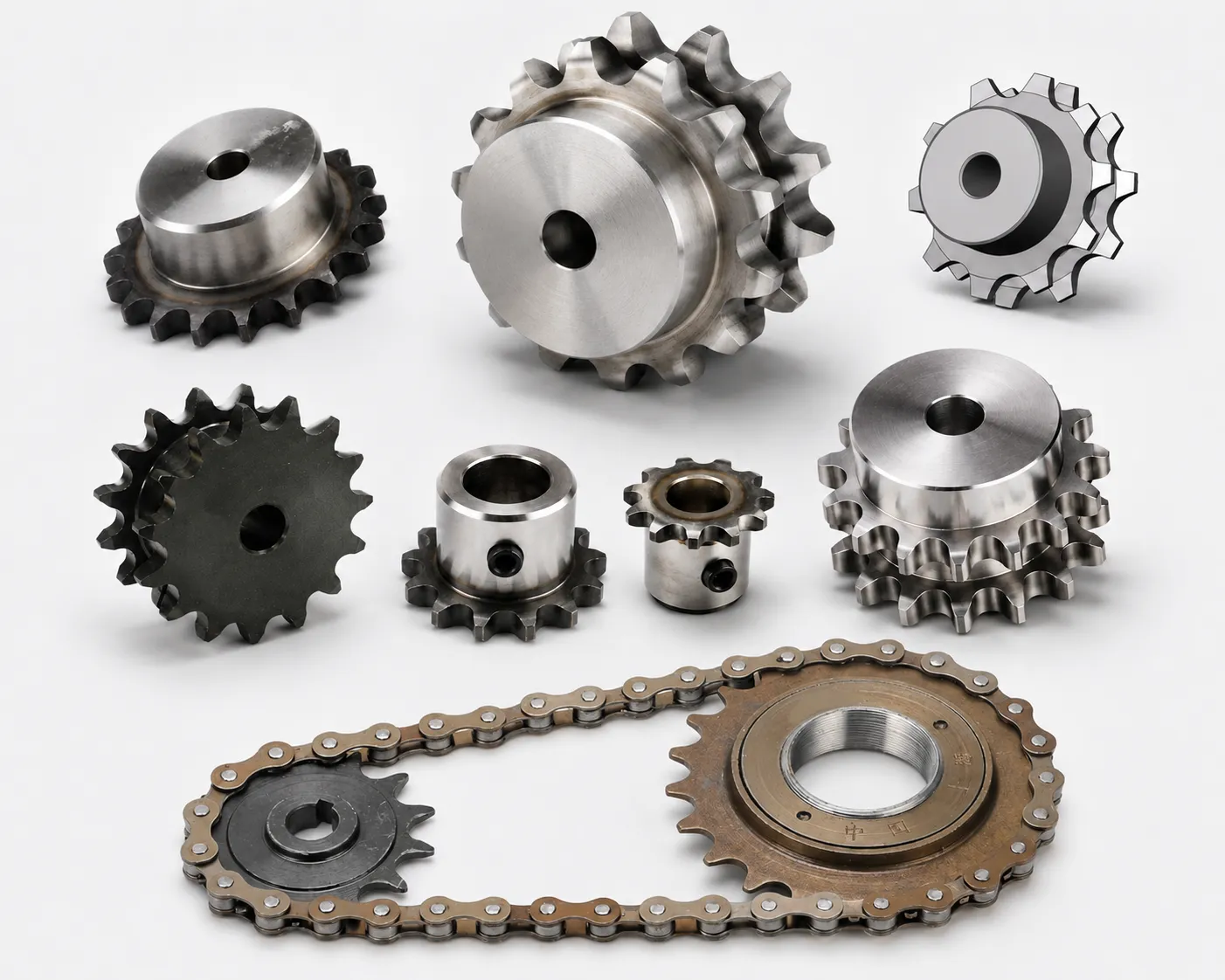
Also available in this series: disassembling hubs for platewheels — solid-disc flanged hubs with a central bore and bolt flange, used to build custom platewheel idler assemblies for flat-top and attachment chain. Hub sizes dm=30 mm to dm=160 mm. See the full sprocket category for all available types and configurations.
📍 Where idler sprockets are used
- Tensioner sprocket — maintains chain tension on the slack strand to prevent chain jump
- Take-up sprocket — adjustable idler on a sliding carriage for chain elongation compensation
- Guide sprocket — changes chain direction around an obstacle without a driven shaft
- Anti-sag support — prevents long chain spans from drooping under their own weight
Idler Sprocket vs Drive Sprocket — Key Differences
Using the wrong sprocket type in a tensioner position is a common installation error. An idler sprocket is not simply a "spare" drive sprocket — the two are designed differently for fundamentally different load conditions.
| Feature | Ball Bearing Idler | Standard Drive Sprocket |
|---|---|---|
| Mounting | Fixed pin — sprocket rotates around stationary pin | Rotating shaft — sprocket turns with shaft |
| Bearing | Deep-groove ball bearing 2RS, pre-packed, sealed | No bearing — bore takes key and setscrew |
| Power transmitted | None — guides and tensions chain only | Full rated chain drive power |
| Lubrication required | None — sealed bearing maintenance-free | Chain lubrication as normal |
| Replacement trigger | Bearing noise, rough rotation or tooth wear | Tooth wear or pitch circle elongation |
| Can drive sprocket replace idler? | ❌ No — a drive sprocket on a fixed pin has no bearing and will seize immediately | |
Column key: Z = tooth count | Pitch = chain pitch (in") × inner width (in") | de = tip diameter (mm) | dp = pitch circle diameter (mm) | A = tooth width (mm) | D1 = bore for pin/shaft (mm) | F = bearing flange OD (mm) | B = assembly width (mm) | H = bearing seat depth (mm)
Ball Bearing Idler Sprocket Specifications
All assemblies supplied complete with 2RS sealed ball bearing pre-installed. DIN 8187 / ISO R606 tooth profile. Pin bore D1 = bore for stationary mounting pin.
| Z | Chain Pitch | ISO Chain | de (mm) | dp (mm) | A (mm) | D1 Pin Bore (mm) | F (mm) | B (mm) | H (mm) |
|---|---|---|---|---|---|---|---|---|---|
| Light-pitch idlers — 5 mm to 9.525 mm pitch | |||||||||
| 23 | 3/8″ × 7/32″ | — | 62.15 | 58.75 | 2.8 | 16 | 40 | 12 | 18.3 |
| 21 | 3/8″ × 7/32″ | 06B-1 | 68.0 | 63.90 | 5.3 | 16 | 40 | 12 | 18.3 |
| 08B / 1/2″ pitch idlers — 12.70 mm pitch | |||||||||
| 16 | 1/2″ × 5/16″ | 08B-1 | 69.5 | 65.10 | 7.2 | 16 | 40 | 12 | 18.3 |
| 18 | 1/2″ × 5/16″ | 08B-1 | 77.8 | 73.14 | 7.2 | 16 | 40 | 12 | 18.3 |
| 10B / 5/8″ pitch idlers — 15.875 mm pitch | |||||||||
| 14 | 5/8″ × 3/8″ | 10B-1 | 78.0 | 71.34 | 9.1 | 16 | 40 | 12 | 18.3 |
| 17 | 5/8″ × 3/8″ | 10B-1 | 93.0 | 86.39 | 9.1 | 16 | 40 | 12 | 18.3 |
| 12B / 3/4″ pitch idlers — 19.05 mm pitch | |||||||||
| 13 | 3/4″ × 7/16″ | 12B-1 | 87.5 | 79.59 | 11.1 | 16 | 40 | 12 | 18.3 |
| 15 | 3/4″ × 7/16″ | 12B-1 | 99.8 | 91.63 | 11.1 | 16 | 40 | 12 | 18.3 |
| 16B / 1″ pitch idlers — 25.40 mm pitch | |||||||||
| 12 | 1″ × 17.02 mm | 16B-1 | 109.0 | 98.14 | 16.2 | 20 | 47 | 14 | 17.7 |
| 20B / 1¼″ pitch idlers — 31.75 mm pitch | |||||||||
| 13 | 1¼″ × 3/4″ | 20B-1 | 147.8 | 132.65 | 18.5 | 25 | 52 | 15 | 21.0 |
All assemblies include 2RS sealed bearing pre-installed and pre-packed with lithium grease. Pin bore D1 tolerance: H7. Non-catalogue tooth counts and custom pin bores available — contact us with specification.
Applications
Agricultural Machinery Tensioners
Combine harvester, baler and header chain tensioning is among the most demanding idler applications — the chain experiences cyclic tension variation as the threshing drum loads and unloads. Ball bearing idler sprockets on spring-loaded pivot arms absorb this tension variation while maintaining minimum chain sag. The 10B-1 and 12B-1 idlers (Z=14–17) are most commonly specified in combine and baler drives.
Conveyor Take-Up Systems
Gravity or screw take-up units on industrial conveyors use idler sprockets on a sliding carriage to compensate for chain elongation. As the chain wears and elongates, the carriage moves to maintain tension. Ball bearing idler sprockets are essential here — a plain bore sprocket on a fixed pin would seize without lubrication. See the full sprocket range for drive sprockets to pair with these idlers.
Packaging & Food Processing Lines
High-speed packaging machine chain drives use idler sprockets to maintain chain tension at constant speed — the 06B-1 and 08B-1 idlers at Z=16–21 are the typical specification. The sealed 2RS bearing requires no regreasing during normal service life, which is important in food plant environments where lubricant contamination of product must be prevented.

Matching Chain & Related Products
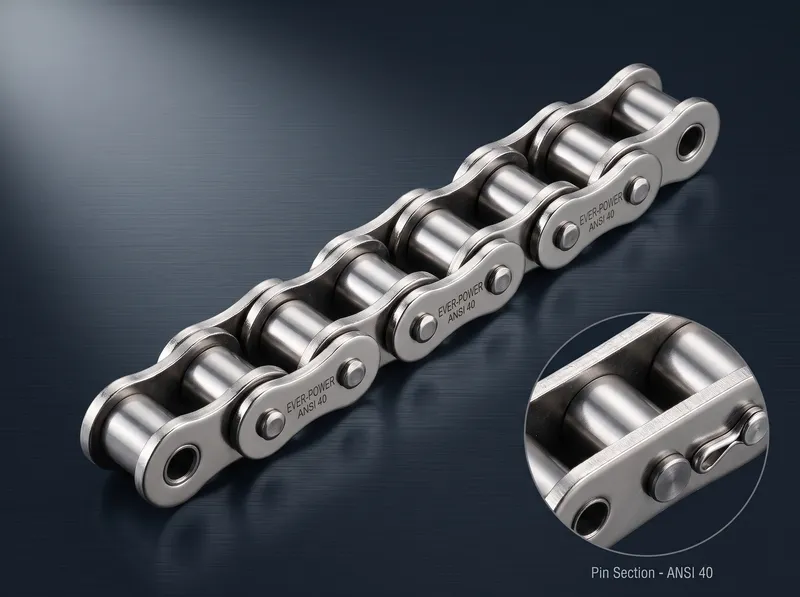
Driving Chains
A and B series short pitch precision roller chains for power transmission. Pitch 9.525 mm to 76.2 mm, simplex to triplex.
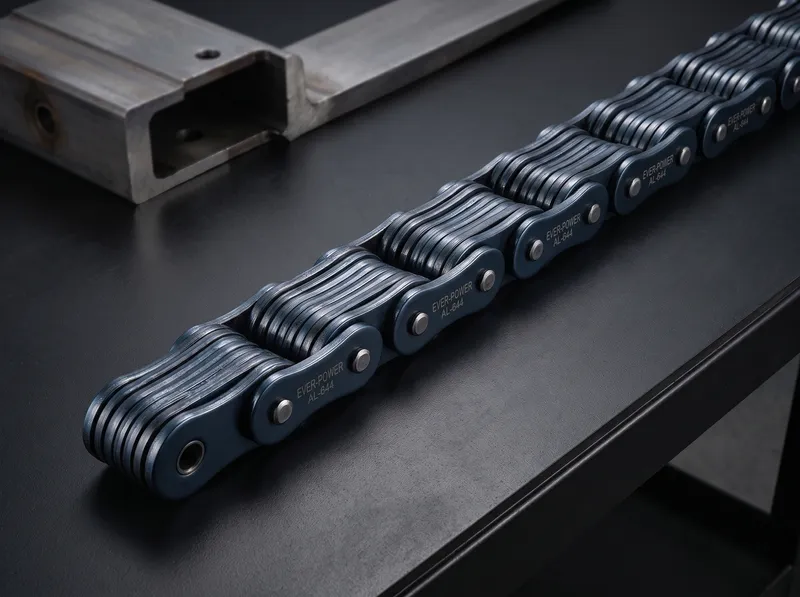
Leaf Chains
BL and LH series hoisting chains for forklift masts and industrial hoist mechanisms. Breaking loads from 11 kN to 1,600+ kN.
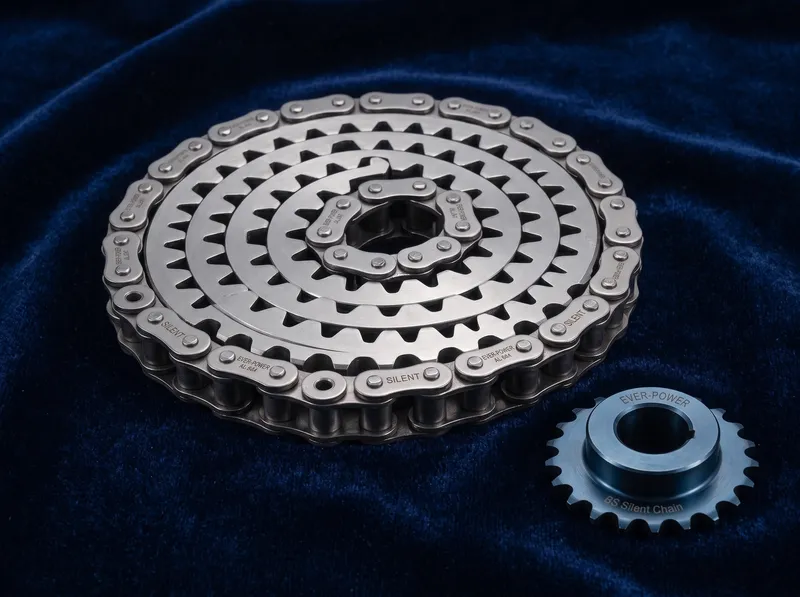
Stainless Steel Chains
SUS304 and SUS316L roller chains for food, pharmaceutical, and chemical washdown environments.
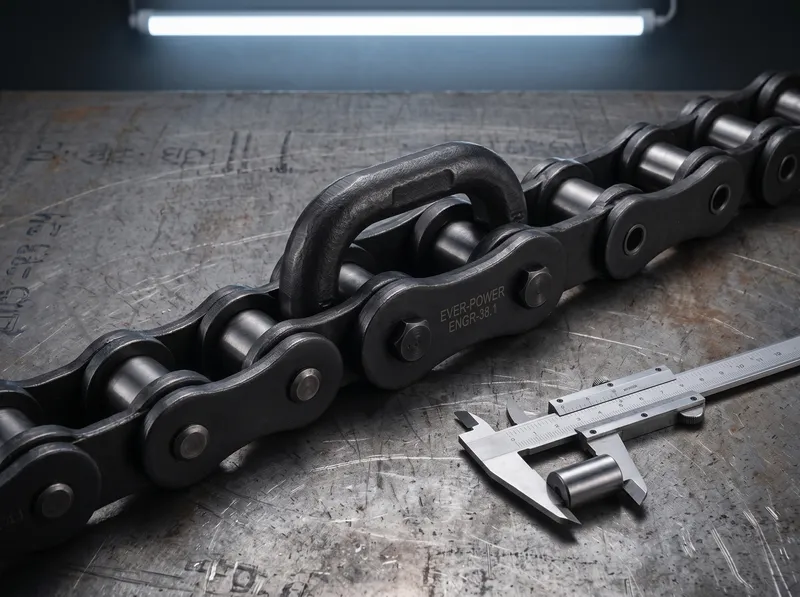
Engineering Chains
Welded steel, cast, and forged chains for cement, steel, mining, and chemical plant heavy conveying.
Frequently Asked Questions
What Our Customers Say
★★★★★
"We fit Korea Ever-Power 10B-1 ball bearing idler sprockets on the spring-tension arms of our baler chain drive system. Previously we were replacing idler assemblies every season — the plain-bore substitute we were using would seize within 200 hours. The sealed bearing assembly from Korea Ever-Power ran the full 1,200-hour season without any maintenance. Night and day difference."
J.O., Farm Machinery Service
France – Agricultural Machinery
★★★★★
"We supply conveyor components across the UK food processing industry. The Korea Ever-Power 08B-1 idler sprockets are our standard specification for all new conveyor builds. The 2RS seal keeps chain lubrication out of the bearing — important in food environments where contamination must be minimised. We stock 06B, 08B and 10B idlers from this range permanently."
T.R., Technical Sales Director
United Kingdom – Conveyor Components Distributor
★★★★★
"We design packaging machines using 06B-1 chain at 2.5 m/s. The tensioner position requires a free-running idler. Korea Ever-Power 06B-1 ball bearing idler at Z=21 fits our standard 16 mm tensioner pin exactly. We have tested 8,000 hours in production without bearing failure. The pre-spin test gives us confidence the assembly is correct before installation."
E.K., Design Engineer
Germany – Packaging Machinery OEM

Additional information
| Editor | Cxm |
|---|
Related products
-
Double Sprockets for Two Single Chains Asian Standard
-
Double Pitch Sprockets Asian Standard
-
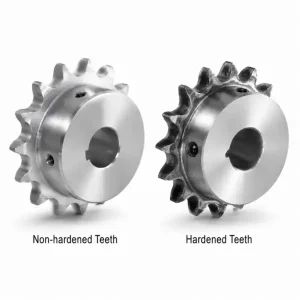
Finished Bore Sprockets Asian Standard
-
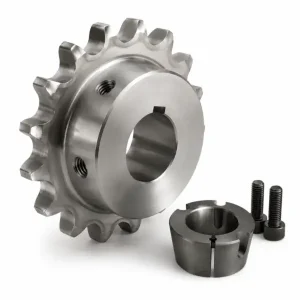
Taper Bore Sprockets American Standard
-
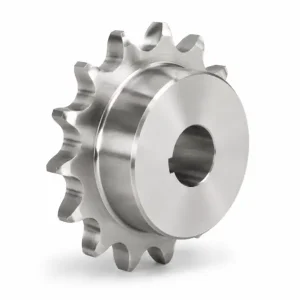
Steel Stock Bore Sprockets American Standard
-
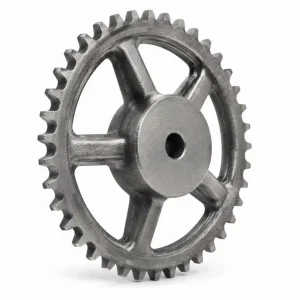
Cast Iron Sprockets European Standard | GG22-GG25 DIN 8187 Large Diameter
-
Finished Bore Sprockets European Standard | Pre-Bored DIN 8187 Ready to Fit
-
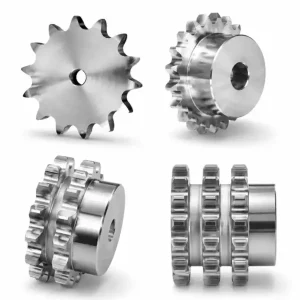
European Standard Sprockets & Platewheels | Simplex Duplex Triplex DIN 8187