Engineering Scope
Engineering Calculation Snapshot: Small sprockets in high-torque drives
Evaluate small tooth count as a dynamic and wear decision, not just a packaging choice: articulation angle, engaged teeth, chain pull, tooth surface, shaft load, hardening, and ratio all become more critical. This article concentrates on small sprocket, high torque chain drive, minimum sprocket teeth, tooth hardening, chain articulation, and tooth load as field-verifiable decision inputs.
For small sprockets in high-torque drives, keep chain engagement, shaft mounting, operating duty, and maintainability in the same decision record; use the current drawing whenever an exact limit is model-specific.
Field Reference
- Chain/tooth interface
- Confirm small sprocket, high torque chain drive, and the mating chain dimensions before changing hardware.
- Shaft/hub interface
- Record minimum sprocket teeth and mounting details that control concentricity, axial position, or load transfer.
- Operating duty
- Document speed, load, shock, starts/reversals, contamination, washdown, and maintenance access relevant to small sprockets in high-torque drives.
- Verification record
- For small sprockets in high-torque drives, keep measured values, nominal drawing values, wear observations, and the final replacement requirement distinct in the service record.
Decision Principle
Release small sprockets in high-torque drives from measured interfaces, not appearance.
For small sprockets in high-torque drives, check the chain interface, shaft connection, duty, and installed geometry as separate acceptance items, then reconcile them in the final specification.
1. Fewer teeth increase joint articulation
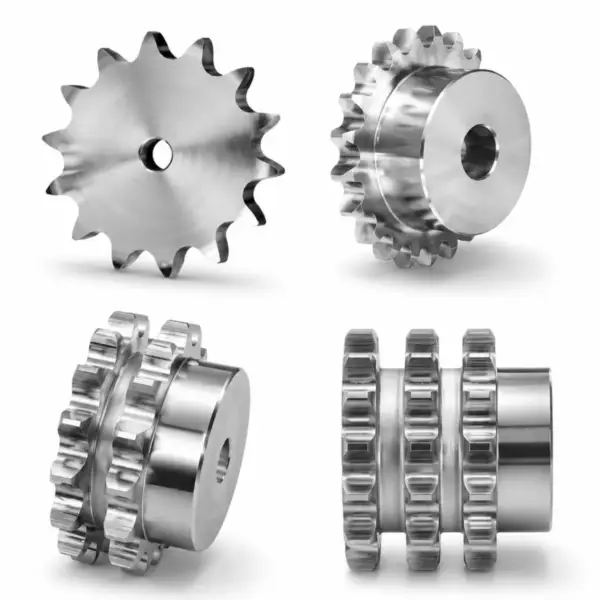
Each chain joint bends through a larger angle as it engages a small sprocket. That raises sliding and articulation effects at the chain joint and can increase vibration and wear. The practical check for fewer teeth increase joint articulation is to connect the observed condition to small sprocket, then confirm that minimum sprocket teeth does not introduce a second compatibility limit. For component context, review small roller chain sprockets when the linked product family is relevant to the same chain-drive interface.
For procurement, express fewer teeth increase joint articulation as verifiable data: chain standard, measured dimension, drawing reference, material condition, or operating requirement. Do not specify only ‘same as old.’
2. Fewer teeth can mean fewer teeth sharing load
Wrap and center distance determine how many teeth are engaged. When both tooth count and wrap are limited, each engaged tooth sees a larger share of chain pull. Record the evidence for fewer teeth can mean fewer teeth sharing load beside the measured high torque chain drive. If tooth hardening is size- or supplier-dependent, carry the drawing reference into the purchase record.
For commissioning, define how fewer teeth can mean fewer teeth sharing load will be checked after installation: chain seating, runout, shaft clearance, tooth-side contact, rpm, or loaded inspection as applicable.
3. The small sprocket cycles fastest
In a reduction drive, the driver typically rotates faster and its smaller tooth set sees more engagement cycles. This is why wear history often points to the small sprocket first. Treat the small sprocket cycles fastest as a pass/fail interface: document minimum sprocket teeth, inspect the mating component, and use chain articulation to confirm the final operating fit. For component context, review high torque roller chain drives when the linked product family is relevant to the same chain-drive interface.
Verification for small sprockets in high-torque drives: compare the field condition with nominal data and treat any difference that changes roller seating, shaft support, or service access as a release criterion.
4. Hardening may be valuable but is not the first fix
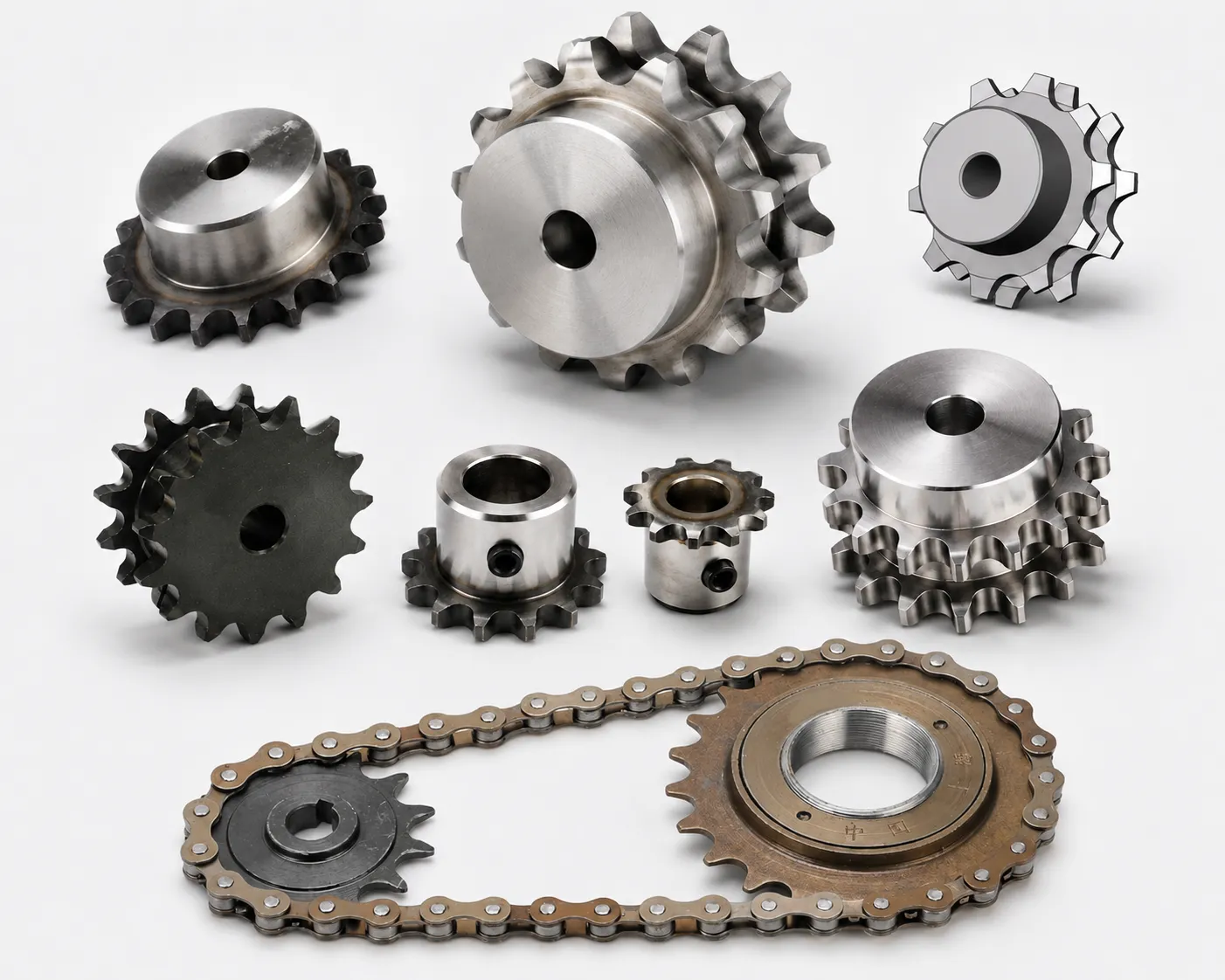
Hardened teeth can resist flank wear, yet an undersized chain, poor lubrication, misalignment, or shock overload still threatens the drive. A useful field note for small sprockets in high-torque drives pairs tooth hardening with tooth load. That keeps the decision tied to the actual chain drive rather than a visual match.
Use the wear evidence to test hardening may be valuable but is not the first fix: asymmetric polishing, fretting, root impact, or chain climbing should lead to a measurable correction rather than a like-for-like replacement.
5. Packaging pressure should be solved at system level
If the ratio forces an extremely small driver, consider a different chain pitch, multiple strands, an additional reduction stage, or a revised center distance rather than accepting poor geometry. For small sprockets in high-torque drives, use chain articulation as the primary field reference and compare it with small sprocket; resolve any disagreement before releasing the sprocket specification.
For procurement, express packaging pressure should be solved at system level as verifiable data: chain standard, measured dimension, drawing reference, material condition, or operating requirement. Do not specify only ‘same as old.’
Decision Table
| Factor | What to verify | Release logic |
|---|---|---|
| Fewer teeth increase joint articulation | Each chain joint bends through a larger angle as it engages a small sprocket | Reconstruct nominal fewer teeth increase joint articulation if wear has obscured the original geometry. |
| Fewer teeth can mean fewer teeth sharing load | Wrap and center distance determine how many teeth are engaged | Use the current supplier or machine limit for model-specific fewer teeth can mean fewer teeth sharing load. |
| The small sprocket cycles fastest | In a reduction drive, the driver typically rotates faster and its smaller tooth set sees more engagement cycles | Record the small sprocket cycles fastest as a release check before installation or restart. |
| Hardening may be valuable but is not the first fix | Hardened teeth can resist flank wear, yet an undersized chain, poor lubrication, misalignment, or shock overload still threatens the drive | Correct the system cause linked to hardening may be valuable but is not the first fix before fitting new hardware. |
| Packaging pressure should be solved at system level | If the ratio forces an extremely small driver, consider a different chain pitch, multiple strands, an additional reduction stage, or a revised center distance rather than accepting poor geometry | Accept packaging pressure should be solved at system level when field evidence matches the controlled requirement. |
| Use measured machine data and the current chain/sprocket drawing for final acceptance; model-specific limits are not interchangeable. | ||
Calculation Procedure
- 1. Quantify chain pull. Use transmitted power and chain speed or a validated design calculation to establish working load and shock factors. Photograph the setup when useful and identify the reference surfaces used to establish tooth hardening.
- 2. Review small-sprocket teeth and rpm. Compare tooth count and speed with the chain manufacturer's selection guidance and power-rating method. If the observation changes chain articulation, stop and update the replacement specification before continuing.
- 3. Check tooth engagement. Calculate or measure chain wrap and ensure enough teeth are carrying load in the actual center-distance geometry. Repeat or rotate the check when wear could bias tooth load; the goal is nominal geometry, not one convenient reading.
- 4. Inspect material and wear history. Document hooking, root wear, pitting, or tooth breakage and determine whether tooth hardening or a different base material is justified. Photograph the setup when useful and identify the reference surfaces used to establish small sprocket.
- 5. Check shaft and key. High chain pull at a small radius can create demanding shaft torque and bearing reactions; verify the entire shaft interface. If the observation changes high torque chain drive, stop and update the replacement specification before continuing.
- 6. Evaluate alternatives. Compare more teeth, smaller chain pitch with more strands, altered ratio staging, hardened teeth, or increased center distance using lifecycle and space constraints. Repeat or rotate the check when wear could bias minimum sprocket teeth; the goal is nominal geometry, not one convenient reading.
For small sprockets in high-torque drives, cross-check adjacent drive interfaces with industrial power transmission components before releasing the installation or replacement record.
Verification Checks
Avoid 01
Choosing the smallest sprocket that physically fits. Document the corrective requirement specifically for small sprockets in high-torque drives before the part is released.
Avoid 02
Assuming high chain tensile strength makes very low tooth count harmless. Document the corrective requirement specifically for small sprockets in high-torque drives before the part is released.
Avoid 03
Hardening teeth without correcting insufficient lubrication. Document the corrective requirement specifically for small sprockets in high-torque drives before the part is released.
Avoid 04
Ignoring how few teeth are actually engaged on a short-center drive. Document the corrective requirement specifically for small sprockets in high-torque drives before the part is released.
Configuration cross-check: use this roller chain drive design only to compare common construction terminology for small sprockets in high-torque drives; release the part from the actual chain, shaft, and controlled drawing.
FAQ: Small sprockets in high-torque drives — practical engineering questions
Why are small sprockets harder on roller chain?
They create larger articulation angles and stronger chordal effects, and they may have fewer teeth sharing load. The small sprocket also usually accumulates more engagement cycles.
How many teeth should a small roller chain sprocket have?
Use the chain manufacturer's rating and tooth-count guidance for the speed and duty. General industrial guidance favors more teeth when space and ratio allow.
Do high-torque drives need hardened sprocket teeth?
They may when tooth wear is limiting, especially on a small high-cycle sprocket. Verify chain pull, shock, material toughness, lubrication, and alignment before specifying hardening.
Can I use a smaller sprocket to increase speed reduction?
Yes mathematically, but the resulting articulation, diameter, tooth engagement, chain rating, and wear may be unacceptable. Compare a larger driven sprocket or another reduction stage.
What causes tooth breakage on a small sprocket?
Possible causes include overload or shock, inadequate tooth or rim strength, poor material/heat treatment, cracks, misalignment, damaged chain, and severe wear that thins the tooth.
What should I check before approving a small sprocket design?
Check chain size and rating, tooth count, rpm, chain pull, wrap, service factor, shaft and key, tooth material or hardening, lubrication, alignment, center distance, and guard clearance.