엔지니어링 범위
Engineering Calculation Snapshot: Sprocket ratio and output RPM
Calculate chain-drive speed ratio from tooth counts, then verify actual output speed, direction, chain pitch, space, and chain rating before releasing the design. This article concentrates on sprocket ratio, output RPM, driver sprocket, driven sprocket, tooth count ratio, and speed reduction as field-verifiable decision inputs.
For sprocket ratio and output rpm, keep chain engagement, shaft mounting, operating duty, and maintainability in the same decision record; use the current drawing whenever an exact limit is model-specific.
필드 참조
- 체인/톱니 인터페이스
- Confirm sprocket ratio, output RPM, and the mating chain dimensions before changing hardware.
- 샤프트/허브 인터페이스
- Record driver sprocket and mounting details that control concentricity, axial position, or load transfer.
- 운영 업무
- Document speed, load, shock, starts/reversals, contamination, washdown, and maintenance access relevant to sprocket ratio and output rpm.
- 검증 기록
- For sprocket ratio and output rpm, keep measured values, nominal drawing values, wear observations, and the final replacement requirement distinct in the service record.
결정 원칙
Release sprocket ratio and output rpm from measured interfaces, not appearance.
For sprocket ratio and output rpm, check the chain interface, shaft connection, duty, and installed geometry as separate acceptance items, then reconcile them in the final specification.
1. Use tooth count for the ideal speed ratio
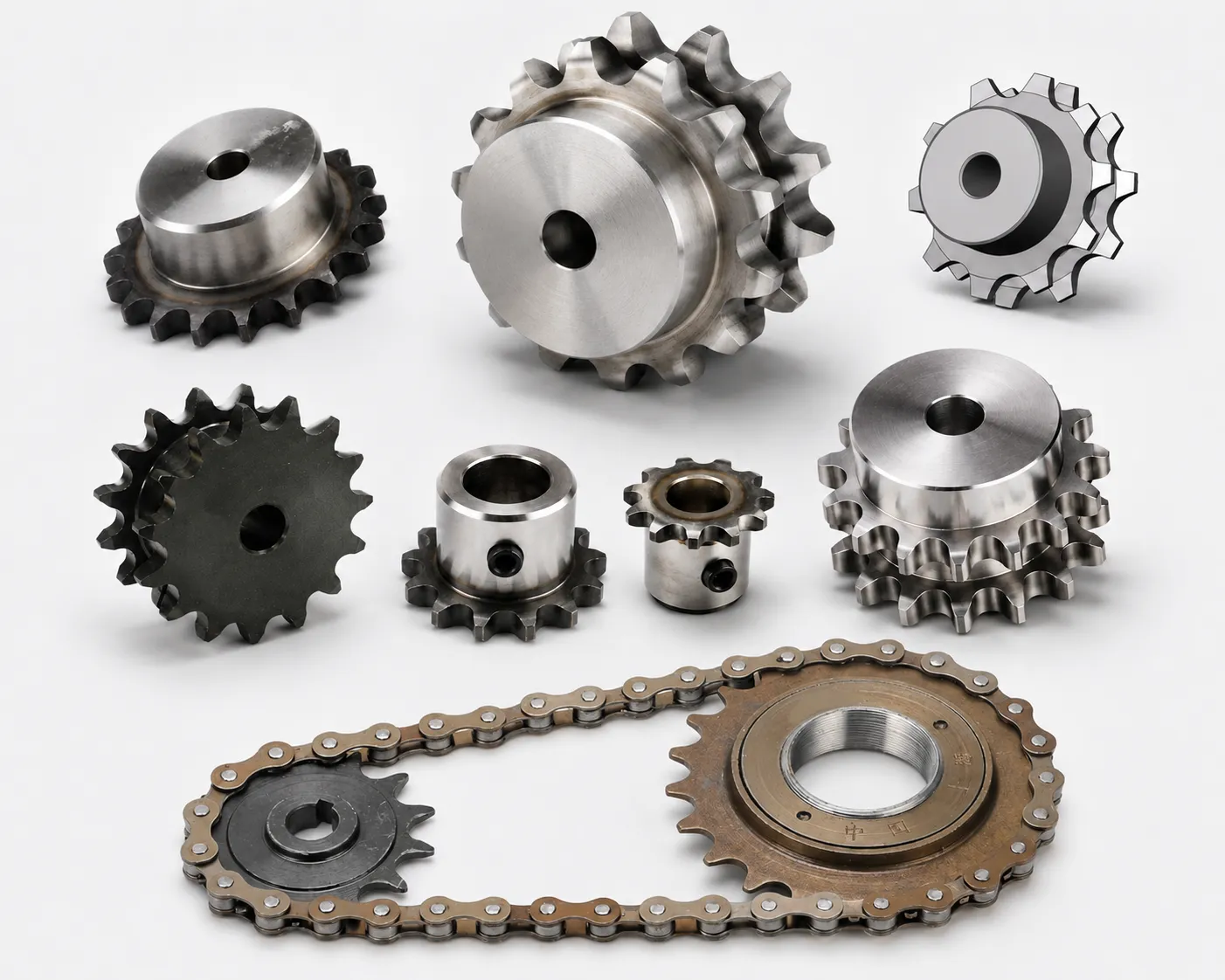
For a simple two-sprocket chain drive, reduction ratio equals driven teeth divided by driver teeth. Output speed equals input speed multiplied by driver teeth and divided by driven teeth. For sprocket ratio and output rpm, use sprocket ratio as the primary field reference and compare it with driver sprocket; resolve any disagreement before releasing the sprocket specification. For component context, review roller chain sprocket ratios 연결된 제품군이 동일한 체인 구동 인터페이스와 관련된 경우.
For procurement, express use tooth count for the ideal speed ratio as verifiable data: chain standard, measured dimension, drawing reference, material condition, or operating requirement. Do not specify only ‘same as old.’
2. Keep driver and driven roles explicit
Reversing the tooth counts reverses the calculated ratio. Mark which shaft supplies power and which receives it before doing arithmetic. The practical check for keep driver and driven roles explicit is to connect the observed condition to output RPM, then confirm that driven sprocket does not introduce a second compatibility limit.
For commissioning, define how keep driver and driven roles explicit will be checked after installation: chain seating, runout, shaft clearance, tooth-side contact, rpm, or loaded inspection as applicable.
3. Round tooth counts only after calculating the target
A required ratio may not produce an integer tooth count. Choose a practical integer combination, then recalculate the actual output speed and quantify the error. Record the evidence for round tooth counts only after calculating the target beside the measured driver sprocket. If tooth count ratio is size- or supplier-dependent, carry the drawing reference into the purchase record. For component context, review 롤러 체인 구동 시스템 연결된 제품군이 동일한 체인 구동 인터페이스와 관련된 경우.
Verification for sprocket ratio and output rpm: compare the field condition with nominal data and treat any difference that changes roller seating, shaft support, or service access as a release criterion.
4. Check sprocket size after choosing teeth
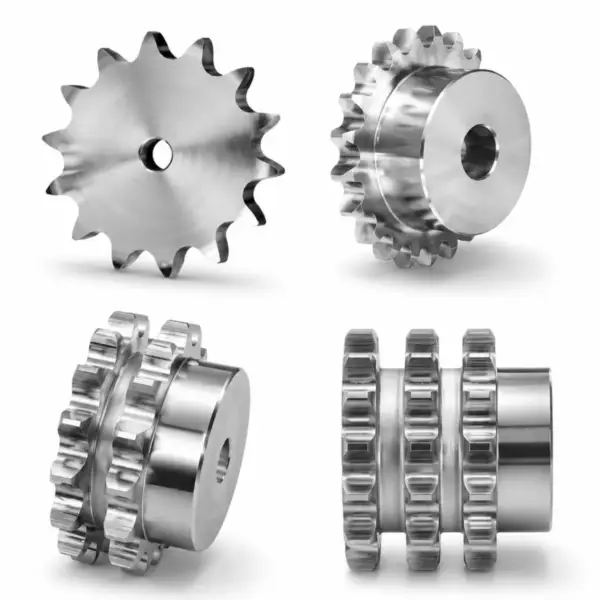
More teeth increase pitch diameter and outside diameter. A mathematically correct ratio can be impossible to package inside a guard or between fixed shafts. Treat check sprocket size after choosing teeth as a pass/fail interface: document driven sprocket, inspect the mating component, and use speed reduction to confirm the final operating fit.
Use the wear evidence to test check sprocket size after choosing teeth: asymmetric polishing, fretting, root impact, or chain climbing should lead to a measurable correction rather than a like-for-like replacement.
5. Ratio is not a chain rating
The tooth counts set kinematics, but transmitted power, speed, shock, lubrication, and chain size still have to be checked with the chain manufacturer’s rating method. A useful field note for sprocket ratio and output rpm pairs tooth count ratio with sprocket ratio. That keeps the decision tied to the actual chain drive rather than a visual match.
For procurement, express ratio is not a chain rating as verifiable data: chain standard, measured dimension, drawing reference, material condition, or operating requirement. Do not specify only ‘same as old.’
의사결정표
| 요인 | 무엇을 확인해야 할까요? | 릴리스 로직 |
|---|---|---|
| Use tooth count for the ideal speed ratio | For a simple two-sprocket chain drive, reduction ratio equals driven teeth divided by driver teeth | Correct the system cause linked to use tooth count for the ideal speed ratio before fitting new hardware. |
| Keep driver and driven roles explicit | Reversing the tooth counts reverses the calculated ratio | Accept keep driver and driven roles explicit when field evidence matches the controlled requirement. |
| Round tooth counts only after calculating the target | A required ratio may not produce an integer tooth count | Reconstruct nominal round tooth counts only after calculating the target if wear has obscured the original geometry. |
| Check sprocket size after choosing teeth | More teeth increase pitch diameter and outside diameter | Use the current supplier or machine limit for model-specific check sprocket size after choosing teeth. |
| Ratio is not a chain rating | The tooth counts set kinematics, but transmitted power, speed, shock, lubrication, and chain size still have to be checked with the chain manufacturer's rating method | Record ratio is not a chain rating as a release check before installation or restart. |
| 최종 승인을 위해서는 측정된 기계 데이터와 최신 체인/스프로킷 도면을 사용하십시오. 모델별 허용 오차는 서로 호환되지 않습니다. | ||
계산 절차
Speed Ratio Formula
Ratio = Ndriven / Ndriver · nout = nin × Ndriver / Ndriven
Example: 18 driver teeth, 54 driven teeth, 900 rpm input → ratio 3:1 and ideal output 300 rpm. Recalculate after choosing integer tooth counts.
- 1. Record shaft speeds. Write input rpm and target output rpm with units and identify the driver and driven shafts. Repeat or rotate the check when wear could bias driven sprocket; the goal is nominal geometry, not one convenient reading.
- 2. Choose an initial driver tooth count. Select a practical small-sprocket tooth count that satisfies manufacturer guidance for smoothness, space, and chain rating. Photograph the setup when useful and identify the reference surfaces used to establish tooth count ratio.
- 3. Calculate the driven teeth. Multiply the driver tooth count by input rpm and divide by target output rpm to obtain the theoretical driven tooth count. If the observation changes speed reduction, stop and update the replacement specification before continuing.
- 4. Round and recalculate. Choose the nearest practical integer tooth count, calculate the actual ratio and output rpm, and compare the difference with process tolerance. Repeat or rotate the check when wear could bias sprocket ratio; the goal is nominal geometry, not one convenient reading.
- 5. Check geometry. Calculate or obtain pitch and outside diameters, verify center distance and guard envelope, and confirm enough chain wrap on the smaller sprocket. Photograph the setup when useful and identify the reference surfaces used to establish output RPM.
- 6. Check drive capacity. Use design power, chain speed, service factor, lubrication, and chain manufacturer data to confirm the selected chain and sprockets are mechanically adequate. If the observation changes driver sprocket, stop and update the replacement specification before continuing.
For sprocket ratio and output rpm, cross-check adjacent drive interfaces with 동력 전달 부품 설치 또는 교체 기록을 게시하기 전에.
검증 확인
01을 피하세요
Using diameter ratio instead of tooth count on a chain drive. Document the corrective requirement specifically for sprocket ratio and output rpm before the part is released.
02를 피하세요
Rounding driven teeth without recalculating the resulting output rpm. Document the corrective requirement specifically for sprocket ratio and output rpm before the part is released.
03을 피하세요
Choosing a tiny driver only to hit the ratio while ignoring articulation and capacity. Document the corrective requirement specifically for sprocket ratio and output rpm before the part is released.
04를 피하세요
Treating ideal rpm as guaranteed under a system with variable-speed input or compliance elsewhere. Document the corrective requirement specifically for sprocket ratio and output rpm before the part is released.
구성 교차 확인: 이것을 사용하세요 chain and sprocket drive design only to compare common construction terminology for sprocket ratio and output rpm; release the part from the actual chain, shaft, and controlled drawing.
FAQ: Sprocket ratio and output RPM — practical engineering questions
How do I calculate sprocket ratio from tooth count?
Divide the driven sprocket tooth count by the driver sprocket tooth count. A 54-tooth driven sprocket with an 18-tooth driver gives a 3:1 reduction.
How do I calculate output RPM in a chain drive?
Multiply input rpm by driver teeth and divide by driven teeth. If an 18-tooth driver runs at 900 rpm and drives 54 teeth, the ideal output is 300 rpm.
Does sprocket diameter affect speed ratio?
The ideal chain-drive ratio is set by tooth counts, not measured outside diameter. Diameter follows from chain pitch and tooth count and matters for packaging and chain speed.
What if my calculated driven sprocket has a fractional number of teeth?
Choose a practical integer tooth count and recalculate the actual output speed. If the error is too large, change both tooth counts or add another reduction stage.
Can I use any small sprocket tooth count to get the ratio I need?
No. Very small tooth counts increase articulation and polygonal speed variation and can reduce allowable drive capacity. Use the chain manufacturer's minimum-tooth and rating guidance.
What else should I verify after calculating sprocket ratio?
Check chain pitch and rating, sprocket diameters, center distance, chain wrap, shaft bore, key capacity, alignment, lubrication, shock duty, and guard clearance.