Engineering Scope
Engineering Calculation Snapshot: Chain speed from sprocket teeth, pitch, and shaft RPM
Calculate linear chain speed from pitch, sprocket teeth, and rpm, keep units consistent, and use the result when evaluating lubrication, dynamic load, wear, and chain rating. This article concentrates on chain speed, sprocket teeth, chain pitch, shaft RPM, feet per minute, and meters per minute as field-verifiable decision inputs.
For chain speed from sprocket teeth, pitch, and shaft rpm, keep chain engagement, shaft mounting, operating duty, and maintainability in the same decision record; use the current drawing whenever an exact limit is model-specific.
Field Reference
- Chain/tooth interface
- Confirm chain speed, sprocket teeth, and the mating chain dimensions before changing hardware.
- Shaft/hub interface
- Record chain pitch and mounting details that control concentricity, axial position, or load transfer.
- Operating duty
- Document speed, load, shock, starts/reversals, contamination, washdown, and maintenance access relevant to chain speed from sprocket teeth, pitch, and shaft rpm.
- Verification record
- For chain speed from sprocket teeth, pitch, and shaft rpm, keep measured values, nominal drawing values, wear observations, and the final replacement requirement distinct in the service record.
Decision Principle
Release chain speed from sprocket teeth, pitch, and shaft rpm from measured interfaces, not appearance.
For chain speed from sprocket teeth, pitch, and shaft rpm, check the chain interface, shaft connection, duty, and installed geometry as separate acceptance items, then reconcile them in the final specification.
1. Use the pitch-line travel per revolution
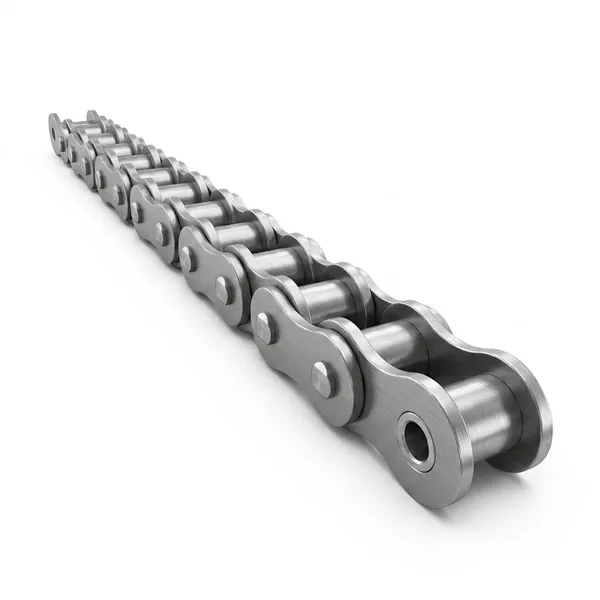
One sprocket revolution advances approximately N chain pitches, so chain speed is pitch multiplied by teeth multiplied by rpm with the necessary unit conversion. For chain speed from sprocket teeth, pitch, and shaft rpm, use chain speed as the primary field reference and compare it with chain pitch; resolve any disagreement before releasing the sprocket specification. For component context, review roller chain speed selection when the linked product family is relevant to the same chain-drive interface.
For commissioning, define how use the pitch-line travel per revolution will be checked after installation: chain seating, runout, shaft clearance, tooth-side contact, rpm, or loaded inspection as applicable.
2. Use consistent units
With pitch in inches, S = P x N x rpm / 12 gives feet per minute. With pitch in millimeters, dividing P x N x rpm by 1000 gives millimeters-to-meters conversion per minute. The practical check for use consistent units is to connect the observed condition to sprocket teeth, then confirm that shaft RPM does not introduce a second compatibility limit.
Verification for chain speed from sprocket teeth, pitch, and shaft rpm: compare the field condition with nominal data and treat any difference that changes roller seating, shaft support, or service access as a release criterion.
3. Speed affects more than throughput
Higher chain speed changes lubrication demand, impact at engagement, centrifugal effects, noise, and the chain maker’s allowable power rating. Record the evidence for speed affects more than throughput beside the measured chain pitch. If feet per minute is size- or supplier-dependent, carry the drawing reference into the purchase record. For component context, review roller chain sprocket tooth counts when the linked product family is relevant to the same chain-drive interface.
Use the wear evidence to test speed affects more than throughput: asymmetric polishing, fretting, root impact, or chain climbing should lead to a measurable correction rather than a like-for-like replacement.
4. Tooth count changes speed at a given rpm
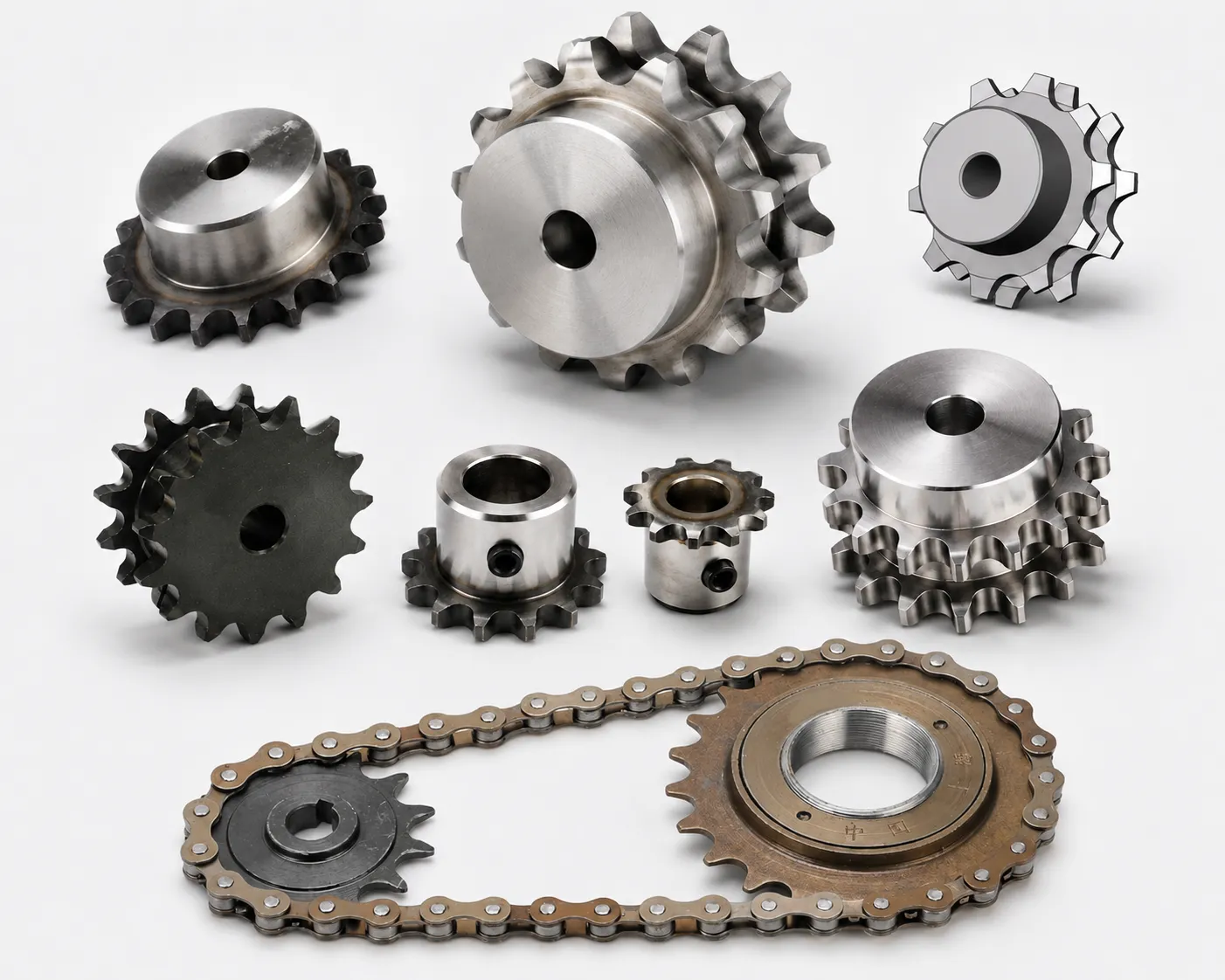
For the same pitch and shaft rpm, a larger sprocket advances more chain length per revolution and therefore produces higher linear chain speed. Treat tooth count changes speed at a given rpm as a pass/fail interface: document shaft RPM, inspect the mating component, and use meters per minute to confirm the final operating fit.
For procurement, express tooth count changes speed at a given rpm as verifiable data: chain standard, measured dimension, drawing reference, material condition, or operating requirement. Do not specify only ‘same as old.’
5. Use manufacturer ratings after the calculation
The formula gives kinematics, not a safe operating limit. Chain construction, lubrication method, sprocket size, service factor, and environment determine allowable application speed and load. A useful field note for chain speed from sprocket teeth, pitch, and shaft rpm pairs feet per minute with chain speed. That keeps the decision tied to the actual chain drive rather than a visual match.
For commissioning, define how use manufacturer ratings after the calculation will be checked after installation: chain seating, runout, shaft clearance, tooth-side contact, rpm, or loaded inspection as applicable.
Calculation Procedure
Chain Speed
S = P × N × n / 12 (ft/min when P is inches)
Example: 0.625 in pitch × 18 teeth × 60 rpm / 12 = 56.25 ft/min. Use the resulting speed with the chain manufacturer’s load and lubrication guidance.
- 1. Record pitch and units. Confirm whether pitch is in inches or millimeters and whether the chain series is the one actually installed. Use the current machine drawing when shaft RPM is model-specific, and keep the measured value in the service record.
- 2. Record active sprocket teeth. Use the tooth count on the sprocket whose rpm is known; the same chain has the same linear speed at every sprocket in steady operation. Before moving on, confirm that feet per minute agrees with the mating chain or shaft interface relevant to this step.
- 3. Record shaft rpm. Use actual operating rpm or the relevant speed range, not only motor nameplate rpm when a gearbox or variable-speed drive is present. Record the result against meters per minute so the next step starts from measured evidence.
- 4. Calculate chain speed. Multiply pitch by tooth count and rpm, then apply the correct unit conversion. Use the current machine drawing when chain speed is model-specific, and keep the measured value in the service record.
- 5. Check the result against the application. Use chain speed in the manufacturer's lubrication and rating method and review noise, guard, and environmental constraints. Before moving on, confirm that sprocket teeth agrees with the mating chain or shaft interface relevant to this step.
- 6. Document operating range. If rpm varies, calculate minimum and maximum chain speed and select lubrication and components for the full duty range. Record the result against chain pitch so the next step starts from measured evidence.
For chain speed from sprocket teeth, pitch, and shaft rpm, cross-check adjacent drive interfaces with industrial power transmission components before releasing the installation or replacement record.
Decision Table
| Factor | What to verify | Release logic |
|---|---|---|
| Use the pitch-line travel per revolution | One sprocket revolution advances approximately N chain pitches, so chain speed is pitch multiplied by teeth multiplied by rpm with the necessary unit conversion | Correct the system cause linked to use the pitch-line travel per revolution before fitting new hardware. |
| Use consistent units | With pitch in inches, S = P x N x rpm / 12 gives feet per minute | Accept use consistent units when field evidence matches the controlled requirement. |
| Speed affects more than throughput | Higher chain speed changes lubrication demand, impact at engagement, centrifugal effects, noise, and the chain maker's allowable power rating | Reconstruct nominal speed affects more than throughput if wear has obscured the original geometry. |
| Tooth count changes speed at a given rpm | For the same pitch and shaft rpm, a larger sprocket advances more chain length per revolution and therefore produces higher linear chain speed | Use the current supplier or machine limit for model-specific tooth count changes speed at a given rpm. |
| Use manufacturer ratings after the calculation | The formula gives kinematics, not a safe operating limit | Record use manufacturer ratings after the calculation as a release check before installation or restart. |
| Use measured machine data and the current chain/sprocket drawing for final acceptance; model-specific limits are not interchangeable. | ||
Verification Checks
Avoid 01
Mixing inch pitch with metric conversion factors. Document the corrective requirement specifically for chain speed from sprocket teeth, pitch, and shaft rpm before the part is released.
Avoid 02
Using motor rpm when the sprocket is on a gearbox output shaft. Document the corrective requirement specifically for chain speed from sprocket teeth, pitch, and shaft rpm before the part is released.
Avoid 03
Calculating chain speed but not checking the chain maker's rating method. Document the corrective requirement specifically for chain speed from sprocket teeth, pitch, and shaft rpm before the part is released.
Avoid 04
Assuming a larger sprocket at the same rpm leaves linear chain speed unchanged. Document the corrective requirement specifically for chain speed from sprocket teeth, pitch, and shaft rpm before the part is released.
Configuration cross-check: use this roller chain drive calculations only to compare common construction terminology for chain speed from sprocket teeth, pitch, and shaft rpm; release the part from the actual chain, shaft, and controlled drawing.
FAQ: Chain speed from sprocket teeth, pitch, and shaft RPM — practical engineering questions
What is the formula for roller chain speed?
With pitch P in inches, tooth count N, and shaft speed n in rpm, chain speed in feet per minute is S=P x N x n / 12. Use consistent units.
How do I calculate chain speed in meters per minute?
If pitch is in millimeters, multiply pitch by tooth count and rpm, then divide by 1000 to convert millimeters per minute to meters per minute.
Does the driven sprocket have a different chain speed?
No. In a steady chain loop the linear chain speed is the same. The driven sprocket rotates at a different rpm because its tooth count is different.
Why does chain speed matter for lubrication?
Joint articulation frequency and lubricant delivery requirements change with speed. Use the chain manufacturer's lubrication table or engineering guidance for the calculated speed range.
Does a larger sprocket increase chain speed?
At the same shaft rpm and chain pitch, yes, because more teeth pass the chain per revolution. In an existing two-sprocket drive, changing teeth also changes the ratio and shaft speeds.
What should I check after calculating chain speed?
Check chain power rating, service factor, lubrication method, sprocket tooth count, alignment, enclosure, noise, temperature, and whether the full variable-speed range stays within the component limits.