Engineering Scope
Diagnostic Snapshot: Chain jumping on sprocket teeth
Trace jumping from chain elongation, worn or mismatched teeth, insufficient engagement, poor slack control, alignment, debris, or damaged rollers before increasing tension. This article concentrates on chain jumping sprocket, chain skipping teeth, chain elongation, sprocket wear, chain tension, and tooth engagement as field-verifiable decision inputs.
For chain jumping on sprocket teeth, keep chain engagement, shaft mounting, operating duty, and maintainability in the same decision record; use the current drawing whenever an exact limit is model-specific.
Field Reference
- Chain/tooth interface
- Confirm chain jumping sprocket, chain skipping teeth, and the mating chain dimensions before changing hardware.
- Shaft/hub interface
- Record chain elongation and mounting details that control concentricity, axial position, or load transfer.
- Operating duty
- Document speed, load, shock, starts/reversals, contamination, washdown, and maintenance access relevant to chain jumping on sprocket teeth.
- Verification record
- For chain jumping on sprocket teeth, keep measured values, nominal drawing values, wear observations, and the final replacement requirement distinct in the service record.
Decision Principle
Release chain jumping on sprocket teeth from measured interfaces, not appearance.
For chain jumping on sprocket teeth, check the chain interface, shaft connection, duty, and installed geometry as separate acceptance items, then reconcile them in the final specification.
Inspection Sequence
- 1. Stop after the first verified skip. Do not continue running a drive that is climbing teeth; impact can damage rollers and tooth tips quickly. Before moving on, confirm that sprocket wear agrees with the mating chain or shaft interface relevant to this step.
- 2. Inspect the chain. Measure elongation, check stiff joints, damaged rollers, plate deformation, and connecting links. Record the result against chain tension so the next step starts from measured evidence.
- 3. Inspect both sprockets. Look for hooked flanks, chipped teeth, packed roots, runout, side wear, and the chain's seating height. Use the current machine drawing when tooth engagement is model-specific, and keep the measured value in the service record.
- 4. Check geometry. Measure center distance, wrap on the small sprocket, alignment, shaft movement, and take-up position. Before moving on, confirm that chain jumping sprocket agrees with the mating chain or shaft interface relevant to this step.
- 5. Confirm component identity. Verify chain and sprocket standard, pitch, roller diameter, width, and strand count against drawings. Record the result against chain skipping teeth so the next step starts from measured evidence.
- 6. Correct and prove. Replace mismatched or worn parts, restore slack and alignment, clean and lubricate, then test at reduced speed and increasing load while watching engagement. Use the current machine drawing when chain elongation is model-specific, and keep the measured value in the service record.
For chain jumping on sprocket teeth, cross-check adjacent drive interfaces with industrial drive maintenance parts before releasing the installation or replacement record.
1. Measure elongation before adjusting tension
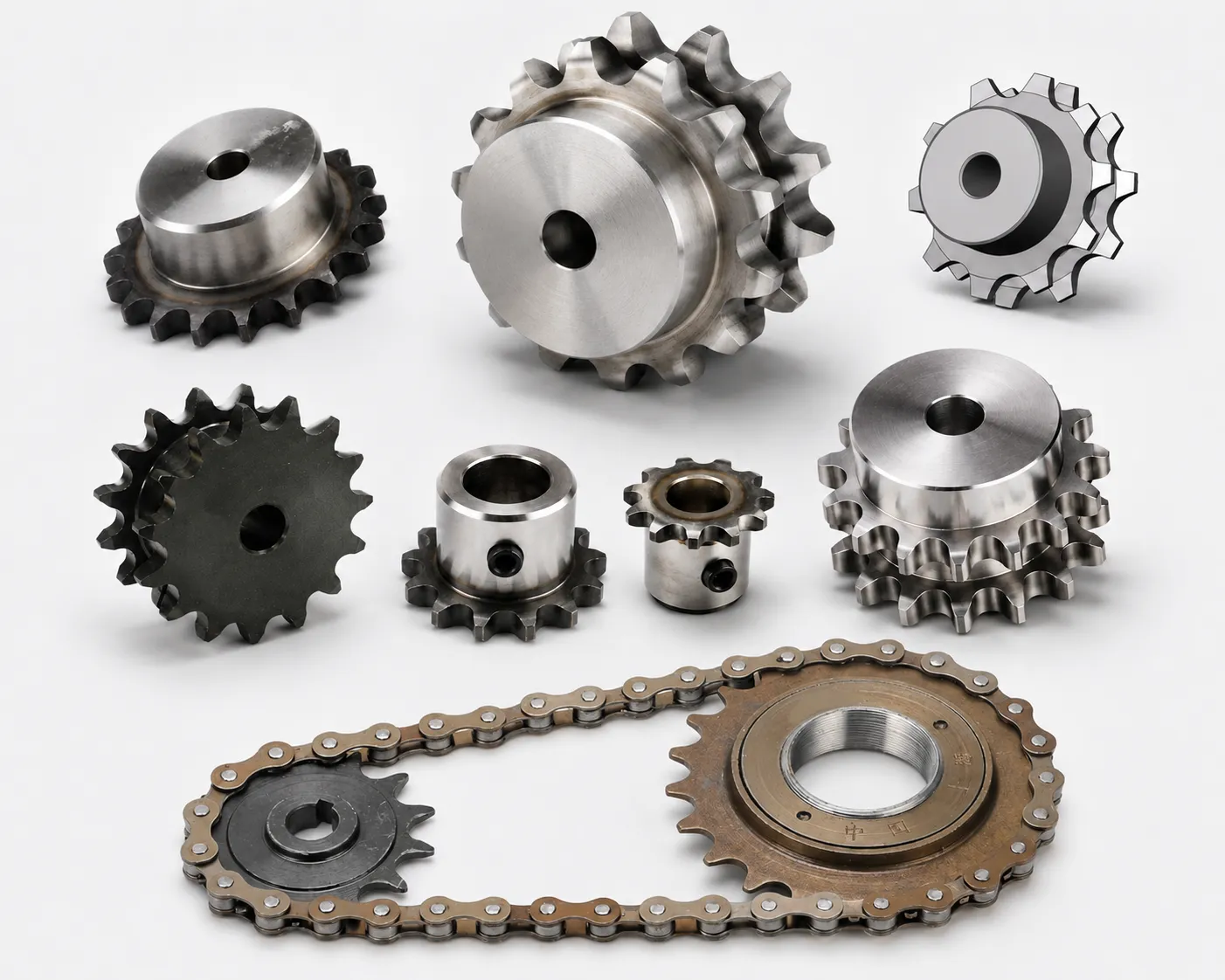
A worn chain has a longer effective pitch and tends to ride higher on the sprocket. Tightening it does not restore nominal pitch and can overload bearings. Record the evidence for measure elongation before adjusting tension beside the measured chain jumping sprocket. If chain elongation is size- or supplier-dependent, carry the drawing reference into the purchase record. For component context, review roller chain troubleshooting when the linked product family is relevant to the same chain-drive interface.
Use the wear evidence to test measure elongation before adjusting tension: asymmetric polishing, fretting, root impact, or chain climbing should lead to a measurable correction rather than a like-for-like replacement.
2. Inspect tooth shape and seating
Hooked or damaged teeth cannot guide rollers smoothly into the roots. A new chain can also jump on a sprocket worn to the old chain’s elongated pitch. Treat inspect tooth shape and seating as a pass/fail interface: document chain skipping teeth, inspect the mating component, and use sprocket wear to confirm the final operating fit.
For procurement, express inspect tooth shape and seating as verifiable data: chain standard, measured dimension, drawing reference, material condition, or operating requirement. Do not specify only ‘same as old.’
3. Check engagement on the small sprocket
Short center distance, an idler position, or large ratio can reduce the number of teeth engaged on the driver. Insufficient wrap raises tooth load and makes jumping more likely. A useful field note for chain jumping on sprocket teeth pairs chain elongation with chain tension. That keeps the decision tied to the actual chain drive rather than a visual match. For component context, review replacement sprockets when the linked product family is relevant to the same chain-drive interface.
For commissioning, define how check engagement on the small sprocket will be checked after installation: chain seating, runout, shaft clearance, tooth-side contact, rpm, or loaded inspection as applicable.
4. Confirm pitch and chain series
A mismatched chain may appear to run at low speed but climb or skip as load rises. Check pitch, roller diameter, width, and strand count. For chain jumping on sprocket teeth, use sprocket wear as the primary field reference and compare it with tooth engagement; resolve any disagreement before releasing the sprocket specification.
Verification for chain jumping on sprocket teeth: compare the field condition with nominal data and treat any difference that changes roller seating, shaft support, or service access as a release criterion.
5. Look for transient causes
Debris in tooth roots, stiff chain joints, shaft movement, loose hubs, and sudden load reversals can create momentary loss of seating even when static tension appears acceptable. The practical check for look for transient causes is to connect the observed condition to chain tension, then confirm that chain jumping sprocket does not introduce a second compatibility limit.
Use the wear evidence to test look for transient causes: asymmetric polishing, fretting, root impact, or chain climbing should lead to a measurable correction rather than a like-for-like replacement.
Symptom-to-Action Matrix
| Factor | What to verify | Release logic |
|---|---|---|
| Measure elongation before adjusting tension | A worn chain has a longer effective pitch and tends to ride higher on the sprocket | Record measure elongation before adjusting tension as a release check before installation or restart. |
| Inspect tooth shape and seating | Hooked or damaged teeth cannot guide rollers smoothly into the roots | Correct the system cause linked to inspect tooth shape and seating before fitting new hardware. |
| Check engagement on the small sprocket | Short center distance, an idler position, or large ratio can reduce the number of teeth engaged on the driver | Accept check engagement on the small sprocket when field evidence matches the controlled requirement. |
| Confirm pitch and chain series | A mismatched chain may appear to run at low speed but climb or skip as load rises | Reconstruct nominal confirm pitch and chain series if wear has obscured the original geometry. |
| Look for transient causes | Debris in tooth roots, stiff chain joints, shaft movement, loose hubs, and sudden load reversals can create momentary loss of seating even when static tension appears acceptable | Use the current supplier or machine limit for model-specific look for transient causes. |
| Use measured machine data and the current chain/sprocket drawing for final acceptance; model-specific limits are not interchangeable. | ||
Prevention Checks
Avoid 01
Adding more tension before measuring chain wear. Document the corrective requirement specifically for chain jumping on sprocket teeth before the part is released.
Avoid 02
Replacing only the chain when tooth hooks are obvious. Document the corrective requirement specifically for chain jumping on sprocket teeth before the part is released.
Avoid 03
Ignoring debris packed in conveyor sprocket roots. Document the corrective requirement specifically for chain jumping on sprocket teeth before the part is released.
Avoid 04
Assuming a new sprocket is the right pitch because its outside diameter is similar. Document the corrective requirement specifically for chain jumping on sprocket teeth before the part is released.
Configuration cross-check: use this chain and sprocket troubleshooting only to compare common construction terminology for chain jumping on sprocket teeth; release the part from the actual chain, shaft, and controlled drawing.
FAQ: Chain jumping on sprocket teeth — practical engineering questions
Why is my roller chain jumping sprocket teeth?
Common causes are excessive chain elongation, hooked sprocket teeth, pitch mismatch, too little tooth engagement, poor slack control, misalignment, stiff joints, or debris in the roots.
Can loose chain tension make a chain skip teeth?
Too much slack can contribute, especially where wrap is limited, but tension should be set only after checking chain elongation, sprocket wear, and alignment. Over-tensioning is not a substitute for replacement.
How do I know if sprocket wear is causing chain jumping?
Inspect the loaded flanks for hooking and place a known-good chain section around several teeth. If rollers ride high or do not seat progressively, the tooth profile is suspect.
Can a new chain jump on an old sprocket?
Yes. A worn sprocket can be shaped to the elongated pitch of the old chain and may not mesh correctly with the new chain.
Does small sprocket wrap affect chain skipping?
Yes. Fewer teeth in engagement increase load per engaged tooth and reduce the margin against climbing. Check center distance, idler position, and the machine's minimum wrap requirement.
What should I inspect after a chain has jumped teeth?
Inspect tooth tips and roots, rollers, pins, plates, connecting links, key and hub, shaft alignment, take-up, guards, and any downstream timing relationship that may have shifted.