The old chain is evidence for hoisting chains vertical lifting, but wear, previous substitutions, or maintenance changes can make it a poor master. A defensible service replacement starts from installation duty and uses the worn assembly only as one source of dimensional information.
Trace the complete load path from the moving carriage or counterweight through chain segments, anchors, and sheaves so each loaded strand and attachment is understood. Then separate static suspended load from acceleration, deceleration, shock, impact at end stops, reeving multiplication, and unequal load sharing between parallel chains. Those two checks define why hoisting chain and vertical lifting belong in the same specification rather than being collected by separate teams after an order is placed.
For hoisting chains vertical lifting, any numeric limit tied to anchor clevis or sheave alignment must come from the applicable chain-series or equipment documentation; the sections below focus on how to obtain and interpret the engineering inputs.
- 주요 결정
- Assess leaf or hoisting chain systems by load path, reeving, anchors, sheaves, dynamic duty, inspection criteria, and safety consequences
- 첫 번째 증거
- hoisting chain
- 결합 인터페이스
- dynamic load
- 릴리스 체크
- sheave alignment reconciled with the selected product and machine data.
Confirm hoisting chain, dynamic load, and the mating geometry first; a failure here eliminates the candidate regardless of price.
Then compare vertical lifting, anchor clevis, and sheave alignment with duty, environment, and service access before release.
1. Map the Machine Duty
Trace the complete load path from the moving carriage or counterweight through chain segments, anchors, and sheaves so each loaded strand and attachment is understood
Map a vertical lifting system as a force path before selecting the chain. Start at the moving carriage, platform, or counterweight; follow every chain segment over its sheaves; and finish at each anchor or clevis. Note how many strands actually share the suspended load and whether reeving changes strand force. This diagram prevents an apparently secondary anchor or return segment from being omitted from the engineering review. Once hoisting chain is documented for hoisting chains vertical lifting, the leaf chain selection 페이지는 일치하는 카테고리를 제공합니다.
2. Follow the Load Through the Operating Cycle
Separate static suspended load from acceleration, deceleration, shock, impact at end stops, reeving multiplication, and unequal load sharing between parallel chains
Separate the sustained suspended load from the dynamic events created by acceleration, braking, reversal, end-stop contact, shock, and unequal sharing between parallel chains. The machine control profile can be as important as the nominal payload. Use the equipment maker’s load cases and the selected chain rating method for dynamic capacity, because a single static force estimate does not establish suitability for repeated lifting cycles. The industrial chain selection resource is an optional category reference once the hoisting chains vertical lifting interface is defined.
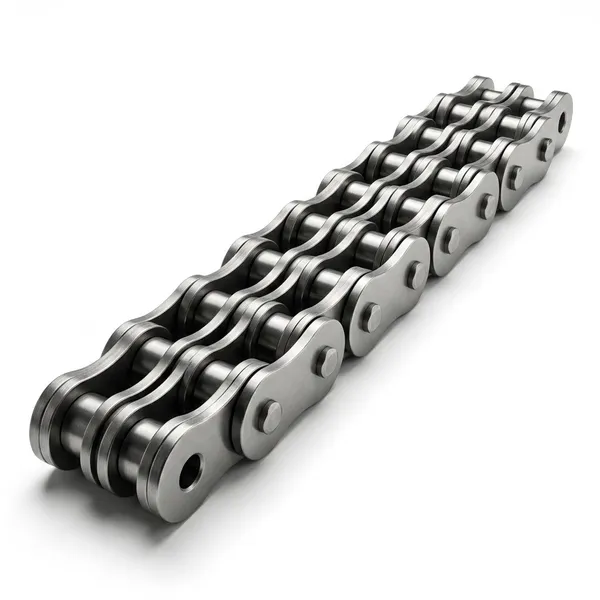
3. Choose the Chain Architecture and Interfaces
Verify chain series, lacing, pitch, anchors, sheave groove and diameter, and pin interfaces against the equipment drawing because general-purpose substitution is inappropriate for lifting systems
Verify the lifting chain as a system of matched interfaces: series and lacing, pitch, plate stack, pin arrangement, anchor clevis, sheave groove and diameter, routing, and available adjustment. A general-purpose chain with similar width may not carry load or bend over the sheave as intended. Resolve any mismatch against the equipment drawing before purchase rather than machining anchors or altering spacers during installation. With hoisting chains vertical lifting duty fixed, review the heavy-duty conveyor chains 이 인터페이스와 일치하는 옵션입니다.
If dynamic load agrees with released reference but sheave alignment does not, treat hoisting chains vertical lifting as an interface problem and survey the mating hardware in advance of changing chain size. If both agree yet the symptom remains, move upstream to load, alignment, lubrication, or support conditions. Numeric limits that belong to one series stay with that series.
4. Design for the Real Environment
Inspect corrosion, plate edge damage, cracks, turned pins, elongation, anchor wear, and sheave alignment at the same service event; chain condition cannot be judged in isolation
Inspect chain and hardware during the same service event. Look for plate cracking, edge rubbing, corrosion, pin movement, joint stiffness, and measured elongation while also examining anchor pins, clevis holes, sheave grooves, bearings, and alignment. A recurring plate-edge mark can be evidence of sheave tracking; accelerated elongation can be worsened by poor articulation or unequal load sharing. Treat the evidence as one lifting mechanism.
| 확인하다 | 공학적 중요성 | 검증 접근법 |
|---|---|---|
| Hoisting Chain | trace the complete load path from the moving carriage or counterweight through chain segments, anchors, and sheaves so each loaded strand and attachment is understood | Verify hoisting chain from a named datum or approved source, then reconcile vertical lifting for hoisting chains vertical lifting ahead of release. |
| Vertical Lifting | separate static suspended load from acceleration, deceleration, shock, impact at end stops, reeving multiplication, and unequal load sharing between parallel chains | Verify vertical lifting from a named datum or approved source, then reconcile dynamic load for hoisting chains vertical lifting before release. |
| Dynamic Load | verify chain series, lacing, pitch, anchors, sheave groove and diameter, and pin interfaces against the equipment drawing because general-purpose substitution is inappropriate for lifting systems | Verify dynamic load from a named datum or approved source, then reconcile anchor clevis for hoisting chains vertical lifting in advance of release. |
| Anchor Clevis | inspect corrosion, plate edge damage, cracks, turned pins, elongation, anchor wear, and sheave alignment at the same service event; chain condition cannot be judged in isolation | Verify anchor clevis from a named datum or approved source, then reconcile sheave alignment for hoisting chains vertical lifting before release. |
| 릴리스 게이트 | Approve hoisting chains vertical lifting only after field evidence, mating geometry, and the selected chain data agree. | |
Send hoisting chain, dynamic load, the mating-component condition, duty, and photographs of the measured references so the open interface can be reviewed before ordering.
5. Protect Serviceability and Alignment
Treat unusual noise, uneven lift height, jerking, or changing chain tension as system symptoms that require controlled inspection rather than simply tightening the chain
Jerking, uneven platform height, changing strand tension, or new noise should trigger controlled diagnosis rather than additional tightening. Compare parallel-chain adjustment, sheave freedom, anchor position, guide condition, and load distribution through the travel. Excessive take-up can add bearing and anchor load without correcting the root cause. Restore geometry and free motion first, then set adjustment by the machine procedure. For hoisting chains vertical lifting, use the 체인 드라이브 부품 범위 range only after sheave alignment passes the machine check.
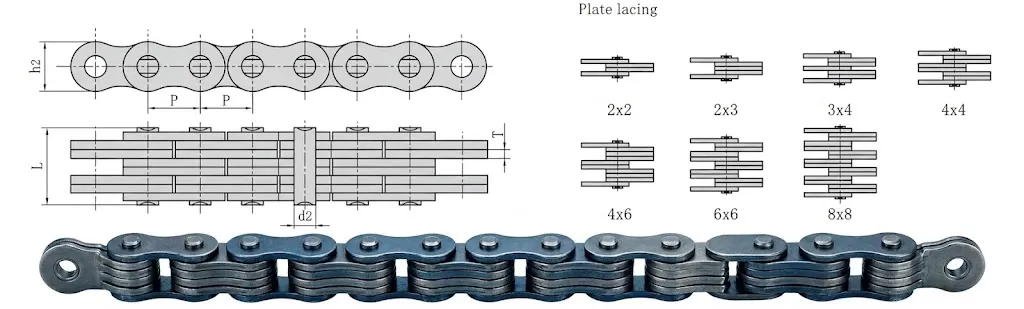
6. Verify the Application Before Release
Document measurements and replacement decisions with the machine-specific limits, then function-test the full travel under approved procedures before releasing the equipment
The release record for a vertical lift should state chain identity, measurement results, anchor and sheave findings, adjustment position, and the equipment-specific acceptance criteria used. Function-test the permitted full travel and observe tracking at each sheave and anchor. Safety devices, guards, and access covers should be restored before return to service. Where the equipment procedure requires proof or staged load testing, follow that method rather than inventing a generic test load.
Field Example: Turning Hoisting Chains Vertical Lifting Into a Release Decision
A maintenance planner investigating hoisting chains vertical lifting starts with the working capture rather than the parts shelf. Trace the complete load path from the moving carriage or counterweight through chain segments, anchors, and sheaves so each loaded strand and attachment is understood. Next, the team checks vertical lifting and dynamic load while the relevant mating hardware is exposed. The sequence matters: it establishes function and geometry before a catalogue size is allowed to influence the decision.
The service-side review then applies two different questions. First, survey corrosion, plate edge damage, cracks, turned pins, elongation, anchor wear, and sheave alignment at the same service event; chain status cannot be judged in isolation. Second, treat unusual noise, uneven lift height, jerking, or changing chain tension as system symptoms that require released inspection rather than simply tightening the chain. The team records anchor clevis with the environment and maintenance access instead of treating it as a later service issue. That makes the specification usable by both procurement and maintenance.
Release follows only subsequent to document measurements and replacement decisions with the equipment-specific limits, then function-test the full travel under approved procedures before releasing the equipment. The hoisting chains vertical lifting work order keeps hoisting chain, dynamic load, sheave alignment, interface photographs, and the controlled document used for any series-specific limit.
Hoisting Chains Vertical Lifting Release Checklist
- Trace the complete load path from the moving carriage or counterweight through chain segments, anchors, and sheaves so each loaded strand and attachment is understood. Document the evidence for hoisting chain with a named reference.
- Separate static suspended load from acceleration, deceleration, shock, impact at end stops, reeving multiplication, and unequal load sharing between parallel chains. Keep the vertical lifting observation with the hoisting chains vertical lifting work order.
- Verify chain series, lacing, pitch, anchors, sheave groove and diameter, and pin interfaces against the equipment drawing because general-purpose substitution is inappropriate for lifting systems. Use the applicable product criterion when dynamic load needs a numeric limit.
- Review corrosion, plate edge damage, cracks, turned pins, elongation, anchor wear, and sheave alignment at the same service event; chain state cannot be judged in isolation. Reconcile anchor clevis with the mating hardware before release.
- Treat unusual noise, uneven lift height, jerking, or changing chain tension as system symptoms that require released inspection rather than simply tightening the chain. Repeat the sheave alignment verify where position or wear can change the result.
- Document measurements and replacement decisions with the equipment-specific limits, then function-test the full travel under approved procedures before releasing the equipment. Archive hoisting chain with the chain identity and equipment duty.
Hoisting Chains Vertical Lifting FAQ
How do I choose or verify hoisting chain for hoisting chains vertical lifting?
For hoisting chains vertical lifting, the first review is hoisting chain. Trace the complete load path from the moving carriage or counterweight through chain segments, anchors, and sheaves so each loaded strand and attachment is understood. For lifting or other safety-critical duty, the equipment-specific inspection and release method governs.
What machine data is needed before checking vertical lifting?
With hoisting chains vertical lifting, judge vertical lifting in its real service state. Separate static suspended load from acceleration, deceleration, shock, impact at end stops, reeving multiplication, and unequal load sharing between parallel chains. Include the mating sprocket, sheave, guide, or attachment whenever anchor clevis is part of the load path.
How do I know whether dynamic load is compatible with the existing system?
For this hoisting chains vertical lifting question, verify dynamic load and sheave alignment together. Verify chain series, lacing, pitch, anchors, sheave groove and diameter, and pin interfaces against the equipment drawing because general-purpose substitution is inappropriate for lifting systems. If a numeric limit is needed for sheave alignment, use the product-specific equipment or chain-series criterion.
Can I select a replacement by anchor clevis alone?
On hoisting chains vertical lifting, appearance alone cannot establish anchor clevis. Review corrosion, plate edge damage, cracks, turned pins, elongation, anchor wear, and sheave alignment at the same service event; chain state cannot be judged in isolation. If the anchor clevis evidence conflicts with hoisting chain, resolve the interface before purchasing the replacement item.
When does sheave alignment become the limiting factor for hoisting chains vertical lifting?
A defensible hoisting chains vertical lifting answer begins with measured sheave alignment. Treat unusual noise, uneven lift height, jerking, or changing chain tension as system symptoms that require released inspection rather than simply tightening the chain. Keep the sheave alignment reading with the maintenance note so future inspections can trend change.
What should be documented before releasing a hoisting chains vertical lifting replacement order?
Before releasing hoisting chains vertical lifting, document hoisting chain and dynamic load. Document measurements and replacement decisions with the equipment-specific limits, then function-test the full travel under approved procedures before releasing the equipment. Subsequent to correction, recheck dynamic load under the same permitted process service state used to establish the symptom.
Cxm.