Tekninen laajuus
Selection Snapshot: Type A, B, and C sprocket hub styles
Choose the hub style from shaft support, axial space, bore capacity, machining access, and how the sprocket will be installed or removed. This article concentrates on Type A sprocket, Type B sprocket, Type C sprocket, hub style, length through bore, and maximum bore as field-verifiable decision inputs.
For type a, b, and c sprocket hub styles, keep chain engagement, shaft mounting, operating duty, and maintainability in the same decision record; use the current drawing whenever an exact limit is model-specific.
Kenttäviite
- Ketjun/hampaan rajapinta
- Confirm Type A sprocket, Type B sprocket, and the mating chain dimensions before changing hardware.
- Akselin/navan liitoskohta
- Record Type C sprocket and mounting details that control concentricity, axial position, or load transfer.
- Käyttötehtävä
- Document speed, load, shock, starts/reversals, contamination, washdown, and maintenance access relevant to type a, b, and c sprocket hub styles.
- Vahvistustiedot
- For type a, b, and c sprocket hub styles, keep measured values, nominal drawing values, wear observations, and the final replacement requirement distinct in the service record.
Päätösperiaate
Release type a, b, and c sprocket hub styles from measured interfaces, not appearance.
For type a, b, and c sprocket hub styles, check the chain interface, shaft connection, duty, and installed geometry as separate acceptance items, then reconcile them in the final specification.
1. Plate-only Type A
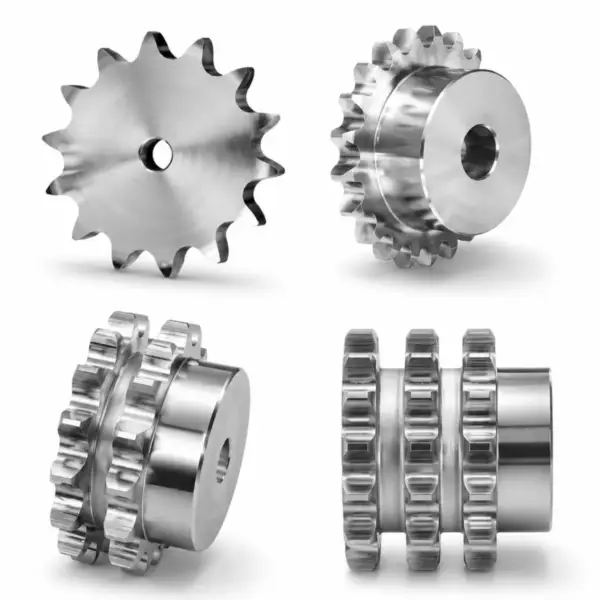
A Type A sprocket is essentially a plate wheel without a projecting hub. It is useful when axial space is tight or when the plate will be attached to another hub or carrier, but its final shaft connection must be engineered separately. Record the evidence for plate-only type a beside the measured Type A sprocket. If Type C sprocket is size- or supplier-dependent, carry the drawing reference into the purchase record. For component context, review roller chain sprocket hub styles kun linkitetty tuoteperhe on relevantti samalle ketjukäyttöliittymälle.
For commissioning, define how plate-only type a will be checked after installation: chain seating, runout, shaft clearance, tooth-side contact, rpm, or loaded inspection as applicable.
2. Single-hub Type B
Type B places a hub on one side, creating more length through bore and a practical location for a keyway, set screws, or a taper bushing while keeping the opposite face relatively clear. Treat single-hub type b as a pass/fail interface: document Type B sprocket, inspect the mating component, and use hub style to confirm the final operating fit.
Verification for type a, b, and c sprocket hub styles: compare the field condition with nominal data and treat any difference that changes roller seating, shaft support, or service access as a release criterion.
3. Double-hub Type C
Type C carries hub material on both sides of the sprocket plate. The arrangement can provide more bore support or balancing of axial mass, but it consumes space on both sides and can interfere with bearings, guards, or adjacent components. A useful field note for type a, b, and c sprocket hub styles pairs Type C sprocket with length through bore. That keeps the decision tied to the actual chain drive rather than a visual match. For component context, review teollisuuden rullaketjukäytöt kun linkitetty tuoteperhe on relevantti samalle ketjukäyttöliittymälle.
Use the wear evidence to test double-hub type c: asymmetric polishing, fretting, root impact, or chain climbing should lead to a measurable correction rather than a like-for-like replacement.
4. Bore capacity and shaft support
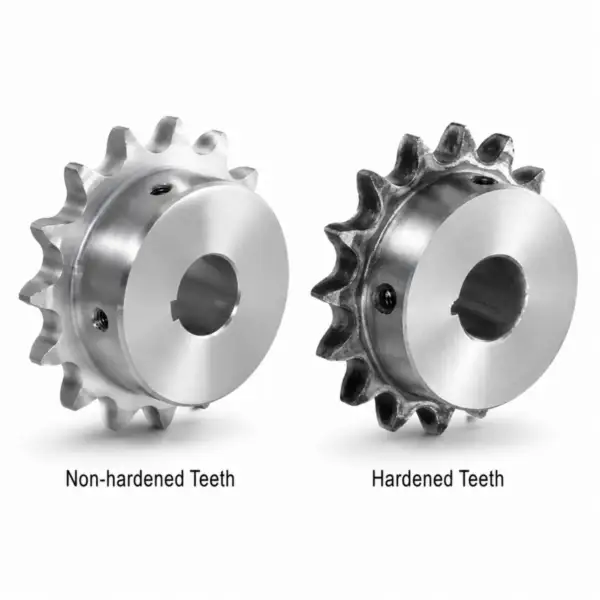
Hub diameter and length through bore limit how much shaft can be supported and how large a finished bore can be machined without weakening the hub. The supplier drawing, not hub-letter alone, controls the actual limit. For type a, b, and c sprocket hub styles, use hub style as the primary field reference and compare it with maximum bore; resolve any disagreement before releasing the sprocket specification.
For procurement, express bore capacity and shaft support as verifiable data: chain standard, measured dimension, drawing reference, material condition, or operating requirement. Do not specify only ‘same as old.’
5. Service access and removal
A hub style that is easy to machine may still be difficult to remove once installed. Check puller access, bushing screw access, key removal, and whether maintenance can reach the hub without moving bearings or guards. The practical check for service access and removal is to connect the observed condition to length through bore, then confirm that Type A sprocket does not introduce a second compatibility limit.
For commissioning, define how service access and removal will be checked after installation: chain seating, runout, shaft clearance, tooth-side contact, rpm, or loaded inspection as applicable.
Valintamenettely
- 1. Map the shaft envelope. Measure free axial space on both sides of the sprocket location, including bearing shoulders, seals, guards, and neighboring hubs. Before moving on, confirm that hub style agrees with the mating chain or shaft interface relevant to this step.
- 2. Record shaft details. Measure shaft diameter, keyway width and depth, shoulder position, usable shaft length, and any threaded or clamped retention features. Record the result against length through bore so the next step starts from measured evidence.
- 3. Choose the hub direction. For a Type B sprocket, decide which side the hub must face so the chain plane remains aligned while the hub clears nearby hardware. Use the current machine drawing when maximum bore is model-specific, and keep the measured value in the service record.
- 4. Check bore limits. Compare the required finished bore or bushing outside diameter with the maximum bore and hub dimensions on the actual sprocket drawing. Before moving on, confirm that Type A sprocket agrees with the mating chain or shaft interface relevant to this step.
- 5. Check runout references. Identify which face can be used for axial alignment and which diameter can be indicated for radial runout after mounting. Record the result against Type B sprocket so the next step starts from measured evidence.
- 6. Confirm removal path. Verify that the sprocket can be removed from the shaft with the available maintenance clearance and without disassembling unrelated machine structure. Use the current machine drawing when Type C sprocket is model-specific, and keep the measured value in the service record.
For type a, b, and c sprocket hub styles, cross-check adjacent drive interfaces with voimansiirtokomponentit ennen asennus- tai korvaustietueen julkaisemista.
Vertailumatriisi
| Tekijä | Mitä varmistaa | Vapautuslogiikka |
|---|---|---|
| Plate-only Type A | A Type A sprocket is essentially a plate wheel without a projecting hub | Record plate-only type a as a release check before installation or restart. |
| Single-hub Type B | Type B places a hub on one side, creating more length through bore and a practical location for a keyway, set screws, or a taper bushing while keeping the opposite face relatively clear | Correct the system cause linked to single-hub type b before fitting new hardware. |
| Double-hub Type C | Type C carries hub material on both sides of the sprocket plate | Accept double-hub type c when field evidence matches the controlled requirement. |
| Bore capacity and shaft support | Hub diameter and length through bore limit how much shaft can be supported and how large a finished bore can be machined without weakening the hub | Reconstruct nominal bore capacity and shaft support if wear has obscured the original geometry. |
| Service access and removal | A hub style that is easy to machine may still be difficult to remove once installed | Use the current supplier or machine limit for model-specific service access and removal. |
| Käytä lopullista hyväksyntää varten mitattuja konetietoja ja nykyistä ketju-/rattaan piirustusta; mallikohtaiset rajat eivät ole keskenään vaihdettavissa. | ||
Lopullinen valintatarkistus
Vältä 01
Selecting Type A only because it is thinner, then discovering there is no engineered hub connection. Document the corrective requirement specifically for type a, b, and c sprocket hub styles before the part is released.
Vältä 02
Facing a Type B hub toward a bearing and losing the axial clearance needed for alignment. Document the corrective requirement specifically for type a, b, and c sprocket hub styles before the part is released.
Vältä 03
Assuming all manufacturers use identical A/B/C dimensions instead of checking the drawing. Document the corrective requirement specifically for type a, b, and c sprocket hub styles before the part is released.
Vältä 04
Machining beyond the published maximum bore and reducing hub wall thickness. Document the corrective requirement specifically for type a, b, and c sprocket hub styles before the part is released.
Konfiguraation ristiintarkistus: käytä tätä industrial sprocket configurations only to compare common construction terminology for type a, b, and c sprocket hub styles; release the part from the actual chain, shaft, and controlled drawing.
FAQ: Type A, B, and C sprocket hub styles — practical engineering questions
What is the difference between Type A, Type B, and Type C sprockets?
Type A has no projecting hub, Type B has a hub on one side, and Type C has hub material on both sides. The letters describe broad construction, not a universal set of dimensions, so bore capacity and length through bore still need to be checked on the selected drawing.
Which sprocket hub style is best for a keyed shaft?
A Type B or Type C design usually provides more hub length for a finished bore and keyway than a plate-only Type A, but the right choice depends on shaft diameter, torque transfer, axial space, and the manufacturer's maximum bore.
Can a Type A sprocket be bored and keyed directly?
Some plate sprockets can be machined or attached to a separate hub, but a thin plate does not automatically provide enough bore length or wall section for a keyed shaft. Verify the intended construction and machining allowance.
Does Type C reduce sprocket wobble compared with Type B?
Not automatically. Runout depends on bore accuracy, hub concentricity, shaft condition, mounting method, and sprocket flatness. A double hub may offer more support, but poor machining or seating can still produce wobble.
How do I decide which way a Type B sprocket hub should face?
Place the sprocket tooth plane where the chain must run, then orient the hub toward the side with enough shaft and service clearance. Confirm that the hub does not contact a bearing shoulder or guard and that alignment can still be measured.
What dimensions should I specify when ordering a Type B or Type C sprocket?
Provide chain size and strand count, tooth count, bore, keyway, hub style, hub diameter, length through bore, material, mounting method, and any axial-space limit. A drawing is preferable when the shaft layout is crowded.