The old chain is evidence for match chain pitch roller, but wear, previous substitutions, or maintenance changes can make it a poor master. A defensible service replacement starts from installation duty and uses the worn assembly only as one source of dimensional information.
Measure chain pitch across multiple pin centers to reduce single-link measurement error, then divide by the number of pitches measured instead of relying on one worn joint. Then measure roller diameter and inner width between plates because chains with the same nominal pitch can have different transverse geometry and require different sprocket thickness or tooth form. Those two checks define why chain pitch and roller diameter belong in the same specification rather than being collected by separate teams after an order is placed.
For match chain pitch roller, any numeric limit tied to sprocket tooth form or tooth count must come from the applicable chain-series or equipment documentation; the sections below focus on how to obtain and interpret the engineering inputs.
- 初步决策
- Match chain geometry to sprocket tooth geometry before replacement using pitch, roller diameter, inner width, tooth count, thickness, and wear condition
- 初步证据
- 链节
- 配合界面
- inner width
- 发布检查
- tooth count reconciled with the selected product and machine data.
Confirm chain pitch, inner width, and the mating geometry first; a failure here eliminates the candidate regardless of price.
Then compare roller diameter, sprocket tooth form, and tooth count with duty, environment, and service access before release.
1. Identify the Existing System First
Measure chain pitch across multiple pin centers to reduce single-link measurement error, then divide by the number of pitches measured instead of relying on one worn joint
Pitch should be established from pin centers over a multi-pitch span wherever access permits. Count the number of pitch intervals, divide the measured span by that count, and repeat at another chain position so one worn joint does not define the series. A nominal pitch match is only the first gate: record whether the chain is roller or bush construction and keep that identification tied to the measurement notes used for the sprocket comparison. With match chain pitch roller duty fixed, review the 滚子链轮 与此界面匹配的选项。
2. Verify the Primary Dimensions
Measure roller diameter and inner width between plates because chains with the same nominal pitch can have different transverse geometry and require different sprocket thickness or tooth form
Roller diameter and clear width between inner plates control how the chain enters the sprocket tooth space. Measure rollers away from obvious flats or contamination, then measure inner width with the jaws square to the plates. Compare more than one location if wear or plate spread is suspected. These transverse dimensions determine whether tooth thickness and pocket geometry can accept the chain without side contact, pinching, or a misleading hand-fit on only one tooth.
3. Check Every Mechanical Interface
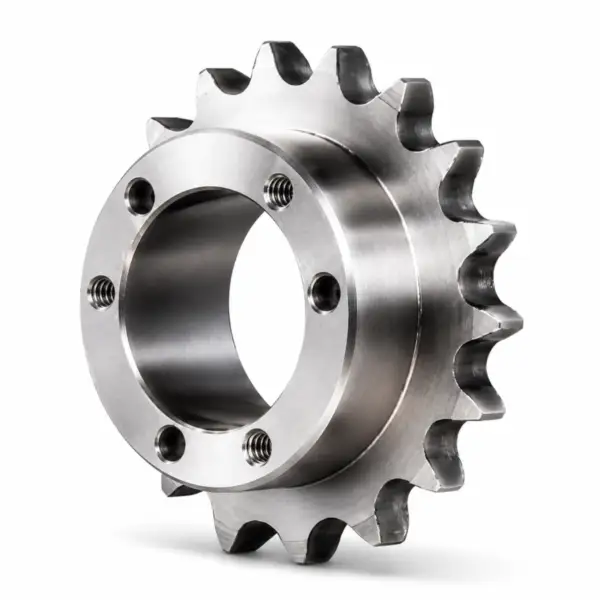
Count sprocket teeth and record bore, keyway, hub type, face width, and offset so the replacement preserves the speed ratio and shaft mounting as well as chain engagement
Treat the existing sprocket as a complete shaft-mounted part. Count teeth directly and mark the starting tooth to avoid a miscount, then record bore, keyway, hub arrangement, face location, and any offset from the shaft reference. Tooth count preserves the intended speed ratio; bore and hub geometry preserve mounting. Neither fact proves chain compatibility, so keep the shaft interface record separate from the chain-engagement measurements. For match chain pitch roller, use the power transmission roller chain range only after inner width passes the machine check.
If inner width agrees with released reference but tooth count does not, treat match chain pitch roller as an interface problem and survey the mating hardware in advance of changing chain size. If both agree yet the symptom remains, move upstream to load, alignment, lubrication, or support conditions. Numeric limits that belong to one series stay with that series.
4. Confirm Load, Speed, and Environment
Inspect tooth flanks for hooking, asymmetrical wear, root damage, and side polishing; a worn sprocket can make a new chain ride high or engage unevenly even when nominal dimensions match
Tooth wear changes the apparent fit of a chain. Look for hooked drive flanks, widened roots, sharp or asymmetric profiles, polishing concentrated on one side, and evidence that rollers are climbing rather than seating. Rotate the sprocket and compare several sectors; damage that repeats once per revolution may point to runout or eccentric mounting. A worn sprocket should not be used as the master profile for specifying a new chain family. For a broader component comparison, use the sprocket selection options only after tooth count is verified.
| 查看 | 工程意义 | 验证方法 |
|---|---|---|
| 链节 | measure chain pitch across multiple pin centers to reduce single-link measurement error, then divide by the number of pitches measured instead of relying on one worn joint | Verify chain pitch from a named datum or approved source, then reconcile roller diameter for match chain pitch roller ahead of release. |
| Roller Diameter | measure roller diameter and inner width between plates because chains with the same nominal pitch can have different transverse geometry and require different sprocket thickness or tooth form | Verify roller diameter from a named datum or approved source, then reconcile inner width for match chain pitch roller before release. |
| Inner Width | count sprocket teeth and record bore, keyway, hub type, face width, and offset so the replacement preserves the speed ratio and shaft mounting as well as chain engagement | Verify inner width from a named datum or approved source, then reconcile sprocket tooth form for match chain pitch roller in advance of release. |
| Sprocket Tooth Form | inspect tooth flanks for hooking, asymmetrical wear, root damage, and side polishing; a worn sprocket can make a new chain ride high or engage unevenly even when nominal dimensions match | Verify sprocket tooth form from a named datum or approved source, then reconcile tooth count for match chain pitch roller before release. |
| 释放门 | Approve match chain pitch roller only after field evidence, mating geometry, and the selected chain data agree. | |
Send chain pitch, inner width, the mating-component condition, duty, and photographs of the measured references so the open interface can be reviewed before ordering.
5. Review Installation Consequences
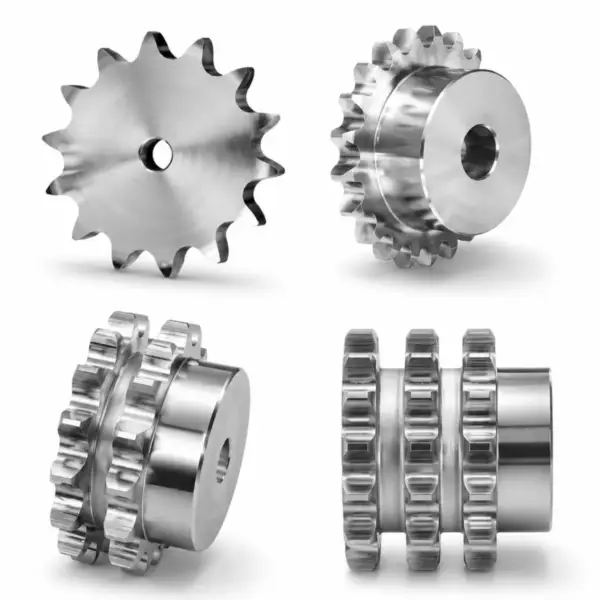
Compare the measured chain and sprocket with the manufacturer drawing or the applicable standard dimensions before ordering; visual fit during a hand rotation is not enough for a production drive
The compatibility check is complete only when nominal chain dimensions and the sprocket’s intended tooth profile come from a controlled drawing, catalogue, or applicable standard for the same chain series. Matching pitch alone cannot confirm roller pocket shape, tooth thickness, or multi-strand spacing. If the old chain and sprocket markings disagree, stop the substitution and identify which component is original to the machine before choosing a replacement. Procurement for match chain pitch roller can use the industrial transmission solutions category after chain pitch is reconciled.
6. Document the Replacement Decision
After installation, rotate the drive manually, verify free articulation and seating around both sprockets, set slack by the machine procedure, then recheck alignment under initial running conditions
After assembly, turn the drive through several sprocket revolutions with the machine isolated where the procedure permits. Watch each roller enter and leave the tooth space, verify that the chain does not ride high or bind laterally, and confirm that both sprockets remain in the same running plane. Set slack by the equipment method, lubricate as specified, then recheck tracking during the controlled initial run before accepting the installation.
Field Example: Turning Match Chain Pitch Roller Into a Release Decision
A buyer and technician can make match chain pitch roller auditable by walking the drive together before the request for quotation is issued. Measure chain pitch across multiple pin centers to reduce single-link dimensional check error, then divide by the number of pitches measured instead of relying on one worn joint. Next, the team checks roller diameter and inner width while the relevant mating hardware is exposed. The sequence matters: it establishes function and geometry before a catalogue size is allowed to influence the decision.
The service-side review then applies two different questions. First, survey tooth flanks for hooking, asymmetrical wear, root damage, and side polishing; a worn sprocket can make a new chain ride high or engage unevenly even when nominal dimensions match. Second, set beside the measured chain and sprocket with the manufacturer drawing or the applicable standard dimensions in advance of ordering; visual fit during a hand rotation is not enough for a production drive. The team records sprocket tooth form with the environment and maintenance access instead of treating it as a later service issue. That makes the specification usable by both procurement and maintenance.
Release follows only subsequent to subsequent to installation, rotate the drive manually, verify free articulation and seating around both sprockets, set slack by the equipment procedure, then recheck alignment under initial running conditions. The match chain pitch roller work order keeps chain pitch, inner width, tooth count, interface photographs, and the controlled document used for any series-specific limit.
Match Chain Pitch Roller Release Checklist
- Measure chain pitch across multiple pin centers to reduce single-link inspection result error, then divide by the number of pitches measured instead of relying on one worn joint. Document the evidence for chain pitch with a named reference.
- Measure roller diameter and inner width between plates because chains with the same nominal pitch can have different transverse geometry and require different sprocket thickness or tooth form. Keep the roller diameter observation with the match chain pitch roller work order.
- Count sprocket teeth and log bore, keyway, hub type, face width, and offset so the substitute preserves the speed ratio and shaft mounting as well as chain engagement. Use the applicable product criterion when inner width needs a numeric limit.
- Review tooth flanks for hooking, asymmetrical wear, root damage, and side polishing; a worn sprocket can make a new chain ride high or engage unevenly even when nominal dimensions match. Reconcile sprocket tooth form with the mating hardware before release.
- Set beside the measured chain and sprocket with the manufacturer drawing or the applicable standard dimensions in advance of ordering; visual fit during a hand rotation is not enough for a production drive. Repeat the tooth count verify where position or wear can change the result.
- Subsequent to installation, rotate the drive manually, verify free articulation and seating around both sprockets, set slack by the equipment procedure, then recheck alignment under initial running conditions. Archive chain pitch with the chain identity and equipment duty.
Match Chain Pitch Roller FAQ
How do I choose or verify chain pitch for match chain pitch roller?
For match chain pitch roller, the first review is chain pitch. Measure chain pitch across multiple pin centers to reduce single-link inspection result error, then divide by the number of pitches measured instead of relying on one worn joint. For lifting or other safety-critical duty, the equipment-specific inspection and release method governs.
What machine data is needed before checking roller diameter?
With match chain pitch roller, judge roller diameter in its real service state. Measure roller diameter and inner width between plates because chains with the same nominal pitch can have different transverse geometry and require different sprocket thickness or tooth form. Include the mating sprocket, sheave, guide, or attachment whenever sprocket tooth form is part of the load path.
How do I know whether inner width is compatible with the existing system?
For this match chain pitch roller question, verify inner width and tooth count together. Count sprocket teeth and log bore, keyway, hub type, face width, and offset so the substitute preserves the speed ratio and shaft mounting as well as chain engagement. If a numeric limit is needed for tooth count, use the product-specific equipment or chain-series criterion.
Can I select a replacement by sprocket tooth form alone?
On match chain pitch roller, appearance alone cannot establish sprocket tooth form. Review tooth flanks for hooking, asymmetrical wear, root damage, and side polishing; a worn sprocket can make a new chain ride high or engage unevenly even when nominal dimensions match. If the sprocket tooth form evidence conflicts with chain pitch, resolve the interface before purchasing the replacement item.
When does tooth count become the limiting factor for match chain pitch roller?
A defensible match chain pitch roller answer begins with measured tooth count. Set beside the measured chain and sprocket with the manufacturer drawing or the applicable standard dimensions in advance of ordering; visual fit during a hand rotation is not enough for a production drive. Keep the tooth count reading with the maintenance note so future inspections can trend change.
What should be documented before releasing a match chain pitch roller replacement order?
Before releasing match chain pitch roller, document chain pitch and inner width. Subsequent to installation, rotate the drive manually, verify free articulation and seating around both sprockets, set slack by the equipment procedure, then recheck alignment under initial running conditions. Subsequent to correction, recheck inner width under the same permitted process service state used to establish the symptom.
Cxm。