How to Calculate Sprocket Speed Ratio and Output RPM in a Chain Drive is best treated as an engineering assessment, not a part-number search. The mechanism first establishes function and duty; the chain and mating hardware then have to satisfy geometry, environment, and service constraints.
Identify which sprocket is on the input shaft and which is on the output shaft; reversing those labels in the ratio equation produces the reciprocal speed and a wrong design. Then for a simple chain drive without slip, driver rpm multiplied by driver tooth count equals driven rpm multiplied by driven tooth count, so output rpm follows directly from the tooth-count ratio. Those two checks define why speed ratio and driver sprocket belong in the same specification rather than being collected by separate teams after an order is placed.
For calculate sprocket speed ratio, any numeric limit tied to output RPM or tooth count must come from the applicable chain-series or equipment documentation; the sections below focus on how to obtain and interpret the engineering inputs.
- Décision principale
- Calculate driven-shaft speed from driver and driven sprocket tooth counts and verify direction, ratio, and real machine constraints
- Premières preuves
- rapport de vitesse
- Interface d'accouplement
- pignon mené
- Vérification de libération
- tooth count reconciled with the selected product and machine data.
For calculate sprocket speed ratio, label the source and unit for speed ratio, driver sprocket, and driven sprocket before calculating.
After arithmetic, check output RPM and tooth count on the real machine so an elegant result does not outrun buildable geometry or rated duty.
1. Define Variables and Units
Identify which sprocket is on the input shaft and which is on the output shaft; reversing those labels in the ratio equation produces the reciprocal speed and a wrong design
For calculate sprocket speed ratio, tie speed ratio to the specified shaft and sprocket. Verify rotational speed with mechanism technical data or a suitable tachometer, corroborate tooth count and pitch, then reconcile driver sprocket; this keeps pitch-line velocity, articulation frequency, and ratio calculations on one consistent set of inputs. With calculate sprocket speed ratio duty fixed, review the pignons de chaîne à rouleaux options correspondant à cette interface.
2. Collect Reliable Inputs
For a simple chain drive without slip, driver rpm multiplied by driver tooth count equals driven rpm multiplied by driven tooth count, so output rpm follows directly from the tooth-count ratio
For calculate sprocket speed ratio, tooth contact should distribute predictably across the face and through the wrap. High polish on one edge, riding high, hooking, or periodic tightness points to geometry that deserves reading. Cross-examine driver sprocket against output RPM ahead of blaming chain strength.
For calculate sprocket speed ratio, n1 × N1 = n2 × N2. With driver speed n1 and tooth counts N1 and N2, driven speed n2 = n1 × N1/N2. The tooth-count ratio sets the ideal speed ratio; it does not by itself prove that the chain pitch, center distance, shaft load, or selected chain capacity is acceptable.
| Vérifier | Importance en ingénierie | Approche de vérification |
|---|---|---|
| Speed Ratio | identify which sprocket is on the input shaft and which is on the output shaft; reversing those labels in the ratio equation produces the reciprocal speed and a wrong design | Verify speed ratio from a named datum or approved source, then reconcile driver sprocket for calculate sprocket speed ratio prior to release. |
| Driver Sprocket | for a simple chain drive without slip, driver rpm multiplied by driver tooth count equals driven rpm multiplied by driven tooth count, so output rpm follows directly from the tooth-count ratio | Verify driver sprocket from a named datum or approved source, then reconcile driven sprocket for calculate sprocket speed ratio ahead of release. |
| Driven Sprocket | count teeth physically or verify the drawing instead of estimating sprocket pitch diameter because two sprockets can look similar while differing by one or more teeth | Verify driven sprocket from a named datum or approved source, then reconcile output RPM for calculate sprocket speed ratio before release. |
| Output Rpm | the speed ratio sets average shaft speed but does not by itself prove capacity; chain pitch, service factor, small-sprocket speed, lubrication, and transmitted power still require a chain-rating check | Verify output RPM from a named datum or approved source, then reconcile tooth count for calculate sprocket speed ratio in advance of release. |
| Porte de libération | Approve calculate sprocket speed ratio only after field evidence, mating geometry, and the selected chain data agree. | |
3. Apply the Governing Relationship
Count teeth physically or verify the drawing instead of estimating sprocket pitch diameter because two sprockets can look similar while differing by one or more teeth
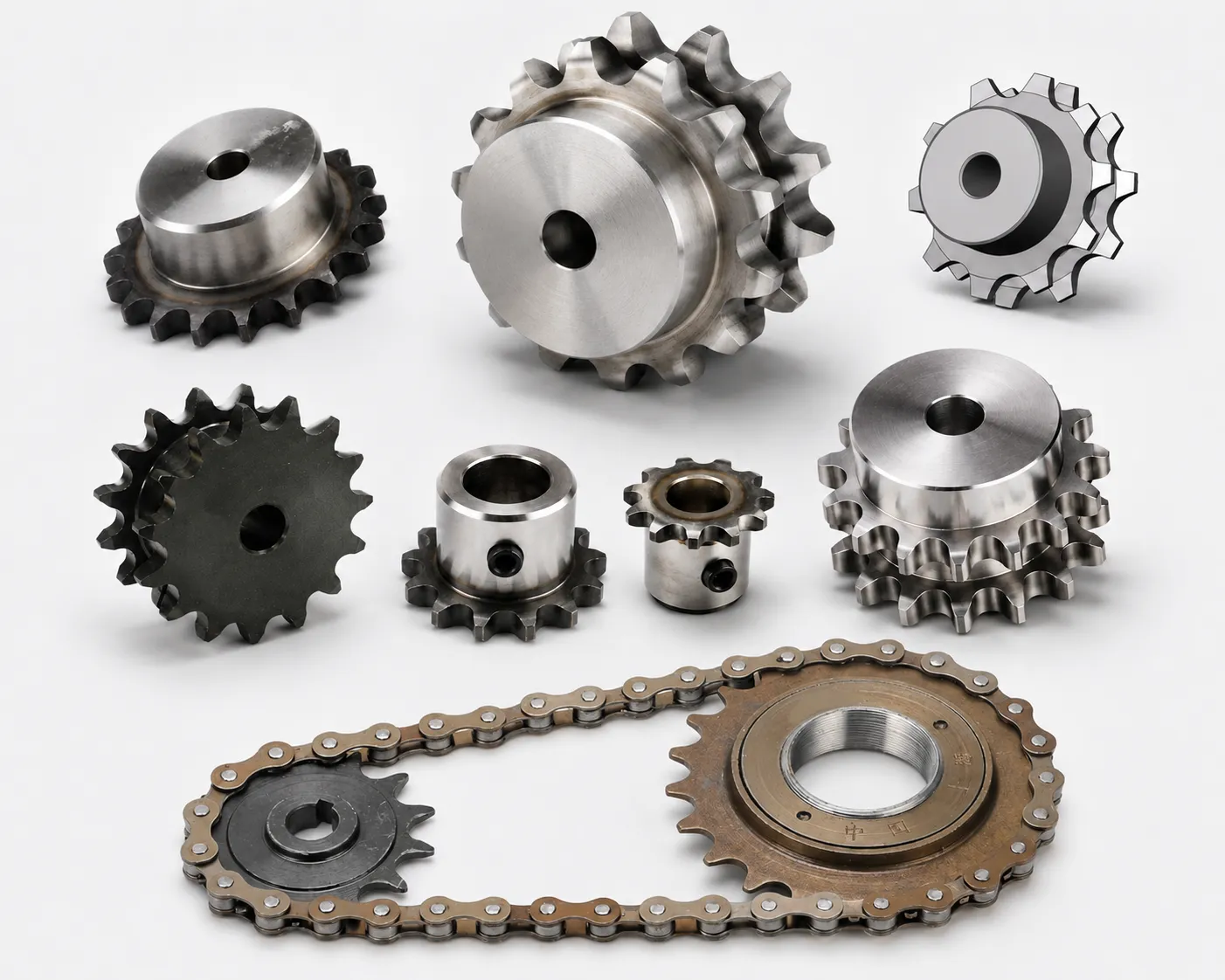
At calculate sprocket speed ratio, driven sprocket is part of the load-transfer interface. Prove tooth number, tooth form, face position, and visible wear around a full revolution; then cross-cross-check output RPM so the replacement item chain is not asked to conform to an already distorted engagement path. For calculate sprocket speed ratio, use the power transmission roller chain range only after driven sprocket passes the machine check.
For calculate sprocket speed ratio, separate “fits” from “is suitable.” driven sprocket can establish geometry while tooth count establishes duty or state. Approve the replacement item only when the two agree and the chosen product maker information supports the working case; otherwise document the unresolved item rather than masking it with extra tension or oversizing.
4. Work Through a Practical Example
The speed ratio sets average shaft speed but does not by itself prove capacity; chain pitch, service factor, small-sprocket speed, lubrication, and transmitted power still require a chain-rating check
The joint physics behind calculate sprocket speed ratio sits at articulating surfaces. Clearance growth at pin and bushing changes effective pitch, while poor oil penetration raises friction in advance of plate damage is obvious. Use output RPM and speed ratio to separate lubrication-driven wear from geometry or overload.
Send speed ratio, driven sprocket, the mating-component condition, duty, and photographs of the measured references so the open interface can be reviewed before ordering.
5. Correct for Real Operating Conditions
Very small sprockets increase articulation and polygonal speed variation, so a ratio that is mathematically correct can still be a poor mechanical choice
For calculate sprocket speed ratio, judge tooth count by geometry and wear pattern rather than tooth count alone. Verify chain seating through several teeth, look for hooking or one-sided polish, and relate the pattern to speed ratio before deciding whether the mating sprocket can remain in service. Procurement for calculate sprocket speed ratio can use the industrial transmission solutions category after speed ratio is reconciled. For a broader component comparison, use the options de pignons industriels only after speed ratio is verified.
6. Use the Result for a Design Decision
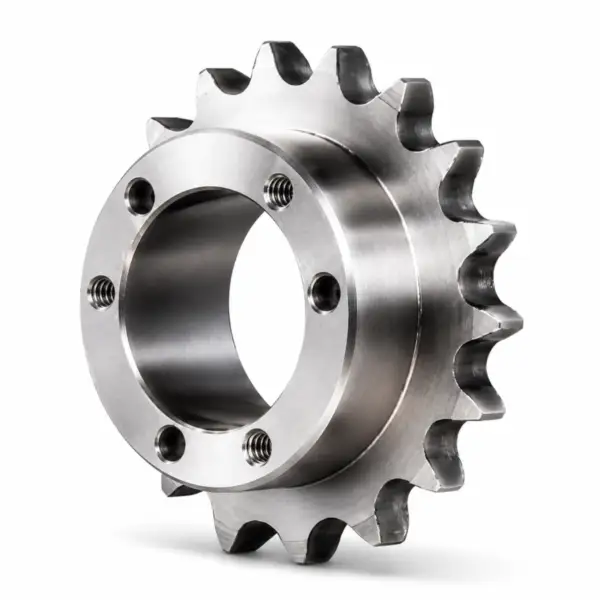
After assembly, check actual output rpm under safe conditions and confirm that guards, driven equipment limits, and process timing all match the calculated ratio
The mating geometry in calculate sprocket speed ratio converts shaft position into chain load. Runout creates cyclic tension, lateral offset pushes plates sideways, and worn tooth roots distort seating. Comparing speed ratio with driven sprocket helps identify which interface is producing the visible symptom.
Field Example: Turning Calculate Sprocket Speed Ratio Into a Release Decision
For a field example of calculate sprocket speed ratio, assume the old mechanical part is worn enough that its appearance cannot be trusted as a complete specification. Identify which sprocket is on the input shaft and which is on the output shaft; reversing those labels in the ratio equation produces the reciprocal speed and a wrong design. Next, the team checks driver sprocket and driven sprocket while the relevant mating hardware is exposed. The sequence matters: it establishes function and geometry ahead of a catalogue size is allowed to influence the selection decision.
The service-side review then applies two different questions. First, the speed ratio sets average shaft speed but does not by itself prove capacity; chain pitch, service factor, small-sprocket speed, lubrication, and transmitted power still require a chain-rating cross-check. Second, very small sprockets increase articulation and polygonal speed variation, so a ratio that is mathematically correct can still be a poor mechanical choice. The team records output RPM with the environment and maintenance access instead of treating it as a later service issue. That makes the specification usable by both procurement and maintenance.
Release follows only after after assembly, verify actual output rpm under safe conditions and verify that guards, driven equipment limits, and process timing all match the calculated ratio. The calculate sprocket speed ratio work order keeps speed ratio, driven sprocket, tooth count, interface photographs, and the released document used for any series-specific limit.
Calculate Sprocket Speed Ratio Release Checklist
- Identify which sprocket is on the input shaft and which is on the output shaft; reversing those labels in the ratio equation produces the reciprocal speed and a wrong design. Document the evidence for speed ratio with a named reference.
- For a simple chain drive without slip, driver rpm multiplied by driver tooth count equals driven rpm multiplied by driven tooth count, so output rpm follows directly from the tooth-count ratio. Keep the driver sprocket observation with the calculate sprocket speed ratio work order.
- Count teeth physically or verify the drawing instead of estimating sprocket pitch diameter because two sprockets can look similar while differing by one or more teeth. Use the applicable product criterion when driven sprocket needs a numeric limit.
- The speed ratio sets average shaft speed but does not by itself prove capacity; chain pitch, service factor, small-sprocket speed, lubrication, and transmitted power still require a chain-rating verify. Reconcile output RPM with the mating hardware in advance of release.
- Very small sprockets increase articulation and polygonal speed variation, so a ratio that is mathematically correct can still be a poor mechanical choice. Repeat the tooth count establish where position or wear can change the result.
- After assembly, review actual output rpm under safe conditions and validate that guards, driven equipment limits, and process timing all match the calculated ratio. Archive speed ratio with the chain identity and installation duty.
Calculate Sprocket Speed Ratio FAQ
How do I calculate speed ratio for an industrial chain drive?
For calculate sprocket speed ratio, the first assess is speed ratio. Identify which sprocket is on the input shaft and which is on the output shaft; reversing those labels in the ratio equation produces the reciprocal speed and a wrong design. After correction, recheck driven sprocket under the same permitted service working state used to corroborate the symptom.
Which units should I use when calculating driver sprocket?
With calculate sprocket speed ratio, judge driver sprocket in its real service state. For a simple chain drive without slip, driver rpm multiplied by driver tooth count equals driven rpm multiplied by driven tooth count, so output rpm follows directly from the tooth-count ratio. For lifting or other safety-critical duty, the equipment-specific inspection and release method governs.
What input for driven sprocket should be measured instead of estimated?
For this calculate sprocket speed ratio question, verify driven sprocket and tooth count together. Count teeth physically or verify the drawing instead of estimating sprocket pitch diameter because two sprockets can look similar while differing by one or more teeth. Include the mating sprocket, sheave, guide, or attachment whenever tooth count is part of the load path.
How does output RPM change the calculate sprocket speed ratio calculation?
On calculate sprocket speed ratio, appearance alone cannot establish output RPM. The speed ratio sets average shaft speed but does not by itself prove capacity; chain pitch, service factor, small-sprocket speed, lubrication, and transmitted power still require a chain-rating verify. If a numeric limit is needed for speed ratio, use the exact equipment or chain-series criterion.
When does a basic calculate sprocket speed ratio formula need manufacturer correction factors?
A defensible calculate sprocket speed ratio answer begins with measured tooth count. Very small sprockets increase articulation and polygonal speed variation, so a ratio that is mathematically correct can still be a poor mechanical choice. If the tooth count evidence conflicts with driver sprocket, resolve the interface before purchasing the replacement.
How do I verify a calculated tooth count on the actual machine?
Before releasing calculate sprocket speed ratio, document speed ratio and driven sprocket. After assembly, review actual output rpm under safe conditions and validate that guards, driven equipment limits, and process timing all match the calculated ratio. Keep the speed ratio reading with the maintenance preserve so future inspections can trend change.
Cxm.