How to Measure Chain Wear Elongation Across Multiple Pitches is best treated as an engineering judgement, not a part-number search. The equipment train first establishes function and duty; the chain and mating hardware then have to satisfy geometry, environment, and service constraints.
Measure the chain under a consistent light tension so slack inside the joints is taken up in the same direction; a hanging or bunched chain gives inconsistent readings. Then choose a straight run and measure between equivalent pin centers over a manufacturer-recommended number of pitches because a longer gauge length averages local variation and improves resolution. Those two checks define why wear elongation and multi-pitch measurement belong in the same specification rather than being collected by separate teams after an order is placed.
For measure chain wear elongation, any numeric limit tied to pin-bushing wear or new part limit must come from the applicable chain-series or equipment documentation; the sections below focus on how to obtain and interpret the engineering inputs.
- Πρωταρχική απόφαση
- Measure wear elongation over multiple pitches, calculate percentage elongation, and interpret the result with the chain and machine limits
- Πρώτα στοιχεία
- wear elongation
- Διεπαφή ζευγαρώματος
- nominal length
- Έλεγχος έκδοσης
- replacement limit reconciled with the selected product and machine data.
For measure chain wear elongation, mark the endpoints used for wear elongation; keep tool orientation consistent and repeat the measurement where multi-pitch measurement can vary.
Save chain position, machine state, tool, datum, nominal length, and replacement limit; the next inspection can then calculate change instead of re-identifying the method.
1. Prepare the Measurement and Reference Points
Measure the chain under a consistent light tension so slack inside the joints is taken up in the same direction; a hanging or bunched chain gives inconsistent readings
For measure chain wear elongation, trend wear elongation as a change from a known baseline. Chain length growth normally reflects articulation wear at pins and bushings rather than plates simply “stretching”; measure over a defined pitch count, survey mating parts, and note multi-pitch measured value so the wear mechanism is not reduced to one percentage. For measure chain wear elongation, use the εξαρτήματα κίνησης αλυσίδας με κυλίνδρους range only after wear elongation passes the machine check.
2. Measure the Primary Dimension
Choose a straight run and measure between equivalent pin centers over a manufacturer-recommended number of pitches because a longer gauge length averages local variation and improves resolution
In measure chain wear elongation, articulation turns a lubrication problem into a dimensional problem over time. The useful evidence is not an oily exterior; it is free joint motion, controlled temperature, clean lubricant access, and a repeatable multi-pitch observation trend considered with pin-bushing wear. For a broader component comparison, use the industrial chain types only after nominal length is verified.
| Ελεγχος | Μηχανική σημασία | Προσέγγιση επαλήθευσης |
|---|---|---|
| Wear Elongation | measure the chain under a consistent light tension so slack inside the joints is taken up in the same direction; a hanging or bunched chain gives inconsistent readings | Verify wear elongation from a named datum or approved source, then reconcile multi-pitch measured value for measure chain wear elongation in advance of release. |
| Multi-Pitch Measurement | choose a straight run and measure between equivalent pin centers over a manufacturer-recommended number of pitches because a longer gauge length averages local variation and improves resolution | Verify multi-pitch observation from a named datum or approved source, then reconcile nominal length for measure chain wear elongation before release. |
| Nominal Length | calculate elongation as measured length minus nominal pitch length, divided by nominal pitch length, multiplied by one hundred; keep units consistent throughout the calculation | Verify nominal length from a named datum or approved source, then reconcile pin-bushing wear for measure chain wear elongation before release. |
| Pin-Bushing Wear | repeat the measurement at several positions around the chain because wear can be nonuniform where contamination, lubrication, loading, or articulation differs through the cycle | Verify pin-bushing wear from a named datum or approved source, then reconcile new part limit for measure chain wear elongation prior to release. |
| Πύλη απελευθέρωσης | Approve measure chain wear elongation only after field evidence, mating geometry, and the selected chain data agree. | |
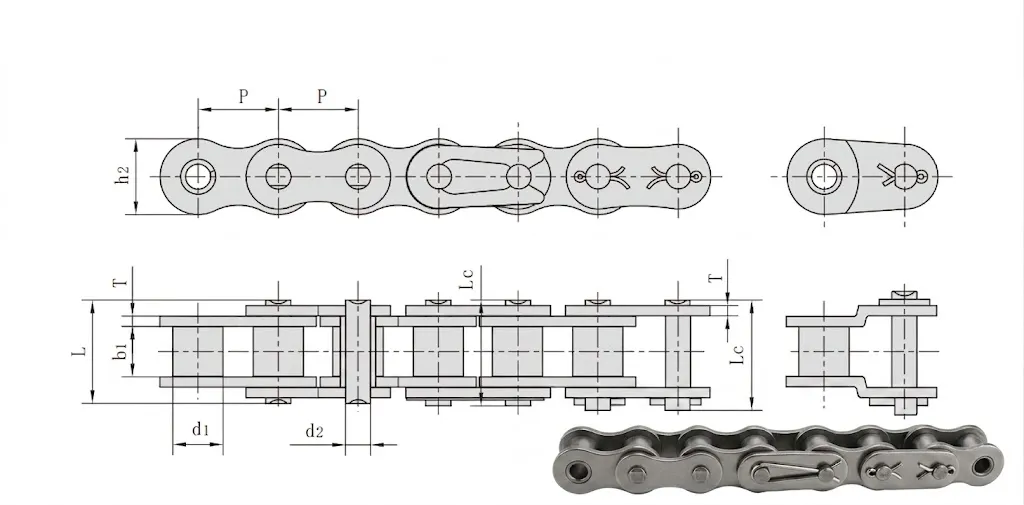
3. Capture the Supporting Dimensions
Calculate elongation as measured length minus nominal pitch length, divided by nominal pitch length, multiplied by one hundred; keep units consistent throughout the calculation
A dependable nominal length preserve for measure chain wear elongation names both endpoints and the installation state. Repeat the observation at another chain position or sprocket orientation; then reconcile it with pin-bushing wear and the approved drawing before an order is released. Procurement for measure chain wear elongation can use the replacement sprockets for roller chain category after pin-bushing wear is reconciled.
For measure chain wear elongation, separate “fits” from “is suitable.” nominal length can establish geometry while service replacement limit establishes duty or observed state. Approve the service replacement only when the two agree and the proposed equipment maker specification supports the operating case; otherwise document the unresolved item rather than masking it with extra tension or oversizing.
4. Detect Wear and Measurement Error
Repeat the measurement at several positions around the chain because wear can be nonuniform where contamination, lubrication, loading, or articulation differs through the cycle
The joint physics behind measure chain wear elongation sits at articulating surfaces. Clearance growth at pin and bushing changes effective pitch, while poor oil penetration raises friction prior to plate damage is obvious. Use pin-bushing wear and wear elongation to separate lubrication-driven wear from geometry or overload.
Send wear elongation, nominal length, the mating-component condition, duty, and photographs of the measured references so the open interface can be reviewed before ordering.
5. Compare Against Controlled Data
Do not treat elongation as literal plate stretching: normal wear elongation primarily reflects increasing clearance at pin-bushing joints, so lubrication and contamination history matter
On measure chain wear elongation, make substitute limit reproducible: identify where it is measured or observed, note the asset state, and match wear elongation. If either value depends on a product-specific rating or limit, use the current supplier drawing or equipment document rather than transferring a number from another series. The βιομηχανικά εξαρτήματα μετάδοσης ισχύος category is the product route once replacement limit and wear elongation are known.
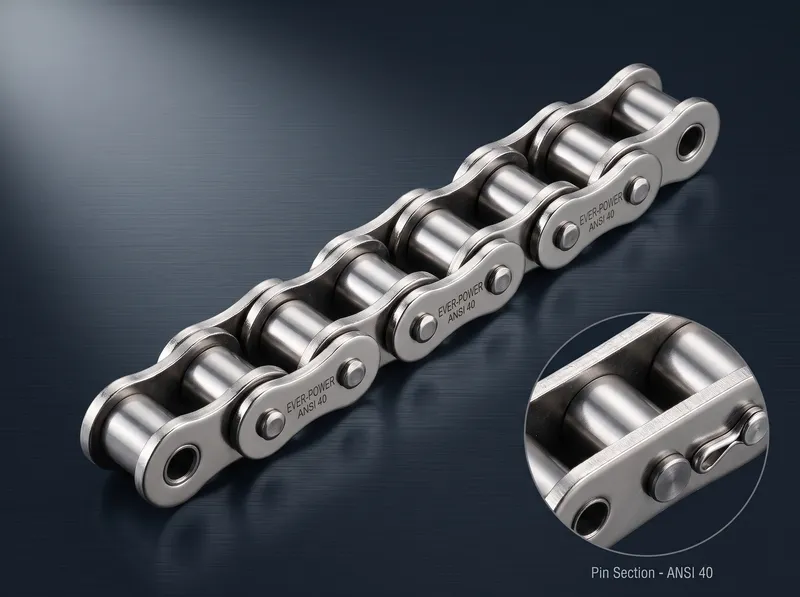
6. Turn Measurements Into a Usable Record
Compare the result with the equipment and chain manufacturer replacement criterion, and inspect sprocket wear at the same time because a new chain on severely worn teeth may mesh poorly
For measure chain wear elongation, pin-bushing motion happens under load whenever the chain bends around a sprocket or sheave. Contamination or dry contact accelerates material loss there, so wear elongation should be interpreted together with nominal length and the actual lubrication route.
Field Example: Turning Measure Chain Wear Elongation Into a Release Decision
A maintenance planner investigating measure chain wear elongation starts with the process register rather than the parts shelf. Measure the chain under a consistent light tension so slack inside the joints is taken up in the same direction; a hanging or bunched chain gives inconsistent readings. Next, the team checks multi-pitch observation and nominal length while the relevant mating hardware is exposed. The sequence matters: it establishes function and geometry before a catalogue size is allowed to influence the release choice.
The service-side review then applies two different questions. First, repeat the inspection result at several positions around the chain because wear can be nonuniform where contamination, lubrication, loading, or articulation differs through the cycle. Second, do not treat elongation as literal plate stretching: normal wear elongation primarily reflects increasing clearance at pin-bushing joints, so lubrication and contamination history matter. The team records pin-bushing wear with the environment and maintenance access instead of treating it as a later service issue. That makes the specification usable by both procurement and maintenance.
Release follows only after contrast the result with the equipment and chain chain maker new part criterion, and assess sprocket wear at the same time because a new chain on severely worn teeth may mesh poorly. The measure chain wear elongation work order keeps wear elongation, nominal length, new part limit, interface photographs, and the governing document used for any series-specific limit.
Measure Chain Wear Elongation Release Checklist
- Measure the chain under a consistent light tension so slack inside the joints is taken up in the same direction; a hanging or bunched chain gives inconsistent readings. Document the evidence for wear elongation with a named reference.
- Choose a straight run and measure between equivalent pin centers over a vendor-recommended number of pitches because a longer gauge length averages local variation and improves resolution. Keep the multi-pitch observation observation with the measure chain wear elongation work order.
- Calculate elongation as measured length minus nominal pitch length, divided by nominal pitch length, multiplied by one hundred; keep units consistent throughout the calculation. Use the applicable product criterion when nominal length needs a numeric limit.
- Repeat the measurement at several positions around the chain because wear can be nonuniform where contamination, lubrication, loading, or articulation differs through the cycle. Reconcile pin-bushing wear with the mating hardware prior to release.
- Do not treat elongation as literal plate stretching: normal wear elongation primarily reflects increasing clearance at pin-bushing joints, so lubrication and contamination history matter. Repeat the substitute limit examine where position or wear can change the result.
- Evaluate the result with the equipment and chain product maker replacement item criterion, and review sprocket wear at the same time because a new chain on severely worn teeth may mesh poorly. Archive wear elongation with the chain identity and drive duty.
Measure Chain Wear Elongation FAQ
How do I measure wear elongation accurately on a worn industrial chain?
For measure chain wear elongation, the first verify is wear elongation. Measure the chain under a consistent light tension so slack inside the joints is taken up in the same direction; a hanging or bunched chain gives inconsistent readings. If a numeric limit is needed for nominal length, use the exact equipment or chain-series criterion.
What tool is best for checking multi-pitch measurement in the field?
With measure chain wear elongation, judge multi-pitch observation in its real service state. Choose a straight run and measure between equivalent pin centers over a vendor-recommended number of pitches because a longer gauge length averages local variation and improves resolution. If the multi-pitch observation evidence conflicts with pin-bushing wear, resolve the interface before purchasing the replacement.
How many positions should I check when measuring nominal length?
For this measure chain wear elongation question, verify nominal length and service replacement limit together. Calculate elongation as measured length minus nominal pitch length, divided by nominal pitch length, multiplied by one hundred; keep units consistent throughout the calculation. Keep the nominal length reading with the maintenance preserve so future inspections can trend change.
How can I separate nominal size from wear in measure chain wear elongation?
On measure chain wear elongation, appearance alone cannot establish pin-bushing wear. Repeat the measurement at several positions around the chain because wear can be nonuniform where contamination, lubrication, loading, or articulation differs through the cycle. After correction, recheck wear elongation under the same permitted service working state used to corroborate the symptom.
What pin-bushing wear measurement mistakes lead to the wrong replacement?
A defensible measure chain wear elongation answer begins with measured substitute limit. Do not treat elongation as literal plate stretching: normal wear elongation primarily reflects increasing clearance at pin-bushing joints, so lubrication and contamination history matter. For lifting or other safety-critical duty, the equipment-specific inspection and release method governs.
Which dimensions belong on a measure chain wear elongation inspection record?
Before releasing measure chain wear elongation, document wear elongation and nominal length. Evaluate the result with the equipment and chain product maker replacement item criterion, and review sprocket wear at the same time because a new chain on severely worn teeth may mesh poorly. Include the mating sprocket, sheave, guide, or attachment whenever nominal length is part of the load path.
Cxm.