How to Choose Leaf Chain for Lifting and Hoisting Applications is best treated as an engineering assessment, not a part-number search. The mechanism first establishes function and duty; the chain and mating hardware then have to satisfy geometry, environment, and service constraints.
Leaf chain is a plate-and-pin tension chain for lifting or counterbalance duties and runs over sheaves rather than toothed drive sprockets, so the entire interface differs from roller-chain selection. Then identify pitch, series or lacing arrangement, number of plates across each link, anchor geometry, pin length, and sheave dimensions from the machine documentation and field measurement. Those two checks define why leaf chain and lacing belong in the same specification rather than being collected by separate teams after an order is placed.
For choose leaf chain lifting, any numeric limit tied to anchor clevis or lifting load must come from the applicable chain-series or equipment documentation; the sections below focus on how to obtain and interpret the engineering inputs.
- Primær beslutning
- Choose leaf chain for lifting by load path, lacing, pitch, anchors, sheaves, dynamic duty, inspection access, and the machine manufacturer requirements
- Første beviser
- leaf chain
- Parringsgrænseflade
- sheave
- Udgivelsestjek
- lifting load reconciled with the selected product and machine data.
Confirm leaf chain, sheave, and the mating geometry first; a failure here eliminates the candidate regardless of price.
Then compare lacing, anchor clevis, and lifting load with duty, environment, and service access before release.
1. Definer driftsopgaven
Leaf chain is a plate-and-pin tension chain for lifting or counterbalance duties and runs over sheaves rather than toothed drive sprockets, so the entire interface differs from roller-chain selection
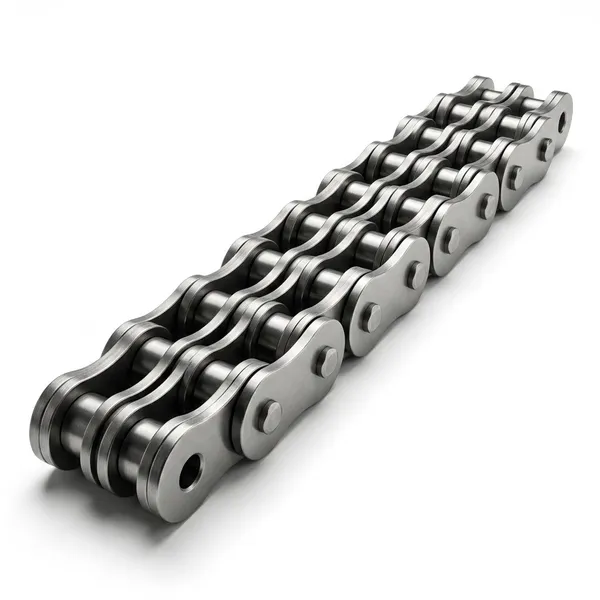
A lifting-chain request should identify the plate lacing as part of the load-carrying architecture, not as a visual detail. Count the plates in each alternating link, note whether the stack is symmetrical, and reconcile that arrangement with the equipment drawing. The mating sheave and anchor must belong to the same approved system because plate-stack width, pin projection, groove geometry, and clevis engagement determine whether load is distributed as intended. Procurement for choose leaf chain lifting can use the hoisting leaf chains category after lacing is reconciled.
2. Oversæt pligt til kædekrav
Identify pitch, series or lacing arrangement, number of plates across each link, anchor geometry, pin length, and sheave dimensions from the machine documentation and field measurement
For a leaf-chain replacement, field identification begins at the anchor and follows the chain over every sheave to the opposite termination. Record clevis style, pin diameter reference, usable pin length, groove condition, and any evidence of plate-edge rubbing. If two chains carry a common carriage, document their routing and adjustment as a pair; selecting one strand in isolation can preserve the wrong equalization condition.
3. Bekræft geometri og sammenkoblede komponenter
Determine the maximum suspended load plus dynamic effects from acceleration, deceleration, shock, reeving, and unequal load sharing; use the equipment maker and chain manufacturer rating method for the exact system
Suspended mass is only the static part of lifting duty. Acceleration, braking, travel reversal, end-of-stroke behavior, reeving arrangement, and unequal sharing between parallel chains can alter the force history. Do not convert a nameplate load directly into a chain rating. Use the machine maker’s load path and the selected leaf-chain manufacturer’s rating procedure so the dynamic case, attachment geometry, and required design margin are handled by the correct method. The muligheder for tekniske transportbåndskæder category is the product route once sheave and anchor clevis are known. The industrial chain types is an optional category reference once the choose leaf chain lifting interface is defined.
For choose leaf chain lifting, separate “fits” from “is suitable.” sheave can establish geometry while lifting load establishes duty or state. Approve the replacement item only when the two agree and the chosen product maker information supports the working case; otherwise document the unresolved item rather than masking it with extra tension or oversizing.
4. Design til miljø og smøring
Inspect anchors, clevis pins, sheave grooves, alignment, and equalization because a new chain cannot correct a worn anchor or a sheave that side-loads the plate stack
Before fitting new leaf chain, inspect the supporting hardware that will guide and terminate it. A grooved or seized sheave, elongated clevis hole, worn anchor pin, bent bracket, or misaligned mast structure can concentrate force into a few plates. Correct those causes first. A new chain should articulate freely over the sheave and enter the anchor without side forcing, twisting, or using the connecting hardware as an alignment device.
Send leaf chain, sheave, the mating-component condition, duty, and photographs of the measured references so the open interface can be reviewed before ordering.
5. Sammenlign vedligeholdelse og konsekvenser af fejl
Provide access for lubrication and periodic measurement of wear elongation, turned pins, cracked plates, corrosion, and damaged plate edges; lifting service is safety-critical and should follow the machine inspection program
Maintenance planning for lifting leaf chain should make the plate-and-pin joint accessible for inspection and lubrication while protecting the work area from contamination. Trend measured elongation using the specified measurement condition, and record turned pins, plate cracks, corrosion, fretting, edge wear, and unusual stiffness separately. The governing discard or replacement criteria come from the equipment and chain documentation; workshop intuition is not a substitute for a safety-critical limit. Once lifting load is documented for choose leaf chain lifting, the industrial chain and sprocket components siden angiver den matchende kategori.
| Check | Ingeniørmæssig betydning | Verifikationsmetode |
|---|---|---|
| Bladkæde | leaf chain is a plate-and-pin tension chain for lifting or counterbalance duties and runs over sheaves rather than toothed drive sprockets, so the entire interface differs from roller-chain selection | Verify leaf chain from a named datum or approved source, then reconcile lacing for choose leaf chain lifting prior to release. |
| Lacing | identify pitch, series or lacing arrangement, number of plates across each link, anchor geometry, pin length, and sheave dimensions from the machine documentation and field measurement | Verify lacing from a named datum or approved source, then reconcile sheave for choose leaf chain lifting ahead of release. |
| Sheave | determine the maximum suspended load plus dynamic effects from acceleration, deceleration, shock, reeving, and unequal load sharing; use the equipment maker and chain manufacturer rating method for the exact system | Verify sheave from a named datum or approved source, then reconcile anchor clevis for choose leaf chain lifting before release. |
| Anchor Clevis | inspect anchors, clevis pins, sheave grooves, alignment, and equalization because a new chain cannot correct a worn anchor or a sheave that side-loads the plate stack | Verify anchor clevis from a named datum or approved source, then reconcile lifting load for choose leaf chain lifting in advance of release. |
| Udgivelsesport | Approve choose leaf chain lifting only after field evidence, mating geometry, and the selected chain data agree. | |
6. Udgiv specifikationen med dokumentation
Replace only with a chain, anchor, and sheave combination documented as compatible; never substitute a visually similar leaf chain by pitch and width alone
Release the lift only after chain identity, lacing, anchor geometry, sheave condition, routing, adjustment, and full-travel clearance have been checked together. Where paired strands are used, confirm that both sides share the mechanism as designed rather than simply matching visible slack. Function testing should follow the equipment procedure and should verify smooth travel, consistent tracking, secure anchors, and no new interference before the machine returns to service.
Field Example: Turning Choose Leaf Chain Lifting Into a Release Decision
Consider a shutdown where the team must resolve choose leaf chain lifting ahead of the asset returns to production. Leaf chain is a plate-and-pin tension chain for lifting or counterbalance duties and runs over sheaves rather than toothed drive sprockets, so the entire interface differs from roller-chain selection. Next, the team checks lacing and sheave while the relevant mating hardware is exposed. The sequence matters: it establishes function and geometry ahead of a catalogue size is allowed to influence the selection decision.
The service-side review then applies two different questions. First, review anchors, clevis pins, sheave grooves, alignment, and equalization because a new chain cannot correct a worn anchor or a sheave that side-loads the plate stack. Second, provide access for lubrication and periodic dimensional check of wear elongation, turned pins, cracked plates, corrosion, and damaged plate edges; lifting service is safety-critical and should follow the drive inspection program. The team records anchor clevis with the environment and maintenance access instead of treating it as a later service issue. That makes the specification usable by both procurement and maintenance.
Release follows only after replace only with a chain, anchor, and sheave combination documented as compatible; never substitute a visually similar leaf chain by pitch and width alone. The choose leaf chain lifting work order keeps leaf chain, sheave, lifting load, interface photographs, and the released document used for any series-specific limit.
Choose Leaf Chain Lifting Release Checklist
- Leaf chain is a plate-and-pin tension chain for lifting or counterbalance duties and runs over sheaves rather than toothed drive sprockets, so the entire interface differs from roller-chain selection. Document the evidence for leaf chain with a named reference.
- Identify pitch, series or lacing arrangement, number of plates across each link, anchor geometry, pin length, and sheave dimensions from the asset documentation and field reading. Keep the lacing observation with the choose leaf chain lifting work order.
- Determine the maximum suspended load plus dynamic effects from acceleration, deceleration, shock, reeving, and unequal load sharing; use the equipment maker and chain product maker rating method for the correct equipment. Use the applicable product criterion when sheave needs a numeric limit.
- Survey anchors, clevis pins, sheave grooves, alignment, and equalization because a new chain cannot correct a worn anchor or a sheave that side-loads the plate stack. Reconcile anchor clevis with the mating hardware in advance of release.
- Provide access for lubrication and periodic observation of wear elongation, turned pins, cracked plates, corrosion, and damaged plate edges; lifting service is safety-critical and should follow the equipment inspection program. Repeat the lifting load establish where position or wear can change the result.
- Replace only with a chain, anchor, and sheave combination documented as compatible; never substitute a visually similar leaf chain by pitch and width alone. Archive leaf chain with the chain identity and installation duty.
Choose Leaf Chain Lifting FAQ
How do I choose or verify leaf chain for choose leaf chain lifting?
For choose leaf chain lifting, the first assess is leaf chain. Leaf chain is a plate-and-pin tension chain for lifting or counterbalance duties and runs over sheaves rather than toothed drive sprockets, so the entire interface differs from roller-chain selection. After correction, recheck sheave under the same permitted service working state used to corroborate the symptom.
What machine data is needed before checking lacing?
With choose leaf chain lifting, judge lacing in its real service state. Identify pitch, series or lacing arrangement, number of plates across each link, anchor geometry, pin length, and sheave dimensions from the asset documentation and field reading. For lifting or other safety-critical duty, the equipment-specific inspection and release method governs.
How do I know whether sheave is compatible with the existing system?
For this choose leaf chain lifting question, verify sheave and lifting load together. Determine the maximum suspended load plus dynamic effects from acceleration, deceleration, shock, reeving, and unequal load sharing; use the equipment maker and chain product maker rating method for the correct equipment. Include the mating sprocket, sheave, guide, or attachment whenever lifting load is part of the load path.
Can I select a replacement by anchor clevis alone?
On choose leaf chain lifting, appearance alone cannot establish anchor clevis. Survey anchors, clevis pins, sheave grooves, alignment, and equalization because a new chain cannot correct a worn anchor or a sheave that side-loads the plate stack. If a numeric limit is needed for leaf chain, use the exact equipment or chain-series criterion.
When does lifting load become the limiting factor for choose leaf chain lifting?
A defensible choose leaf chain lifting answer begins with measured lifting load. Provide access for lubrication and periodic observation of wear elongation, turned pins, cracked plates, corrosion, and damaged plate edges; lifting service is safety-critical and should follow the equipment inspection program. If the lifting load evidence conflicts with lacing, resolve the interface before purchasing the replacement.
What should be documented before releasing a choose leaf chain lifting replacement order?
Before releasing choose leaf chain lifting, document leaf chain and sheave. Replace only with a chain, anchor, and sheave combination documented as compatible; never substitute a visually similar leaf chain by pitch and width alone. Keep the leaf chain reading with the maintenance preserve so future inspections can trend change.
Cxm.