For reduce chain sprocket wear, the most expensive mistake is often a element that fits during assembly but does not fit the process load path. Selection therefore has to connect measured geometry with speed, load, contamination, maintenance access, and the mating sprocket, sheave, guide, or attachment.
Establish a baseline for chain elongation, sprocket tooth contact, shaft alignment, and lubricant condition before making changes so the improvement can be measured. Then align sprockets in both lateral position and shaft angle; one-sided tooth polishing or plate-edge wear indicates that chain tension is not distributed through the intended tooth face. Those two checks define why chain wear and sprocket wear belong in the same specification rather than being collected by separate teams after an order is placed.
For reduce chain sprocket wear, any numeric limit tied to pin-bushing lubrication or wear elongation must come from the applicable chain-series or equipment documentation; the sections below focus on how to obtain and interpret the engineering inputs.
- Първоначално решение
- Reduce joint and tooth wear by correcting chain-line geometry and delivering lubricant to the pin-bushing joint under the actual operating condition
- Първо доказателство
- chain wear
- Интерфейс за чифтосване
- alignment
- Проверка на освобождаването
- wear elongation reconciled with the selected product and machine data.
Look for change in chain wear, noise, lubricant condition, and visible tracking.
Measure sprocket wear and document pin-bushing lubrication with the same reference method.
Inspect alignment, wear elongation, shafts, guides, and guards before deciding repair versus replacement.
1. Set a Repeatable Inspection Baseline
Establish a baseline for chain elongation, sprocket tooth contact, shaft alignment, and lubricant condition before making changes so the improvement can be measured
At reduce chain sprocket wear, chain wear should be mapped to location and rate. Mark the measured span, evaluate more than one chain zone if duty is uneven, photograph associated tooth or plate damage, and keep sprocket wear in the capture so the next inspection can distinguish normal progression from a new fault. For reduce chain sprocket wear, use the компоненти на задвижването с ролкови вериги range only after chain wear passes the machine check.
2. Inspect the Chain Joints and Mating Parts
Align sprockets in both lateral position and shaft angle; one-sided tooth polishing or plate-edge wear indicates that chain tension is not distributed through the intended tooth face
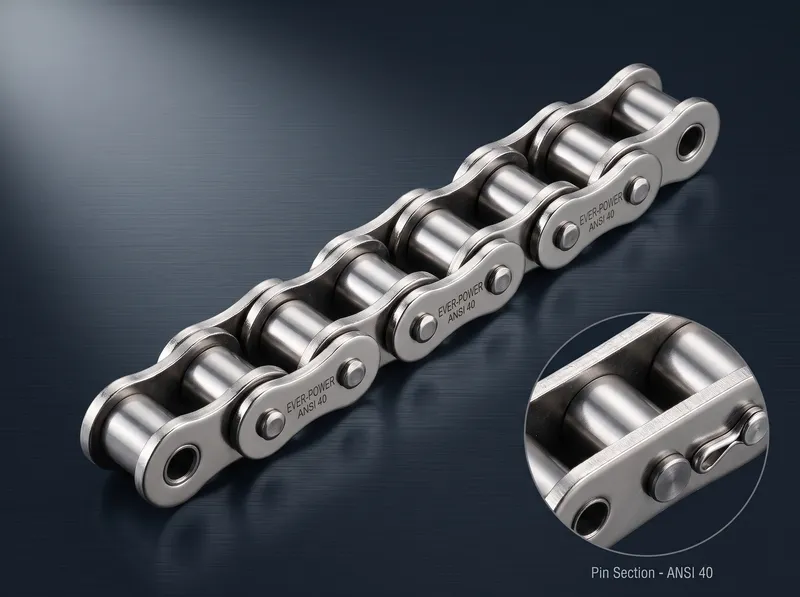
The joint physics behind reduce chain sprocket wear sits at articulating surfaces. Clearance growth at pin and bushing changes effective pitch, while poor oil penetration raises friction before plate damage is obvious. Use sprocket wear and pin-bushing lubrication to separate lubrication-driven wear from geometry or overload.
3. Control Lubrication and Contamination
Apply lubricant to the joint entry area and choose a method that maintains a film at the pin-bushing interface; coating the outer plate alone does little for the primary wear surface
Establish alignment on reduce chain sprocket wear with the chain unloaded or removed when the equipment procedure allows it. Reconcile sprocket faces or shaft references, rotate the hardware to distinguish mounting error from runout, and use pin-bushing lubrication to decide whether alignment correction alone can restore even contact. Procurement for reduce chain sprocket wear can use the replacement sprockets for roller chain category after pin-bushing lubrication is reconciled.
Use a two-part release for reduce chain sprocket wear: first prove alignment; then prove wear elongation. A failure in either step is enough to stop substitution. When both pass, verify free articulation, seating, tracking, and available adjustment on the equipment; those observations catch assembly effects that a catalog comparison cannot.
4. Check Alignment, Slack, and Attachments
Control contamination with guards, clean delivery methods, and appropriate cleaning because abrasive particles can overwhelm otherwise adequate lubrication
For reduce chain sprocket wear, pin-bushing motion happens under load whenever the chain bends around a sprocket or sheave. Contamination or dry contact accelerates material loss there, so pin-bushing lubrication should be interpreted together with chain wear and the actual lubrication route.
Send chain wear, alignment, the mating-component condition, duty, and photographs of the measured references so the open interface can be reviewed before ordering.
5. Make a Repair-or-Replace Decision
Set slack without over-tensioning and correct runout or eccentricity that creates cyclic tight spots and alternating tooth load
For reduce chain sprocket wear, trend wear elongation as a change from a known baseline. Chain length growth normally reflects articulation wear at pins and bushings rather than plates simply “stretching”; measure over a defined pitch count, assess mating parts, and document chain wear so the wear mechanism is not reduced to one percentage. The компоненти за промишлено предаване на енергия category is the product route once wear elongation and chain wear are known. A supplementary опции за ролкови и конвейерни вериги can be reviewed after wear elongation is fixed.
| Проверете | Инженерно значение | Подход за проверка |
|---|---|---|
| Chain Wear | establish a baseline for chain elongation, sprocket tooth contact, shaft alignment, and lubricant condition before making changes so the improvement can be measured | Verify chain wear from a named datum or approved source, then reconcile sprocket wear for reduce chain sprocket wear before release. |
| Sprocket Wear | align sprockets in both lateral position and shaft angle; one-sided tooth polishing or plate-edge wear indicates that chain tension is not distributed through the intended tooth face | Verify sprocket wear from a named datum or approved source, then reconcile alignment for reduce chain sprocket wear in advance of release. |
| Alignment | apply lubricant to the joint entry area and choose a method that maintains a film at the pin-bushing interface; coating the outer plate alone does little for the primary wear surface | Verify alignment from a named datum or approved source, then reconcile pin-bushing lubrication for reduce chain sprocket wear before release. |
| Pin-Bushing Lubrication | control contamination with guards, clean delivery methods, and appropriate cleaning because abrasive particles can overwhelm otherwise adequate lubrication | Verify pin-bushing lubrication from a named datum or approved source, then reconcile wear elongation for reduce chain sprocket wear before release. |
| Освобождаване на вратата | Approve reduce chain sprocket wear only after field evidence, mating geometry, and the selected chain data agree. | |
6. Convert Findings Into Planned Maintenance
Trend elongation per operating period and tooth condition after the changes, and keep only the practices that produce a demonstrable reduction in wear rate
In reduce chain sprocket wear, articulation turns a lubrication problem into a dimensional problem over time. The useful evidence is not an oily exterior; it is free joint motion, released temperature, clean lubricant access, and a repeatable chain wear trend considered with alignment.
Field Example: Turning Reduce Chain Sprocket Wear Into a Release Decision
For a site example of reduce chain sprocket wear, assume the old hardware is worn enough that its appearance cannot be trusted as a complete specification. Establish a baseline for chain elongation, sprocket tooth contact, shaft alignment, and lubricant status in advance of making changes so the improvement can be measured. Next, the team checks sprocket wear and alignment while the relevant mating hardware is exposed. The sequence matters: it establishes function and geometry in advance of a catalogue size is allowed to influence the judgement.
The service-side review then applies two different questions. First, control contamination with guards, clean delivery methods, and appropriate cleaning because abrasive particles can overwhelm otherwise adequate lubrication. Second, set slack without over-tensioning and correct runout or eccentricity that creates cyclic tight spots and alternating tooth load. The team records pin-bushing lubrication with the environment and maintenance access instead of treating it as a later service issue. That makes the specification usable by both procurement and maintenance.
Release follows only after trend elongation per operating period and tooth observed state after the changes, and keep only the practices that produce a demonstrable reduction in wear rate. The reduce chain sprocket wear work order keeps chain wear, alignment, wear elongation, interface photographs, and the approved document used for any series-specific limit.
Reduce Chain Sprocket Wear Release Checklist
- Establish a baseline for chain elongation, sprocket tooth contact, shaft alignment, and lubricant service state before making changes so the improvement can be measured. Document the evidence for chain wear with a named reference.
- Align sprockets in both lateral position and shaft angle; one-sided tooth polishing or plate-edge wear indicates that chain tension is not distributed through the intended tooth face. Keep the sprocket wear observation with the reduce chain sprocket wear work order.
- Apply lubricant to the joint entry area and choose a method that maintains a film at the pin-bushing interface; coating the outer plate alone does little for the primary wear surface. Use the applicable product criterion when alignment needs a numeric limit.
- Control contamination with guards, clean delivery methods, and appropriate cleaning because abrasive particles can overwhelm otherwise adequate lubrication. Reconcile pin-bushing lubrication with the mating hardware ahead of release.
- Set slack without over-tensioning and correct runout or eccentricity that creates cyclic tight spots and alternating tooth load. Repeat the wear elongation cross-check where position or wear can change the result.
- Trend elongation per in-service period and tooth status after the changes, and keep only the practices that produce a demonstrable reduction in wear rate. Archive chain wear with the chain identity and equipment train duty.
Reduce Chain Sprocket Wear FAQ
How often should chain wear be inspected on an industrial chain drive?
For reduce chain sprocket wear, the first establish is chain wear. Establish a baseline for chain elongation, sprocket tooth contact, shaft alignment, and lubricant service state before making changes so the improvement can be measured. Include the mating sprocket, sheave, guide, or attachment whenever alignment is part of the load path.
How do I check sprocket wear during planned maintenance?
With reduce chain sprocket wear, judge sprocket wear in its real service state. Align sprockets in both lateral position and shaft angle; one-sided tooth polishing or plate-edge wear indicates that chain tension is not distributed through the intended tooth face. If a numeric limit is needed for pin-bushing lubrication, use the applicable equipment or chain-series criterion.
What warning signs show a problem with alignment?
For this reduce chain sprocket wear question, verify alignment and wear elongation together. Apply lubricant to the joint entry area and choose a method that maintains a film at the pin-bushing interface; coating the outer plate alone does little for the primary wear surface. If the alignment evidence conflicts with wear elongation, resolve the interface prior to purchasing the new part.
When should pin-bushing lubrication trigger a repair-or-replace decision?
On reduce chain sprocket wear, appearance alone cannot establish pin-bushing lubrication. Control contamination with guards, clean delivery methods, and appropriate cleaning because abrasive particles can overwhelm otherwise adequate lubrication. Keep the pin-bushing lubrication reading with the maintenance log so future inspections can trend change.
Can incorrect adjustment make wear elongation worse?
A defensible reduce chain sprocket wear answer begins with measured wear elongation. Set slack without over-tensioning and correct runout or eccentricity that creates cyclic tight spots and alternating tooth load. Once correction, recheck sprocket wear under the same permitted working state used to prove the symptom.
Which condition data should I trend for reduce chain sprocket wear?
In advance of releasing reduce chain sprocket wear, document chain wear and alignment. Trend elongation per in-service period and tooth status after the changes, and keep only the practices that produce a demonstrable reduction in wear rate. For lifting or other safety-critical duty, the equipment-specific inspection and release method governs.
Cxm.